Como Bluff, near Medicine Bow, Wyoming
Como Bluff, Wyoming — Digging With Bakker
- Location Como Bluff, near Medicine Bow, Wyoming
- Formation Morrison Formation (Late Jurassic)
- Season 1994–1997
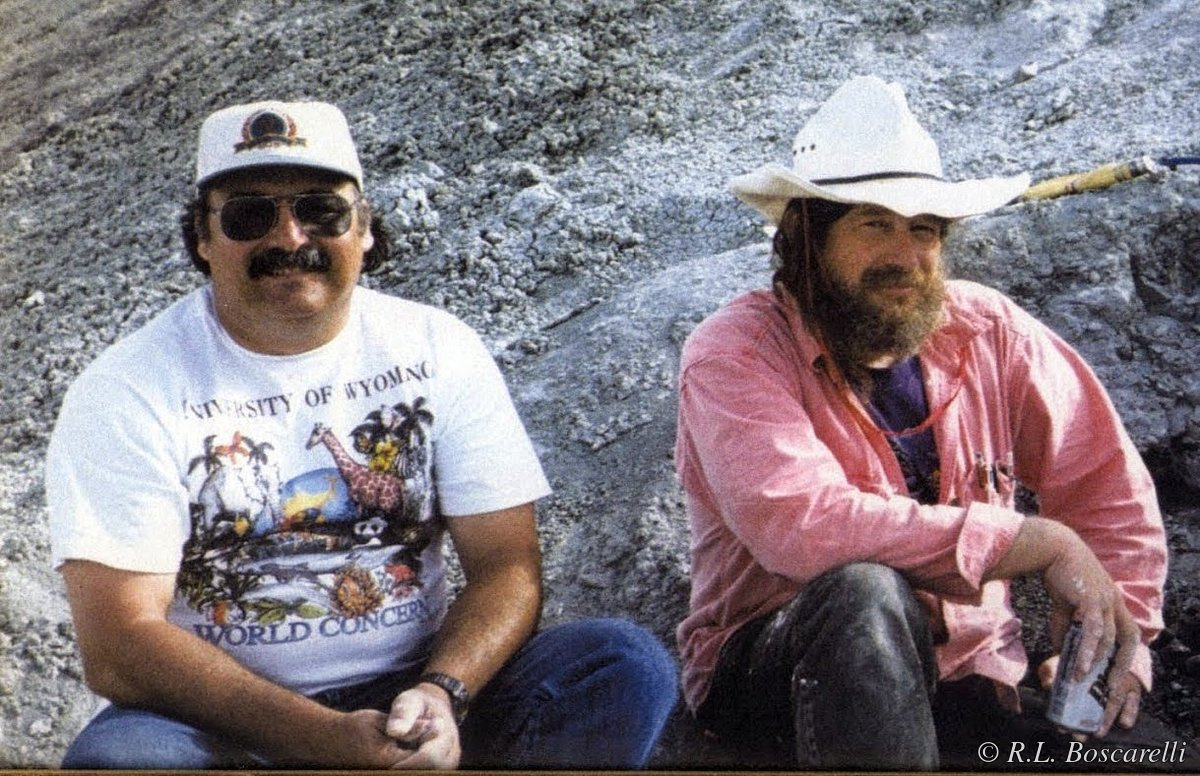
Como Bluff, along an anticline ridge near Medicine Bow, Wyoming, is one of the historic dinosaur localities of North America — a Morrison Formation ridge that produced some of the first great sauropod skeletons during the 19th-century Bone Wars. From 1994 to 1997 I worked here across multiple summer seasons as part of a Dinamation / Casper College research project under the direction of Dr. Robert T. Bakker. It was my first experience digging dinosaurs alongside a world-famous paleontologist, and it set the course for everything that followed.
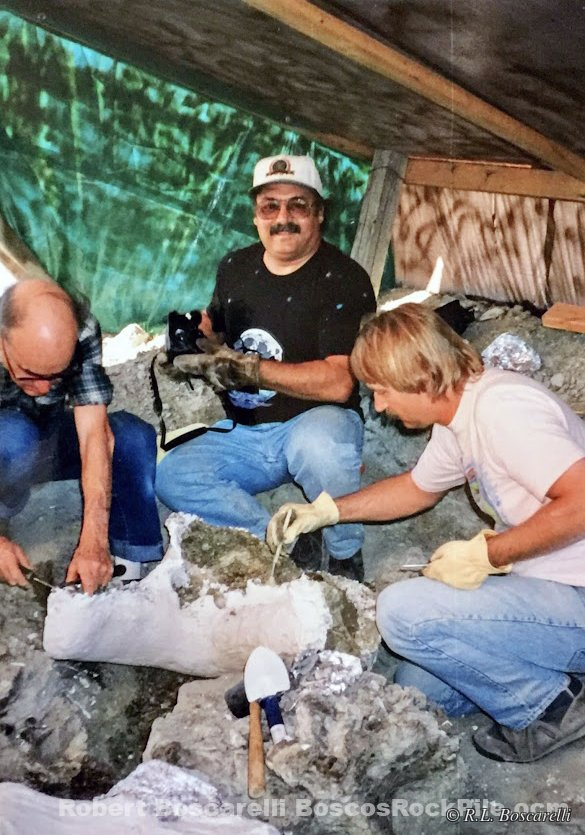
The work recovered sauropod material from the Morrison Formation, with associated Allosaurus material present. The specimen we called “Bertha” was central to the effort. The element we recovered was her pubis — a massive sauropod hip bone. The crew read her unusual upright position as an animal that had become mired in soft sediment before burial.
Bertha’s species helped bring back Brontosaurus
To the crew, Bertha’s kind was Brontosaurus yahnahpin — Bakker championed Brontosaurus as a valid genus for years before the rest of the field came round. The name has travelled since, and the route is worth following:
- 1994 — described as Apatosaurus yahnahpin by Filla & Redman. That Filla is James Filla, my own dig partner at Como Bluff — the same man who later made and sent me the Allosaurus manus cast further down this page.
- 1998 — moved to its own genus, Eobrontosaurus, by Bakker.
- 2015 — reassigned to Brontosaurus yahnahpin by Tschopp, Mateus & Benson (PeerJ), in the study that revived Brontosaurus as a valid genus.
So the animal we were digging belongs to one of the three species recognised when Brontosaurus came back — and it carries the name of the man who was working the quarry beside me. The Tate Museum in Casper still prints her as Apatosaurus yahnahpin on their “Keep ‘em in Wyoming” shirt; the yahnahpin is the constant, the genus has moved three times.
Years later, my Como Bluff dig partner James Filla sent me a cast he had made of an Allosaurus atrox left manus — the hand, with its big recurved claw.
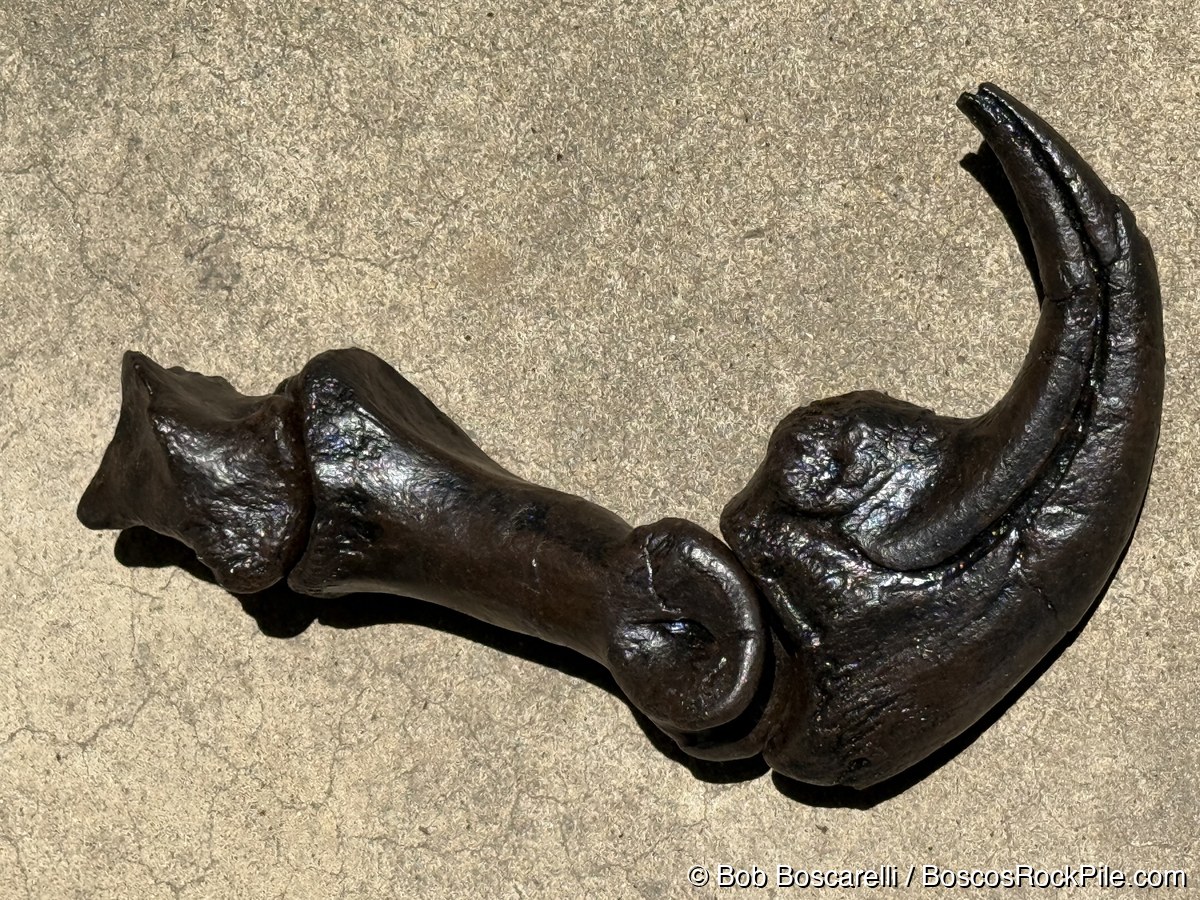
A cast of the left manus of Allosaurus atrox — the hand and its recurved claw — made and sent by dig colleague James Filla (Nederland, Colorado, 1994); the original was found at Como Bluff.
Como Bluff is hard ground to work. The bone-bearing layers are smectitic clays that swell and crack as they dry, so every specimen needed careful stabilization before it could be lifted. Each season ran roughly two weeks and covered the full field cycle — prospecting, excavation, mapping, jacketing, preparation, documentation, and public interaction — worked through desert heat and sudden thunderstorms, with the crew based out of the historic Virginian Hotel in Medicine Bow.
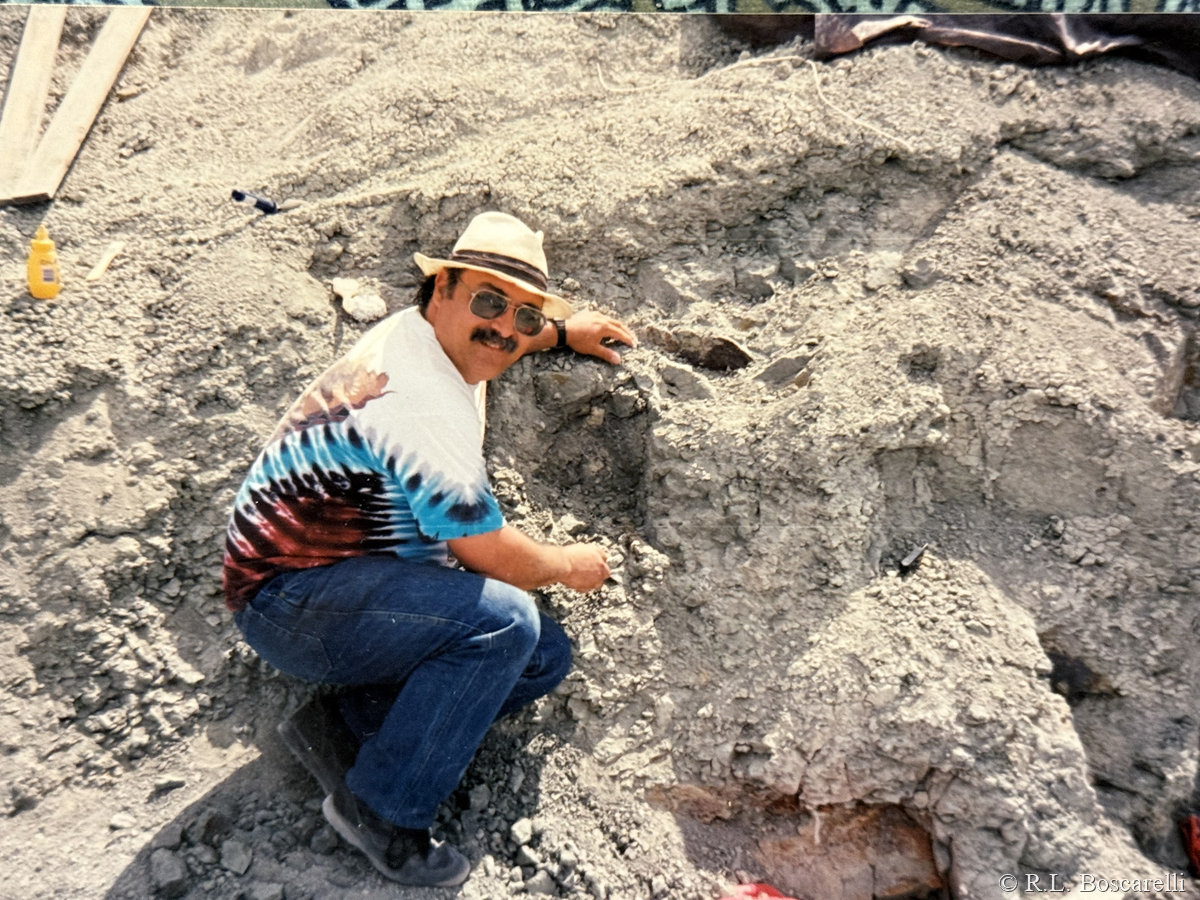
Working beside Bakker meant the science never stopped at the quarry wall — it carried on into long evenings of sketches and argument about how these animals actually lived. (His inscription in my copy of The Dinosaur Heresies, and the other paleontologists I have shared a quarry with, are on the Rock Stars page.) This record preserves modern excavation at a historically significant locality and its place in the ongoing Apatosaurus / Brontosaurus research story.
Field footage — Bakker’s lectures, 1994–1995
I filmed these at Como Bluff in 1994 and 1995. They went unpublished for thirty years; they are now on my channel, captioned. This is Bakker teaching in the field, to the crew, the way he did every evening.


Image Licensing & Research Inquiries
Specimens and field photography from this archive are available for research, publication, and museum use. Get in touch to discuss licensing or collaboration.
Start a licensing inquiry