
Live Earthquake Helicorder — Soquel, Santa Cruz County, CA
Live ground motion from Bosco's home seismic station in Soquel, California.
Live Helicorder
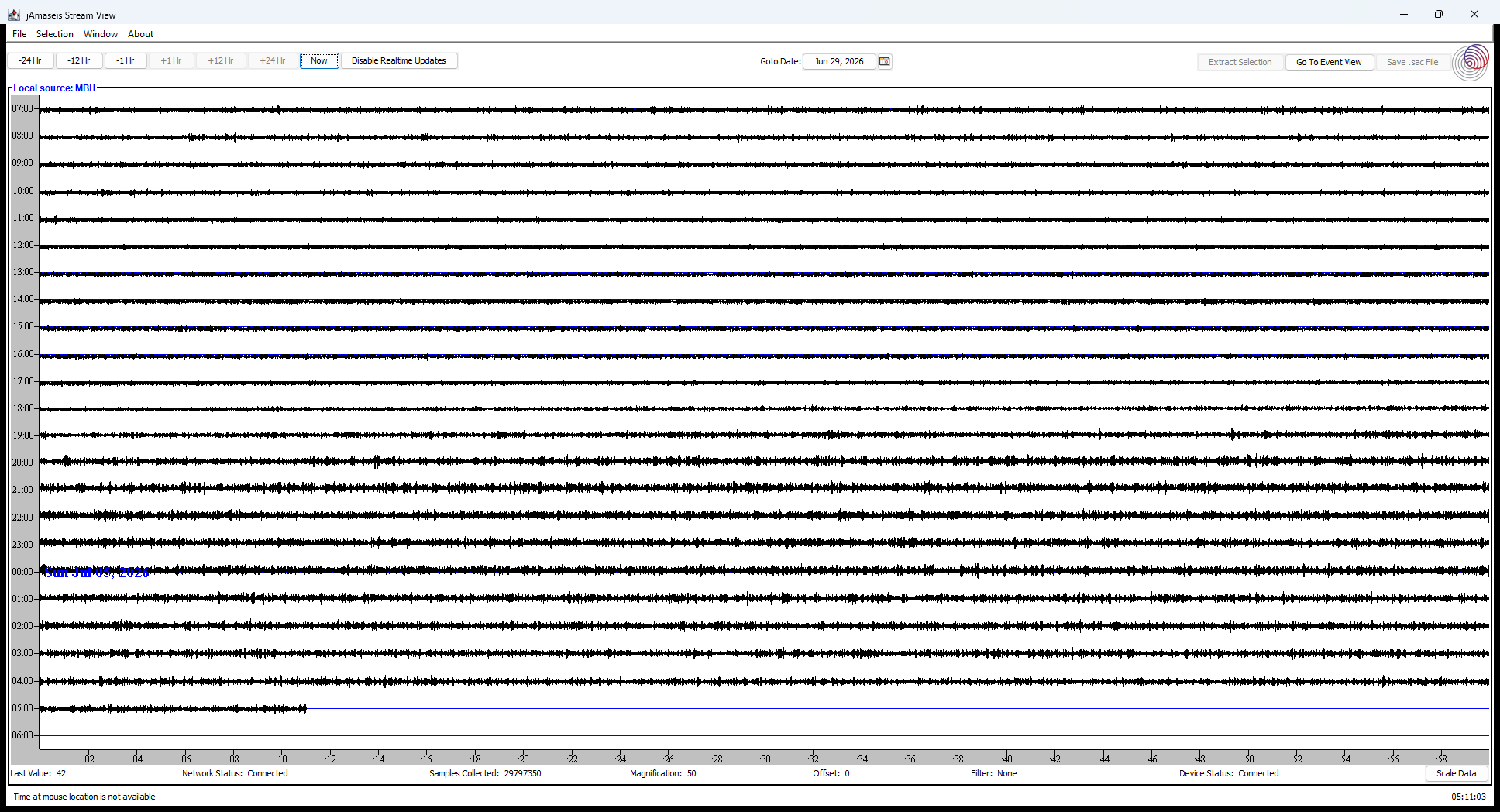
The live trace is not reaching the site right now — the station uploads a new chart every five minutes and this panel will pick it up automatically when it resumes. For what the instrument has recorded, see the detected-earthquake catalog.
| Mag | When | Where | From station |
|---|
The RockPile keeps an eye on the living earth, not just the fossil one. A seismic station in Soquel, Santa Cruz County, California records ground motion around the clock; the live helicorder below refreshes on its own every five minutes.
If the trace is moving because of something you just felt, the official agencies — USGS, the National Weather Service, the tsunami warning centers — are gathered on the Emergency Resources page.
The Instruments
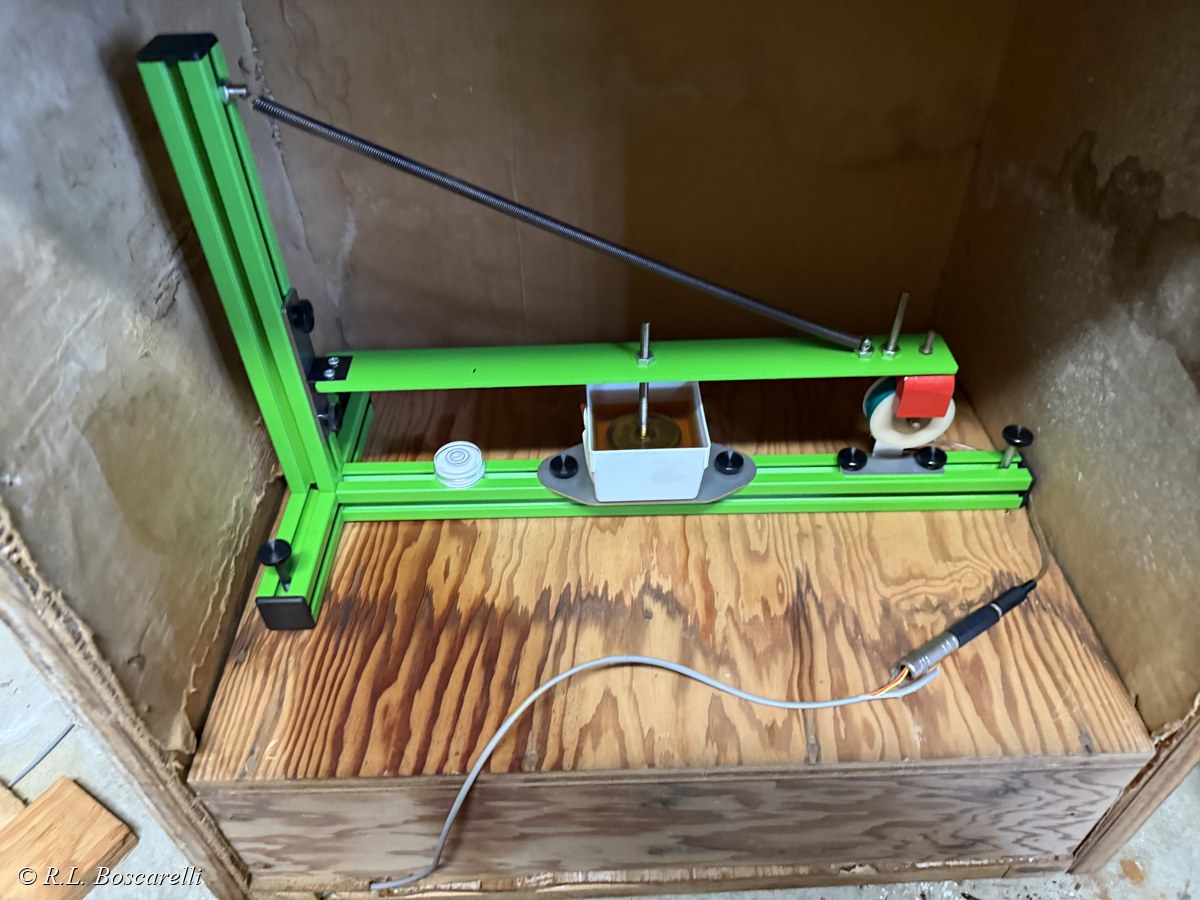
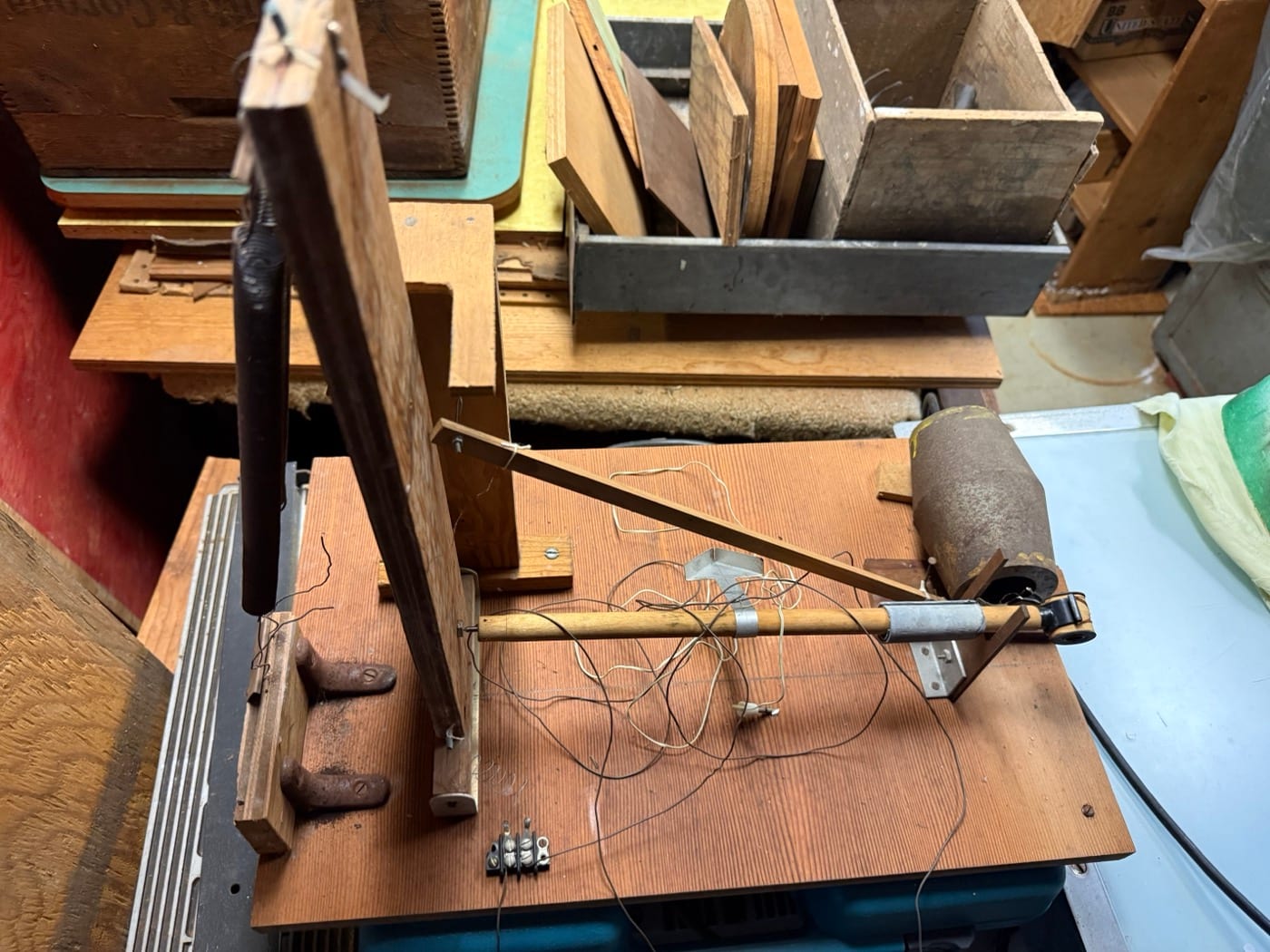
This station has watched the same patch of ground for two generations. The original seismograph was hand-built by David Reynolds (W6TQP), Bosco's father-in-law — a horizontal-pendulum design with a moving coil swinging in a permanent-magnet field, near-frictionless pivots, and a needle tracing ground motion onto paper tape. It was recording in the basement when the Loma Prieta earthquake struck on October 17, 1989; the shaking knocked the recorder from its shelf and tore the tape mid-trace — a fragment David labeled by hand and kept.
Bosco keeps the watch today from the same Soquel home. His EQ-1 seismograph sits in that same basement, built into the very case David used, and feeds the live helicorder above — it's tuned for distant earthquakes. Alongside it he runs a second, self-contained geophone sensor indoors, in a spare room: where the EQ-1 registers the far events, the geophone tells him whether a quake is close to home. Between them the two instruments cover both ends — the world's big distant shocks and the local ground right under Soquel.

A second earthquake on the tape
The Loma Prieta fragment wasn't the only one David kept. A year later, on the night of October 24, 1990, his seismograph caught a magnitude‑5.7 earthquake near Lee Vining — between Mono Lake and the eastern edge of Yosemite, roughly 150 miles away. The USGS called it one of the most widely felt earthquakes ever reported in California, shaking the ground from San Francisco to Reno; the shock loosed rockslides that closed two roads into Yosemite. David marked this tape in the same steady hand as the first — "R=5.7 · Wed 10-24-90 · 11:16 PM · Yosemite / Mono lake" — clocking the arrival to the minute on an instrument he built himself.
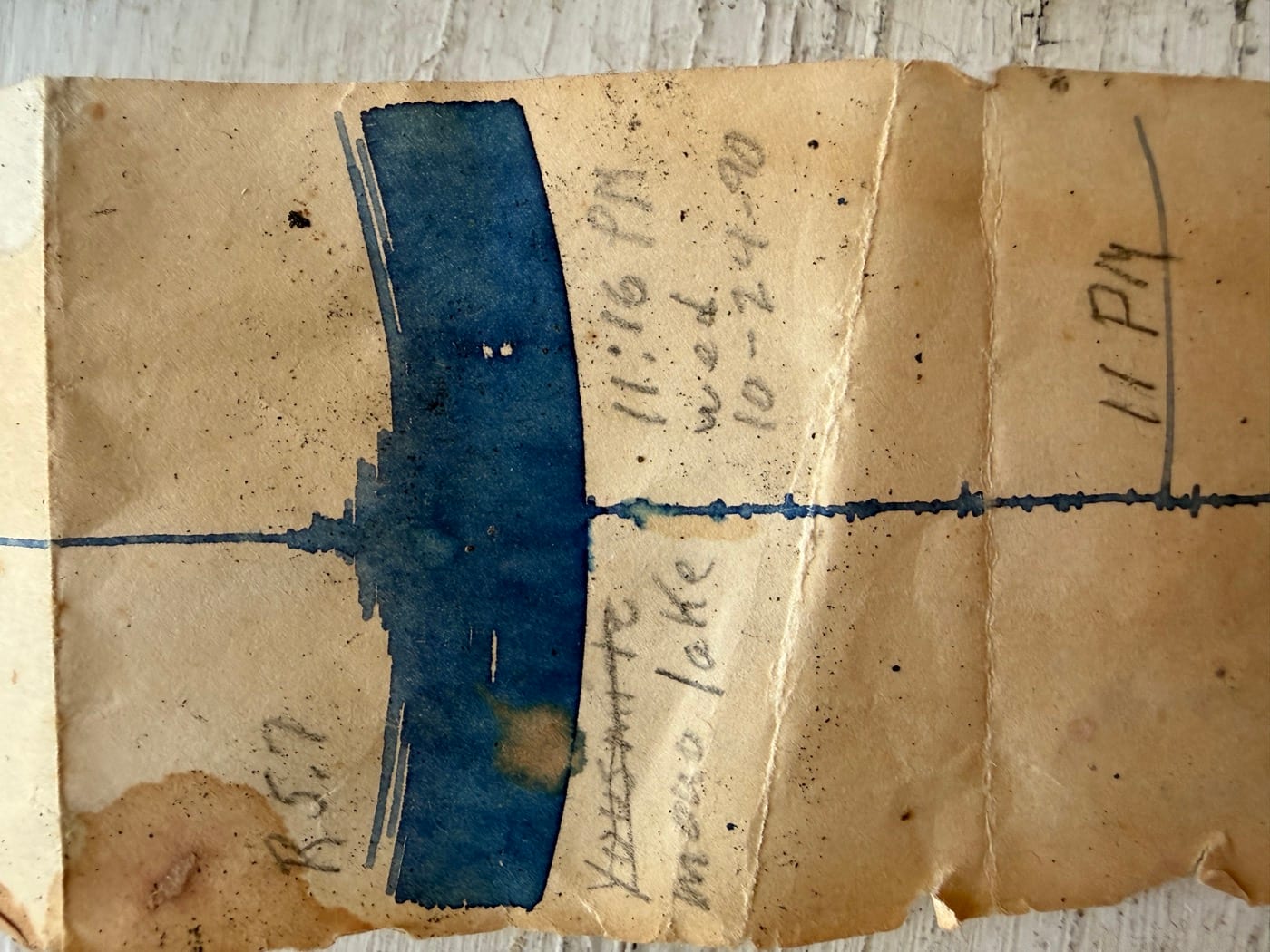
Two surviving tapes, a year apart, both annotated by hand — the analog ancestors of the live helicorder above and the detected-earthquake catalog below. Same basement, same patch of ground, same idea: keep a record of what the earth is doing. Felt something just now? Is there an earthquake right now near Santa Cruz? answers it from this trace, with a page for every nearby quake the station has recorded.
Station Specifications
| Seismograph | Windows helicorder pipeline — 24-hour rolling PNG |
|---|---|
| Seismo update | Every 5 minutes (automated upload) |
| Instruments | EQ-1 seismograph (basement, distant quakes) + self-contained indoor geophone (near-home) |
| Location | Soquel, California (Santa Cruz County) |
What the Station Has Caught
A seismic station is only as good as what it records. Across roughly 43 weeks of continuous listening in 2026, the EQ-1's automated detector flagged 176,272 bursts of ground motion — and 282 of them line up, to the minute, with earthquakes in the official USGS catalog: from local California shocks to a magnitude‑7.5 in Venezuela, about 3,800 miles away.
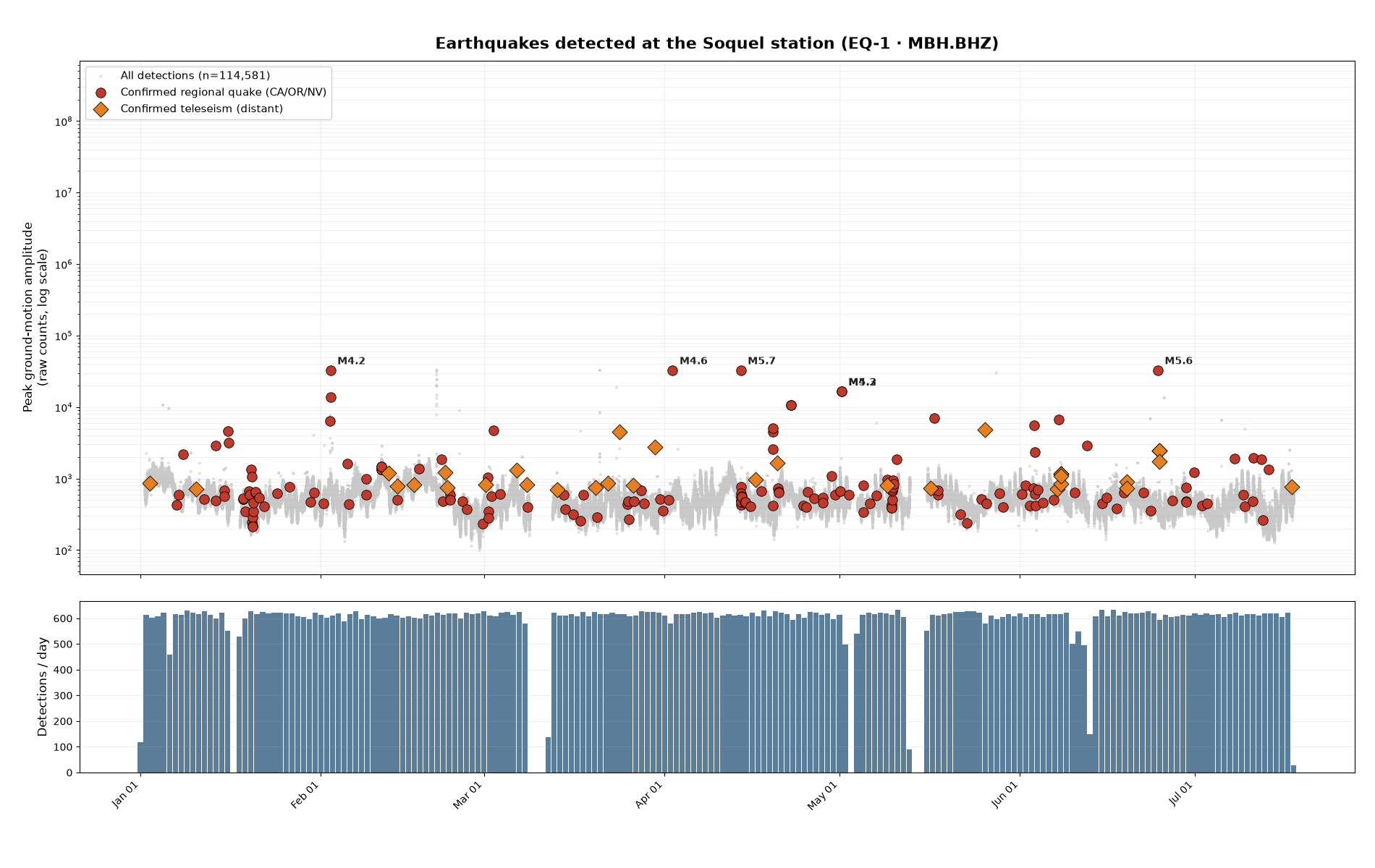
On June 24 alone, the station registered a magnitude‑5.6 quake up in Redwood Valley — then, within hours, the magnitude‑7.5 Venezuela earthquake and a magnitude‑6.9 off the coast of Japan. One homemade-lineage instrument, in one Soquel basement, feeling three corners of the Pacific in a single afternoon.