Sarah the Stegosaurus
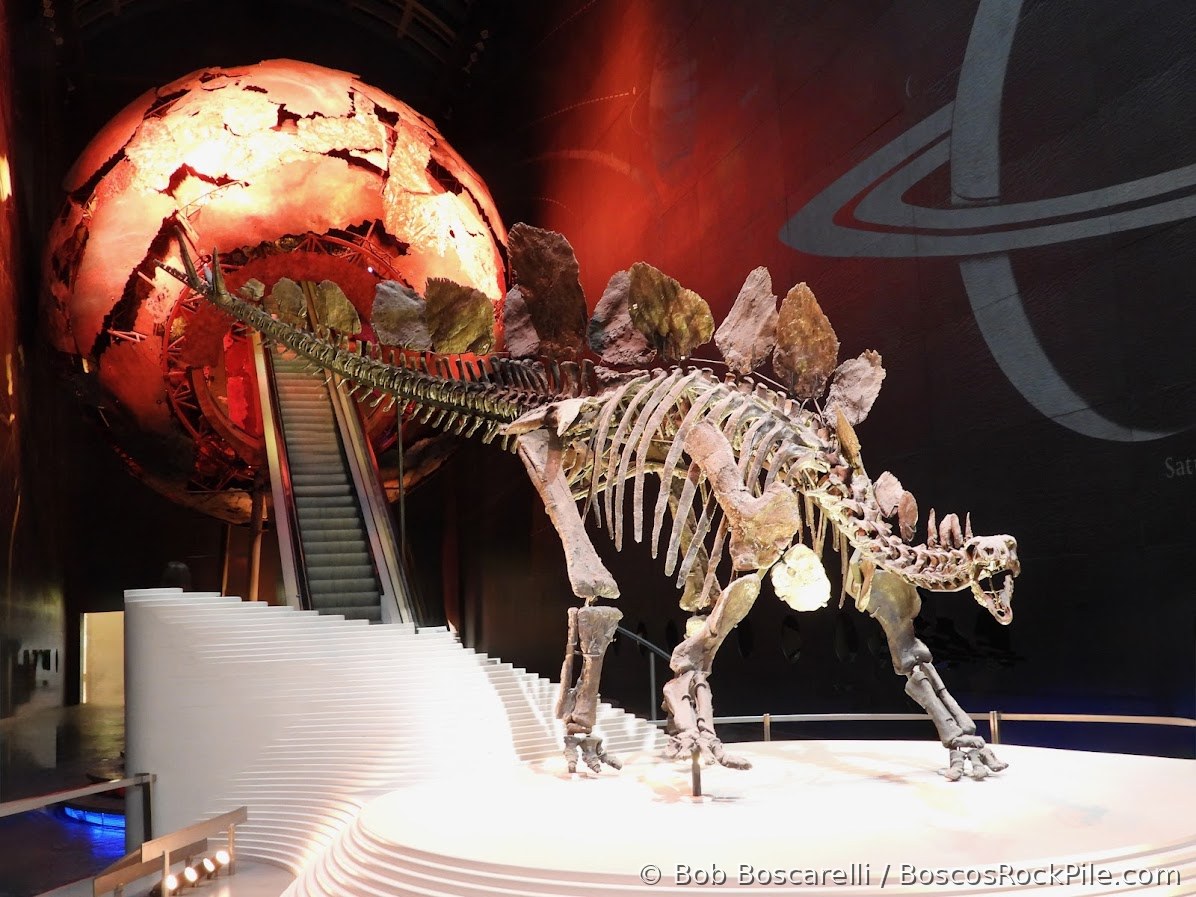
In the summer of 2007, a team working the Red Canyon Ranch outside Shell, Wyoming uncovered one of the finest Stegosaurus skeletons ever found in the Morrison Formation. That animal — named Sarah — now stands as a centerpiece exhibit at the Natural History Museum in London. This is the story of how she got there, and how Bosco’s team started the work that made it possible.
Shell, Wyoming — A Landscape Built for Dinosaurs
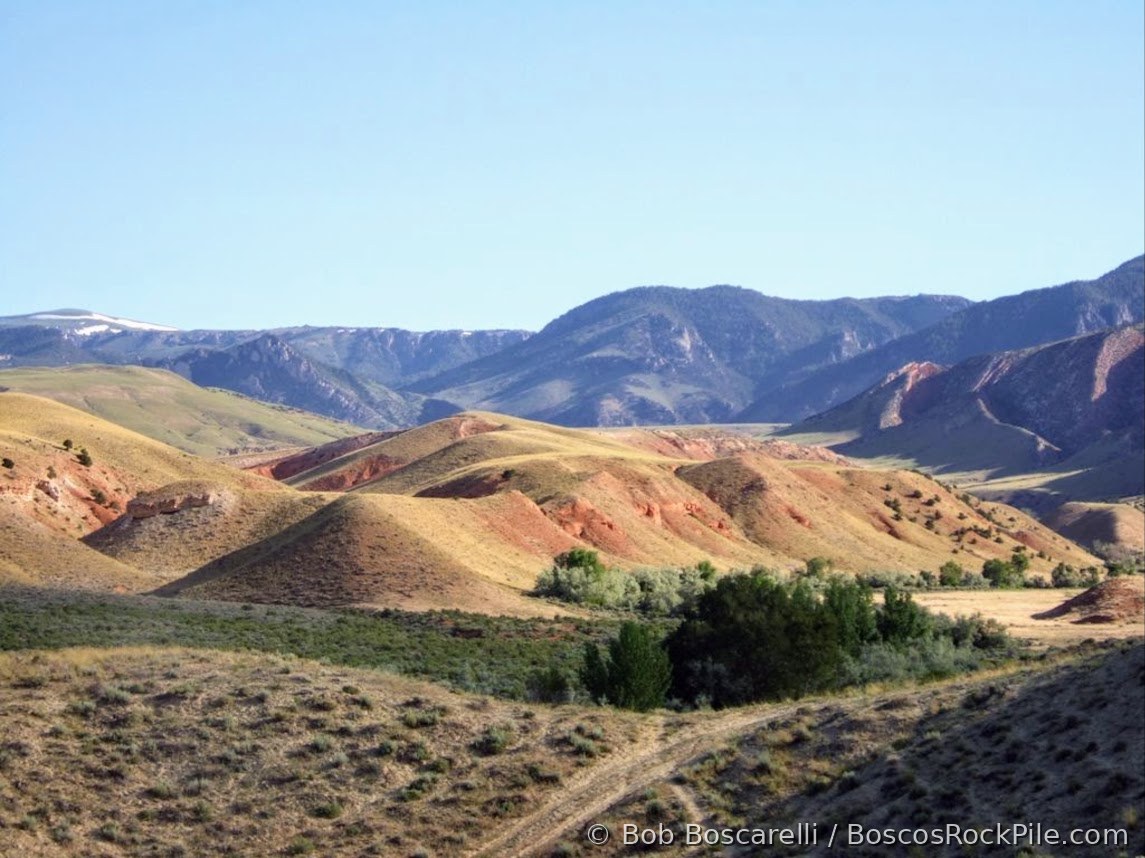
The Shell, Wyoming area sits atop the Upper Jurassic Morrison Formation — one of the richest dinosaur-bearing geological layers anywhere on Earth, roughly 150 million years old. The Bighorn Basin is comparatively understudied relative to better-known Morrison sites in Utah and Colorado, which means discoveries here carry extra scientific weight.
This is the same ground where Barnum Brown of the American Museum of Natural History ran his legendary 1934 Howe Quarry excavation — pulling an estimated 3,000–4,000 bones from at least 20 animals in a single season. Barosaurus, Camarasaurus, Diplodocus. The operation was funded by Sinclair Oil; the Sinclair green dinosaur logo traces directly to that dig. Swiss paleontologist Kirby Siber of the Sauriermuseum Aathal reopened the Howe Quarry in 1990, and in 1991 his team found Big Al — one of the most complete Allosaurus skeletons ever recovered.
Red Canyon Ranch and Bob Simon’s Operation
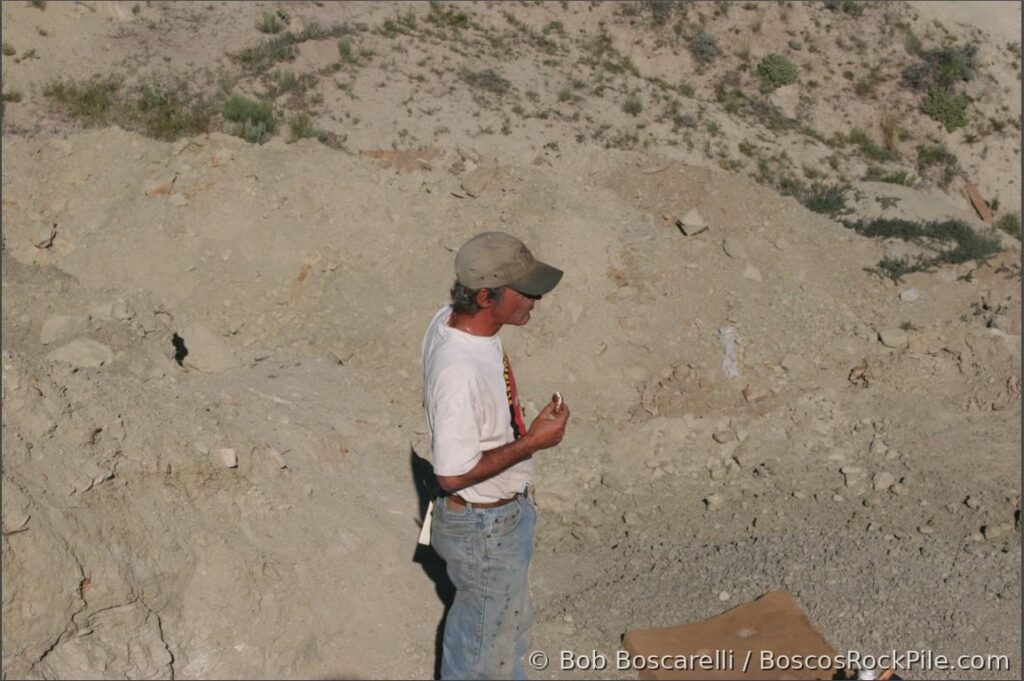
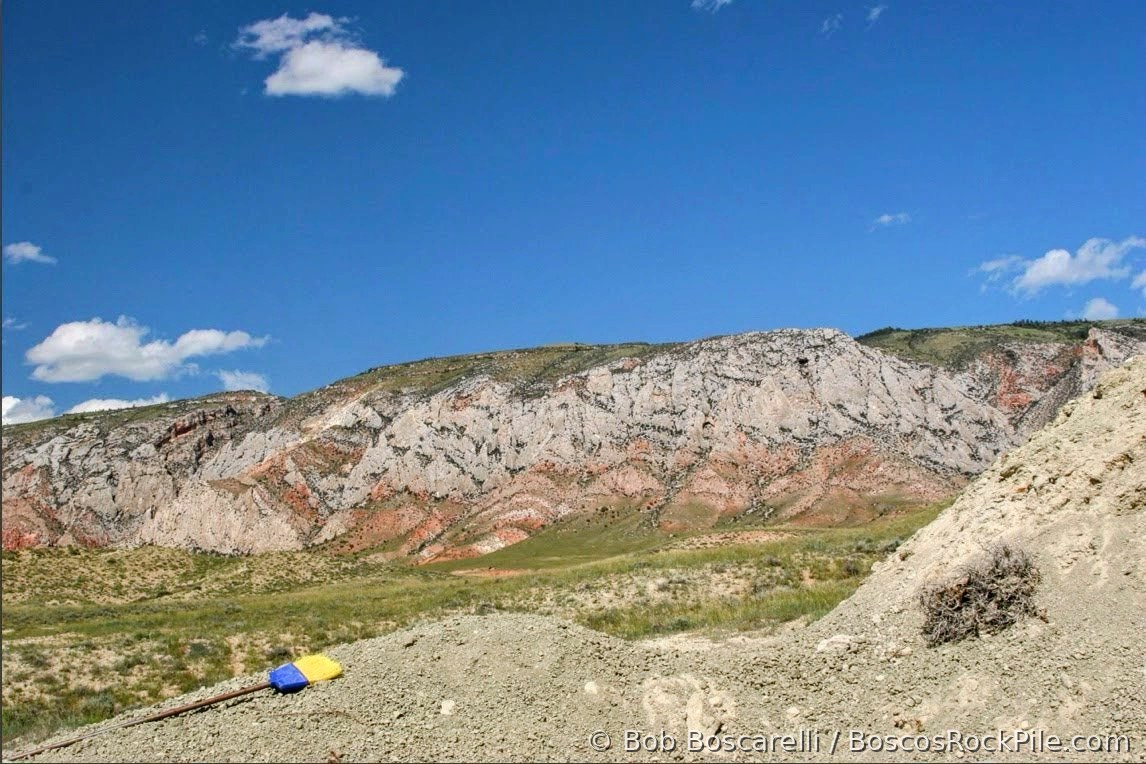
Red Canyon Ranch — owned by John Ed, a Native American landowner — became the site of a new excavation organized by Bob Simon, a retired Chevron geologist with Virginia Tech and University of Virginia degrees and president of the Virginia Dinosaur Company and Dinosaur Safaris. The site had prior dig activity, and a BLM boundary dispute had complicated operations until Bob Simon paid for an independent re-survey of the property lines.
Bosco joined the Red Canyon Ranch digs, working the site across multiple seasons. A university field school ran a concurrent dig immediately adjacent — the kind of layered, multi-team field operation that was unusual for a private ranch site. When Bosco’s team finished their season, they covered Sarah following standard practice and planned to return the following year to complete the excavation.
The Excavation
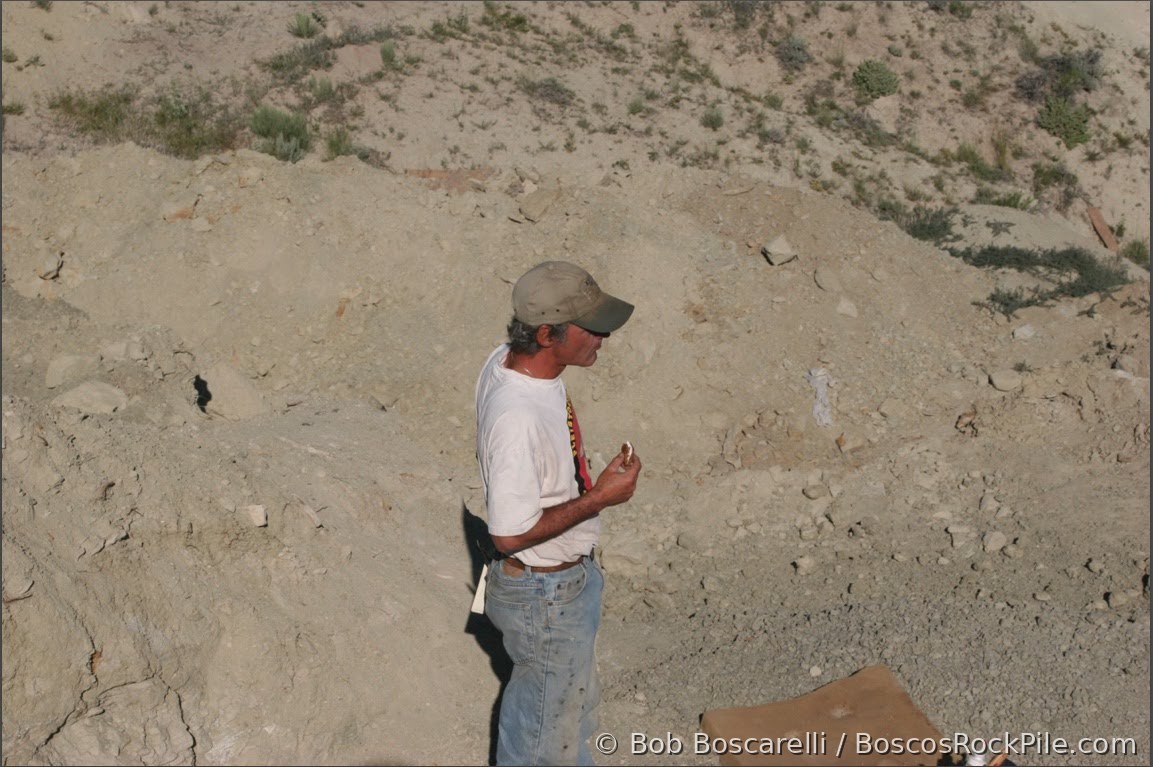
That next season brought an unexpected development. Kirby Siber’s Swiss crew had arrived in Shell to work the Howe Quarry — but were locked out before they could start, due to a BLM access dispute. With a full, experienced crew and no active site, Kirby began giving geology lectures around the Shell area. He was well known locally from previous seasons and from his Howe Quarry work.
With time on their hands and nowhere else to go, Kirby’s team stepped in and finished excavating Sarah. What Bosco’s team had begun, Kirby’s team completed — and the result was extraordinary.
Sarah’s Bones — In the Ground
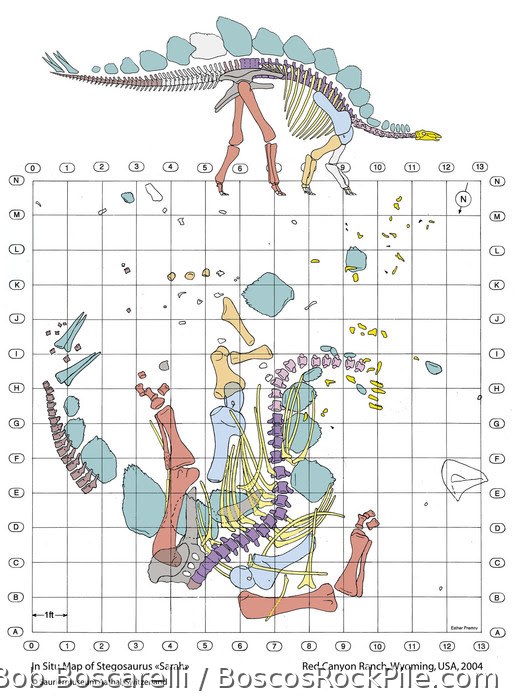
The full-bed view tells the story immediately: Sarah was articulated, meaning the bones were still in their original anatomical positions when found. Articulated skeletons are relatively rare — most dinosaur finds are scattered and fragmentary. An articulated stegosaur of this completeness was immediately recognized as scientifically significant.
The skeleton preserves the characteristic Stegosaurus anatomy: the double row of vertical dermal plates along the spine, the paired thagomizer spikes at the tail end, and the four-limbed stance. Sarah’s excellent preservation and completeness would eventually make her one of the most studied Stegosaurus specimens in the world.
From Shell Wyoming to London
After the excavation, Kirby’s team shipped Sarah to the Sauriermuseum Aathal in Switzerland for preparation and display. From there, a cast of Sarah was made at Peter Larson’s Black Hills Institute of Geological Research in Hill City, South Dakota.
That cast appeared at a gem and mineral show in Arizona — Phoenix or Tucson. Dr. Paul Barrett of the Natural History Museum London saw the model at the show, traced it back to the original specimen, and began the acquisition process. Sarah is now a centerpiece exhibit at the Natural History Museum, London.
Bosco and Dani later visited the Natural History Museum London after Sarah went on display. Dr. Barrett — who had discovered and acquired Sarah — took them to lunch at the museum. During that visit it emerged that Dr. Barrett was unaware the stegosaurus had originally been named Sarah by the dig team. The provenance story connecting Sarah to Shell Wyoming, Bob Simon’s ranch, and Bosco’s excavation team is not well documented in official records. This archive is the primary record.
Photograph and License
All field photography on this page is © Bob Boscarelli / BoscosRockPile.com. For licensing inquiries — research, publication, educational use — please use the contact page.