Unearthing the Past with Paleontology
The paleontology here is field paleontology — the patient work of getting a 150-million-year-old animal out of the ground without losing the story it carries.
This archive documents direct participation in excavations across Wyoming’s Morrison Formation. It preserves the full recovery sequence — prospecting, excavation, stabilization, quarry mapping, plaster jacketing, preparation, and documentation — rather than generalized dinosaur facts. The record is about how the specimens came out of the rock, and the quarry context they came from. Field paleontology is mostly patience and method. A specimen is prospected on the surface, then exposed a few millimeters at a time; fragile bone is stabilized with consolidant as it appears; the quarry floor is mapped so the animal’s articulation is recorded before anything moves; and each element is jacketed in plaster and burlap for the trip to the lab. None of it is fast, and all of it is documentation as much as digging — which is exactly what this archive preserves.
Three excavations anchor the collection:
- Apatosaurus “Bertha” — Como Bluff, with Dr. Robert T. Bakker (1994–97)
- Sarah / Sophie the Stegosaurus — Shell, Wyoming (2003–2004), later displayed at the Natural History Museum, London
- Camarasaurus — Red Canyon Ranch, Shell, Wyoming (2007), later transferred to the Fukui Prefectural Dinosaur Museum, Japan
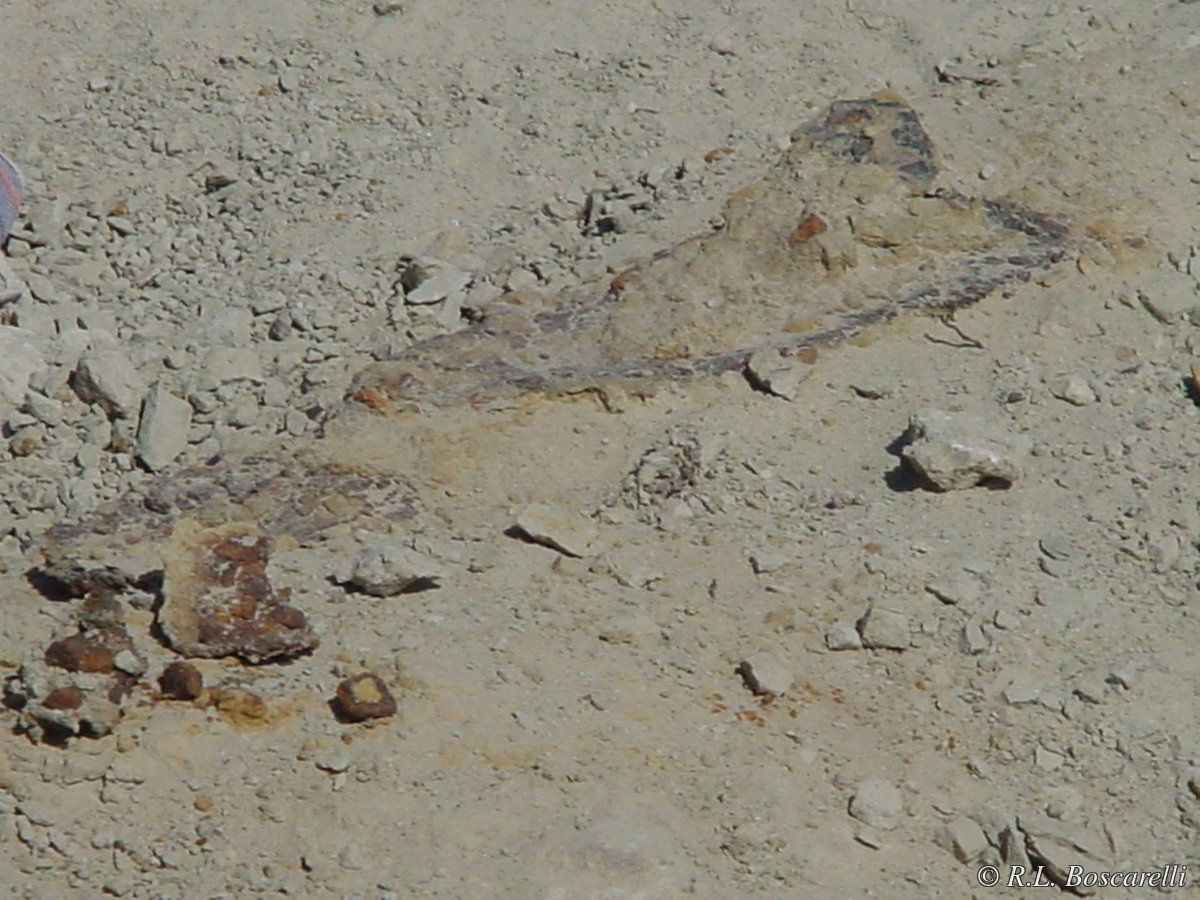
This work was done alongside some of the field’s most recognized figures — Dr. Robert T. Bakker, Dr. Paul Sereno, and others (see Rock Stars) — but the focus here is the fieldwork itself: the methods, the quarry context, and the recovery.
All three animals are Late Jurassic. They were long gone — by some 85 million years — before the asteroid and the Deccan volcanoes ended the age of dinosaurs; what killed the dinosaurs is its own page.
Specimens from the collection
A couple of fossils from Bosco’s own cabinet, each shown with a scale ruler.
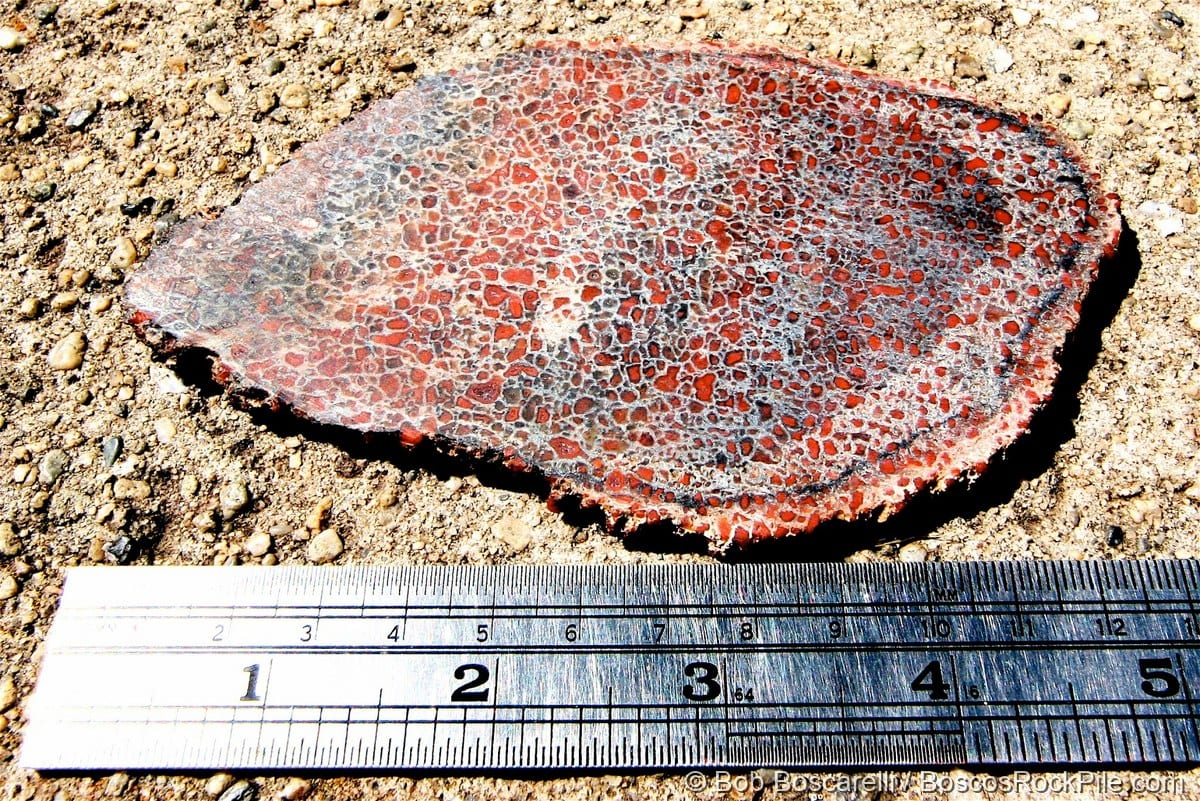
Agatized dinosaur bone (“gembone”) — a cut, polished slab showing the fossilized cellular structure of dinosaur bone, the marrow cavities filled with red agate. Taxon indeterminate from a slab.
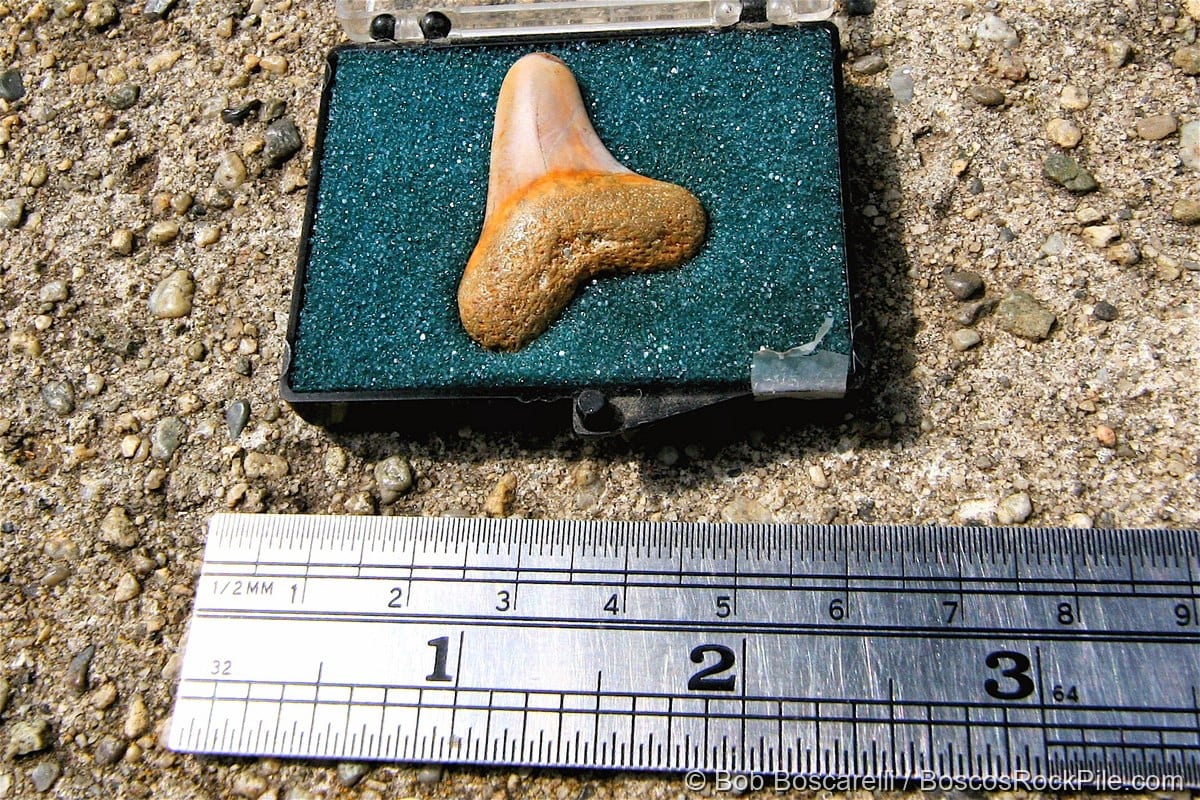
Fossil shark tooth — crown and root, collected in the Santa Margarita Formation (Miocene) at Scotts Valley, California.
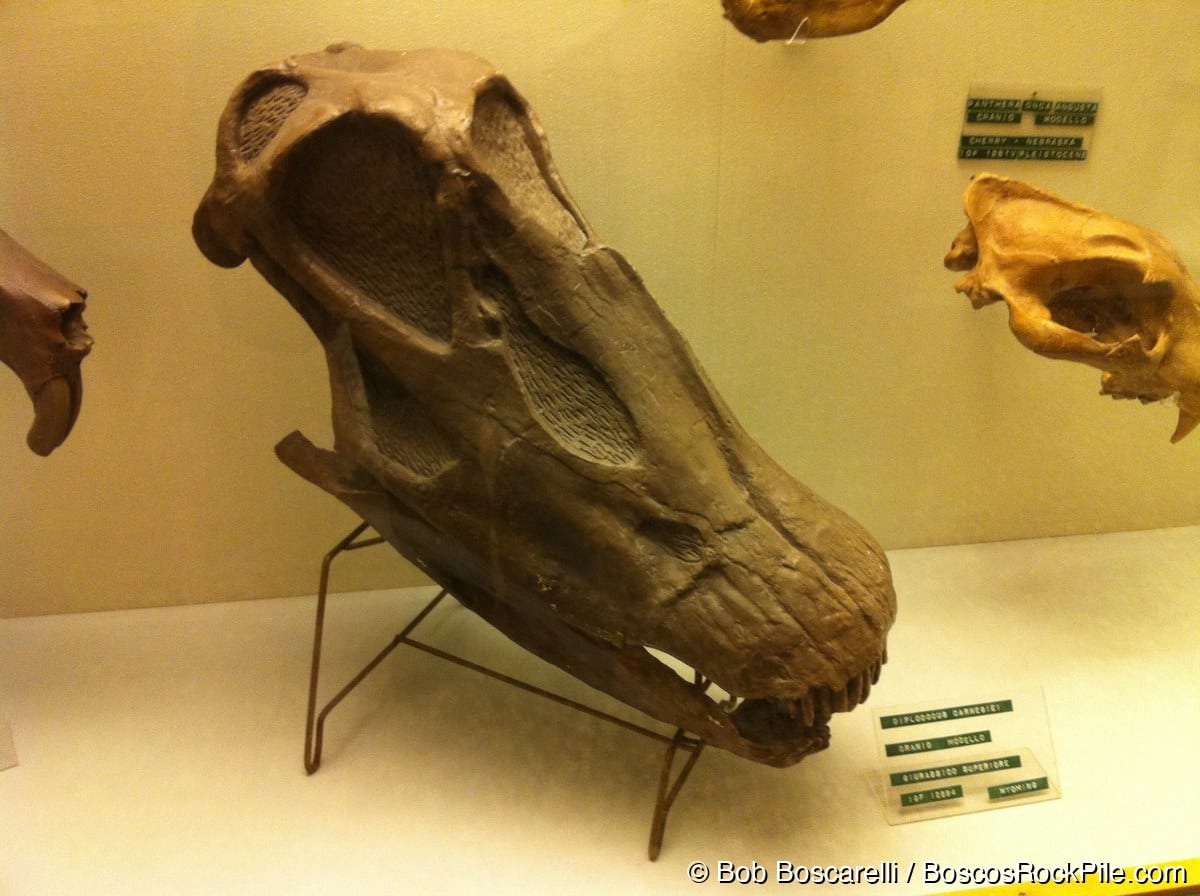
Morrison dinosaurs travel further than most people realize. In a display case at the University of Florence’s paleontology museum in Italy sits a cast of the Diplodocus carnegii skull — the Carnegie Museum’s celebrated Wyoming sauropod — its label reading Giurassico Superiore · Wyoming (Upper Jurassic, Wyoming), no. IGF 12884. The collection is so far off the beaten path that even our travel guide didn’t know it was there, and the only person on hand was minding the gift shop.
Handmade at the RockPile
Handmade sterling-silver jewelry, cut and set at the bench by the same hands that work the quarry. Every piece is one of a kind; when it is gone there is no second one. No vertebrate fossil material is ever sold.
See the work at cyberzoic.com → The silversmithing story →Image Licensing & Research Inquiries
Specimens and field photography from this archive are available for research, publication, and museum use. Get in touch to discuss licensing or collaboration.
Start a licensing inquiry