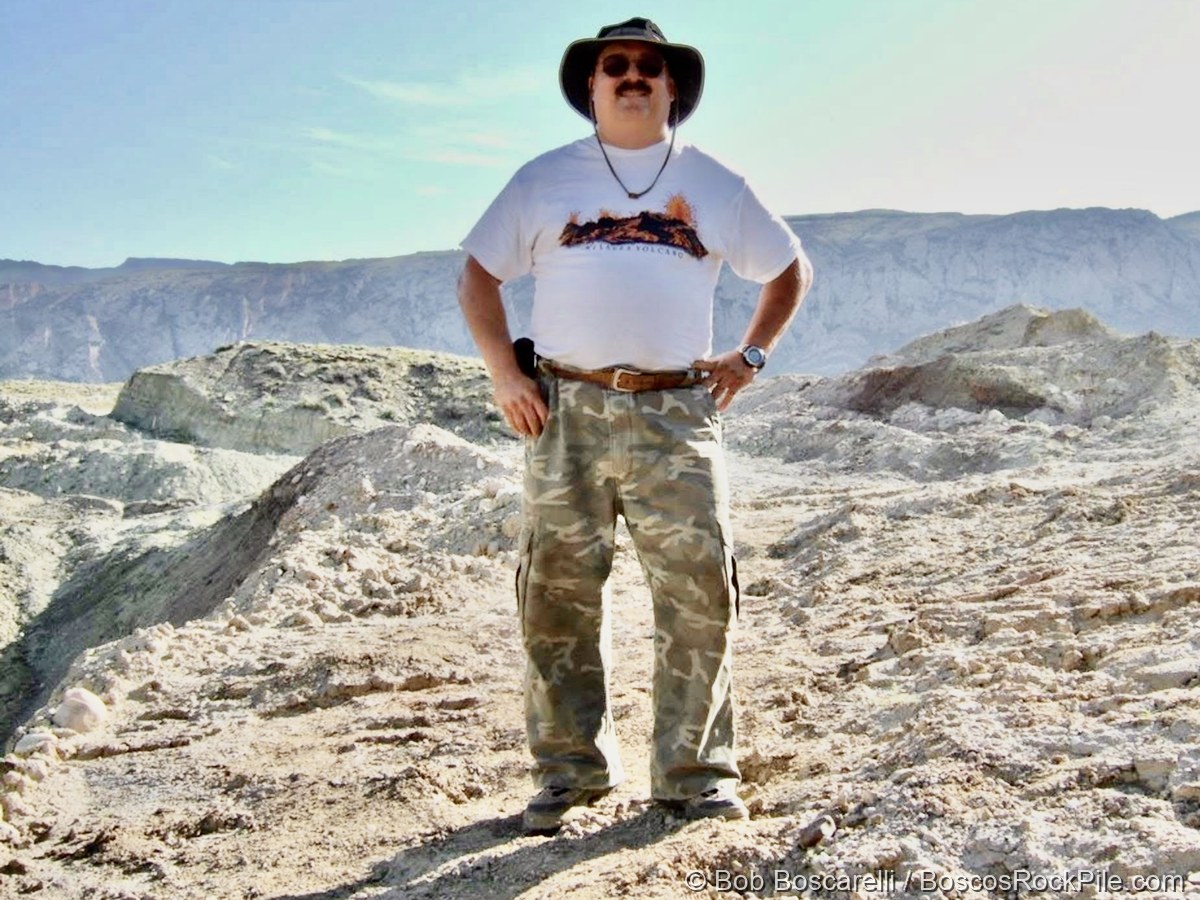
Working a site like this is a combination of painstaking precision and long field days in the Wyoming sun. This photograph captures a quiet moment at the quarry edge with Don — the kind of downtime that happens between excavation sessions when you’re waiting for consolidant to dry.
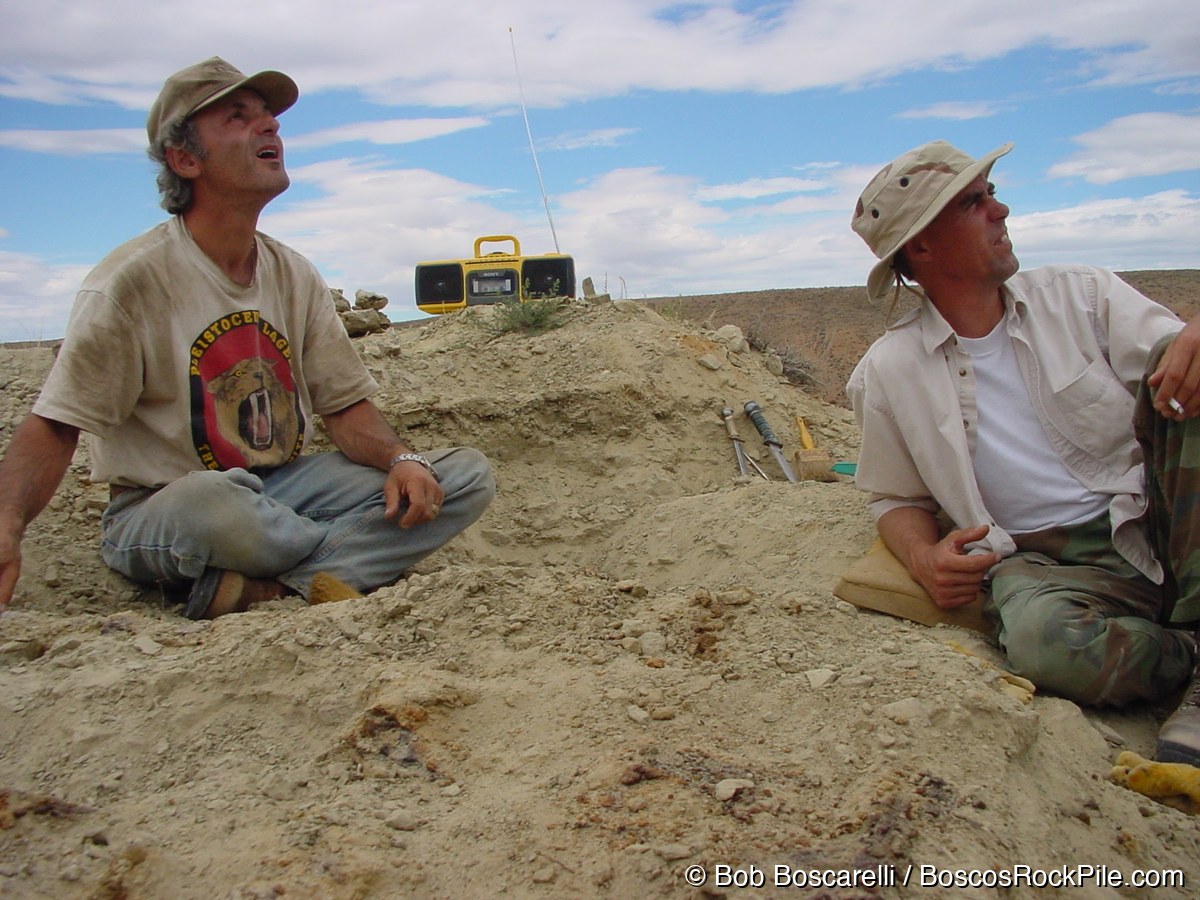
Paul Sereno — National Geographic Explorer-in-Residence, University of Chicago paleontologist, and one of the most prolific fossil hunters of his generation — was among the scientists who visited the Sophie excavation. This photograph was taken during his visit to the site.
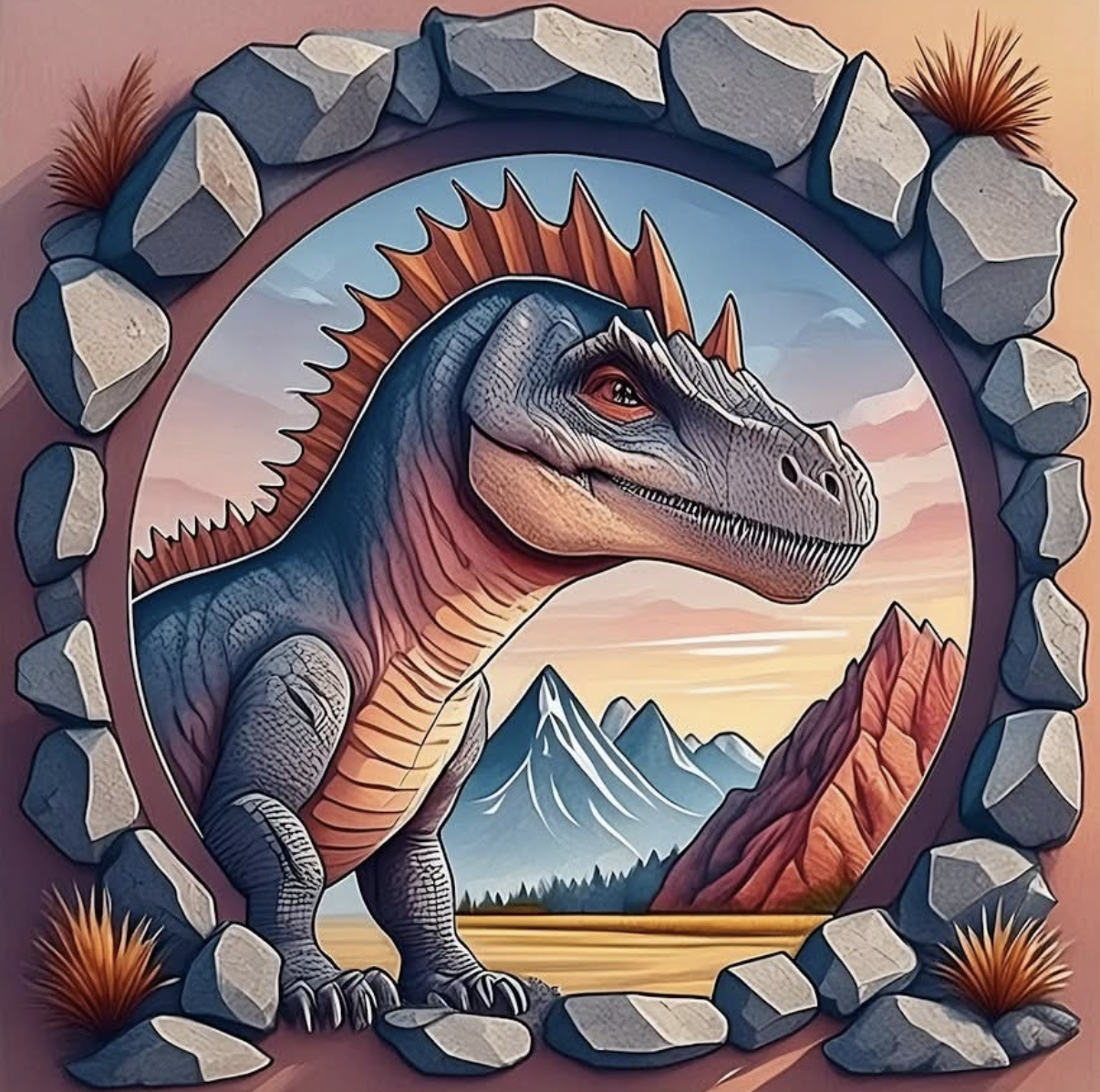
Stegosaurus was a large herbivorous dinosaur of the Late Jurassic period, living approximately 155–150 million years ago. The genus is immediately recognizable by its distinctive double row of tall, diamond-shaped dorsal plates running along the spine and the paired spikes at the end of the tail — the formidable “thagomizer.” Adults could reach 9 meters in length and weigh up to 5 tons.
Complete, articulated Stegosaurus specimens are exceptionally rare. Most museum mounts are composites assembled from the bones of multiple individuals. Sophie represents one of the most scientifically valuable stegosaur finds in the history of vertebrate palaeontology. The Morrison Formation site where Sophie was recovered belongs to the same geological unit that produced virtually all of the landmark sauropod and theropod discoveries of the American West — including Camarasaurus, Diplodocus, Allosaurus, and Brachiosaurus.
All photographs on this page are my own field documentation images from the 2007 Wyoming excavation. High-resolution archival files are available for scientific publications, museum exhibition, documentary production, and fine art printing.
For licensing inquiries or research access, please use the contact form. Include “Sophie Stegosaurus” in your subject line and specify intended use and resolution requirements.