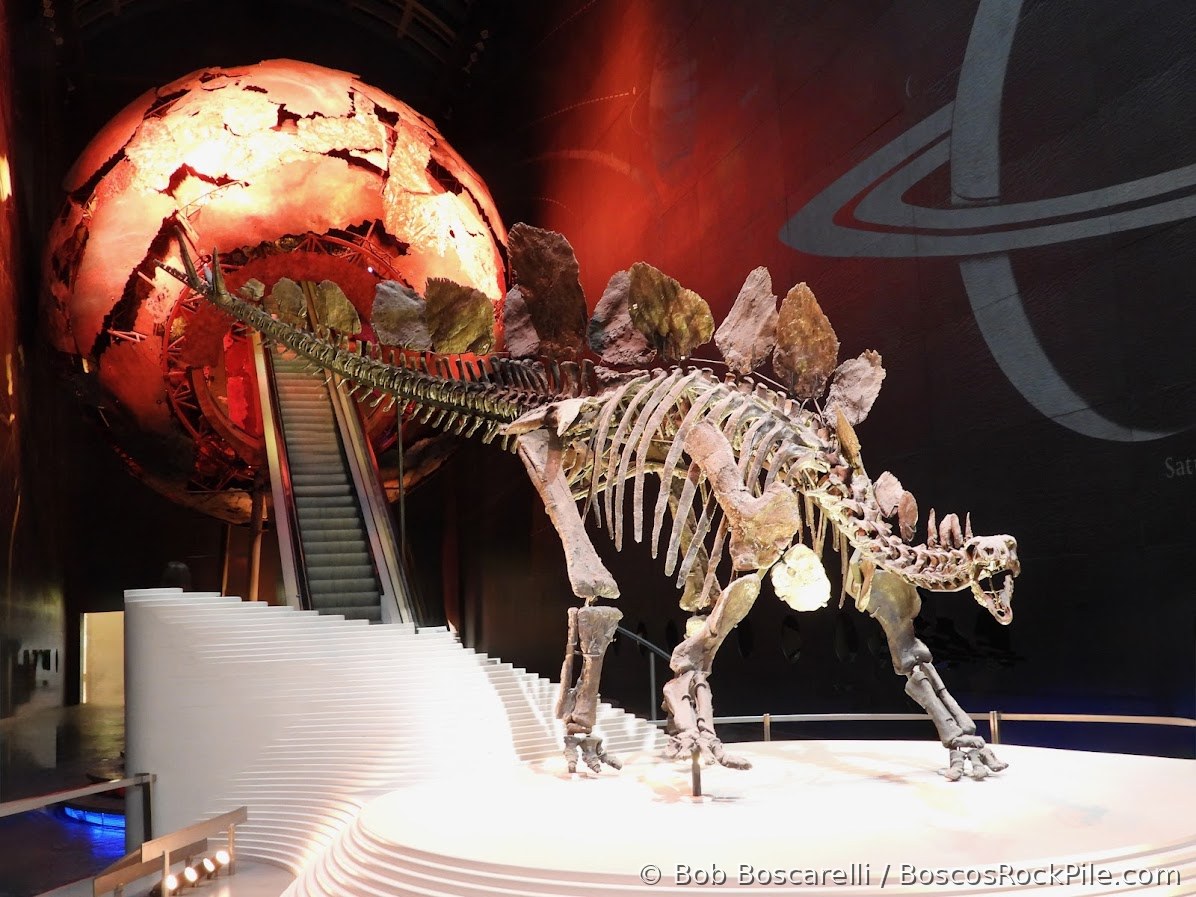
One of the finest Stegosaurus skeletons ever recovered from the Morrison Formation — first seen in the summer of 2004, fully excavated over the seasons that followed, and now on permanent display at the Natural History Museum in London. She was named Sarah by the team that found her, after the daughter of John Ed, the Native American landowner of Red Canyon Ranch near Shell, Wyoming. When a London benefactor funded her acquisition by the Natural History Museum, she was renamed Sophie after his daughter. This is her full story.
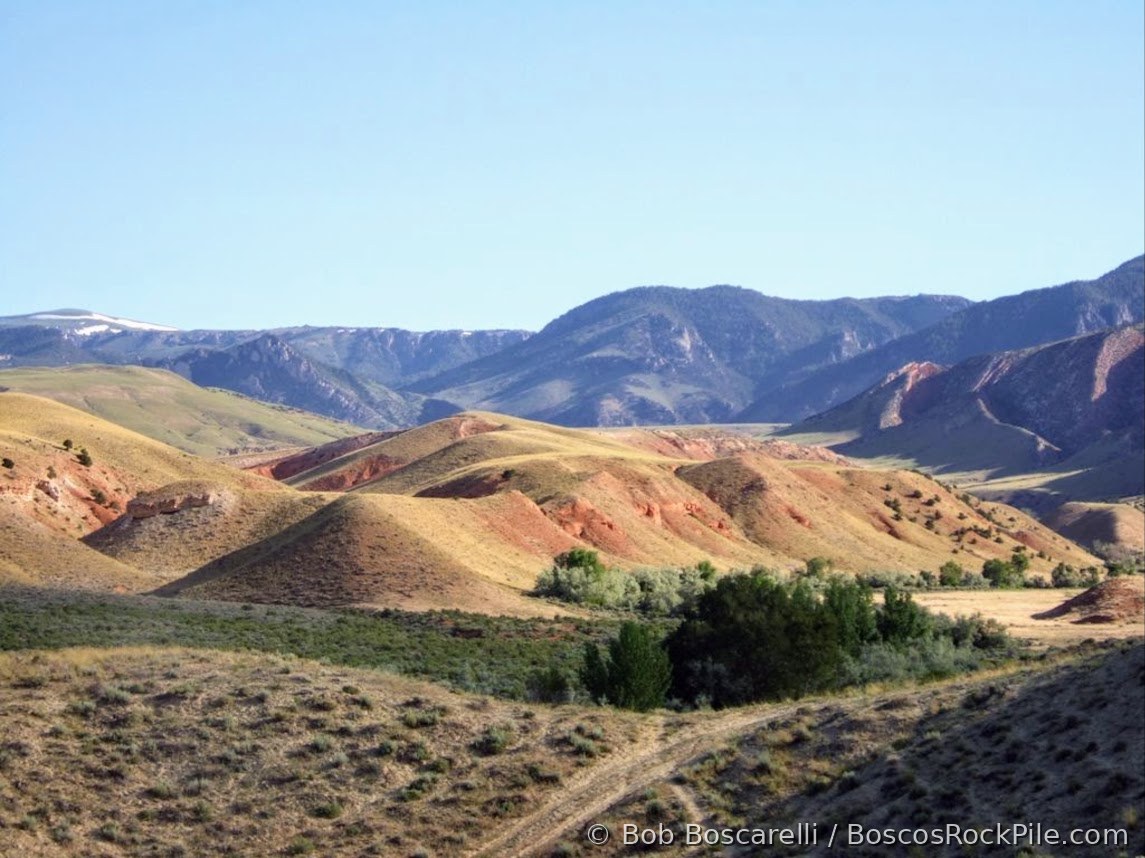
The Shell, Wyoming area sits atop the Upper Jurassic Morrison Formation — one of the richest dinosaur-bearing geological layers anywhere on Earth, roughly 150 million years old. The Bighorn Basin is comparatively understudied relative to better-known Morrison sites in Utah and Colorado, which means discoveries here carry extra scientific weight. Immediately below the Morrison lies the Sundance Formation — the marine sequence that preceded the Morrison floodplain — where belemnites, gryphaea, and other Late Jurassic marine invertebrates weather out of the same hillsides that yield dinosaur bones just a few meters higher.
This is the same ground where Barnum Brown of the American Museum of Natural History ran his legendary 1934 Howe Quarry excavation — pulling an estimated 3,000–4,000 bones from at least 20 animals in a single season. Swiss paleontologist Kirby Siber of the Sauriermuseum Aathal reopened the Howe Quarry in 1990, and in 1991 his team found Big Al — one of the most complete Allosaurus skeletons ever recovered.
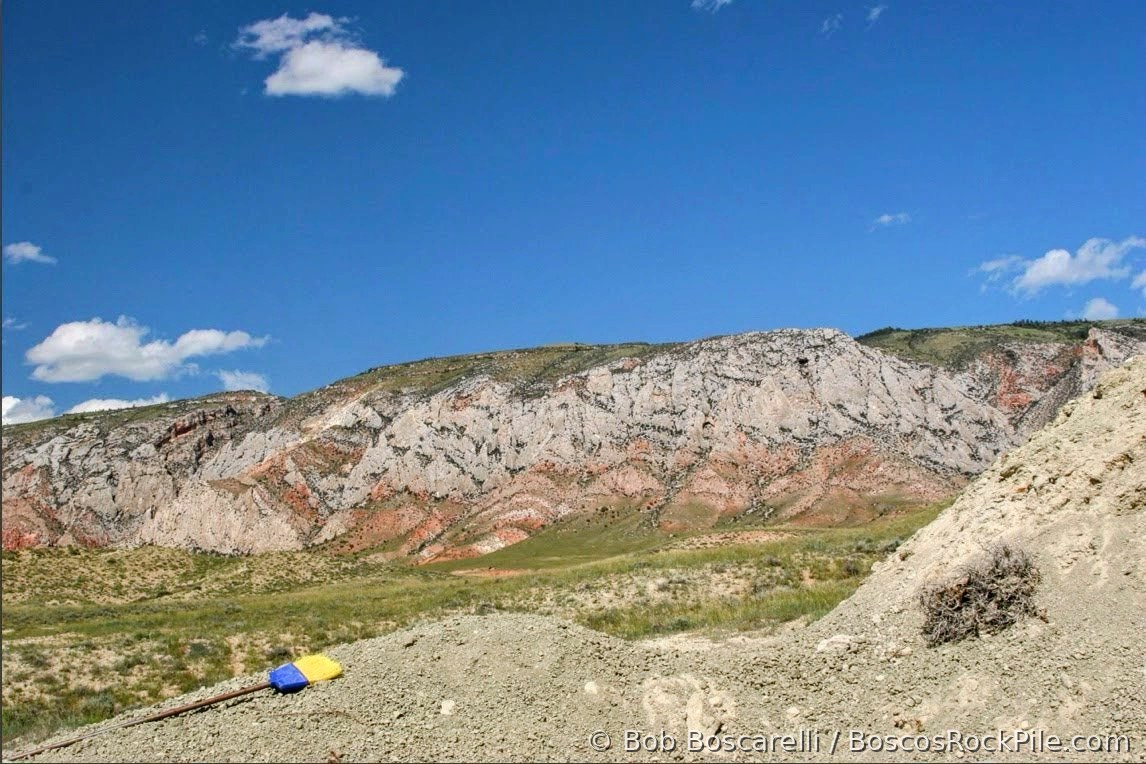
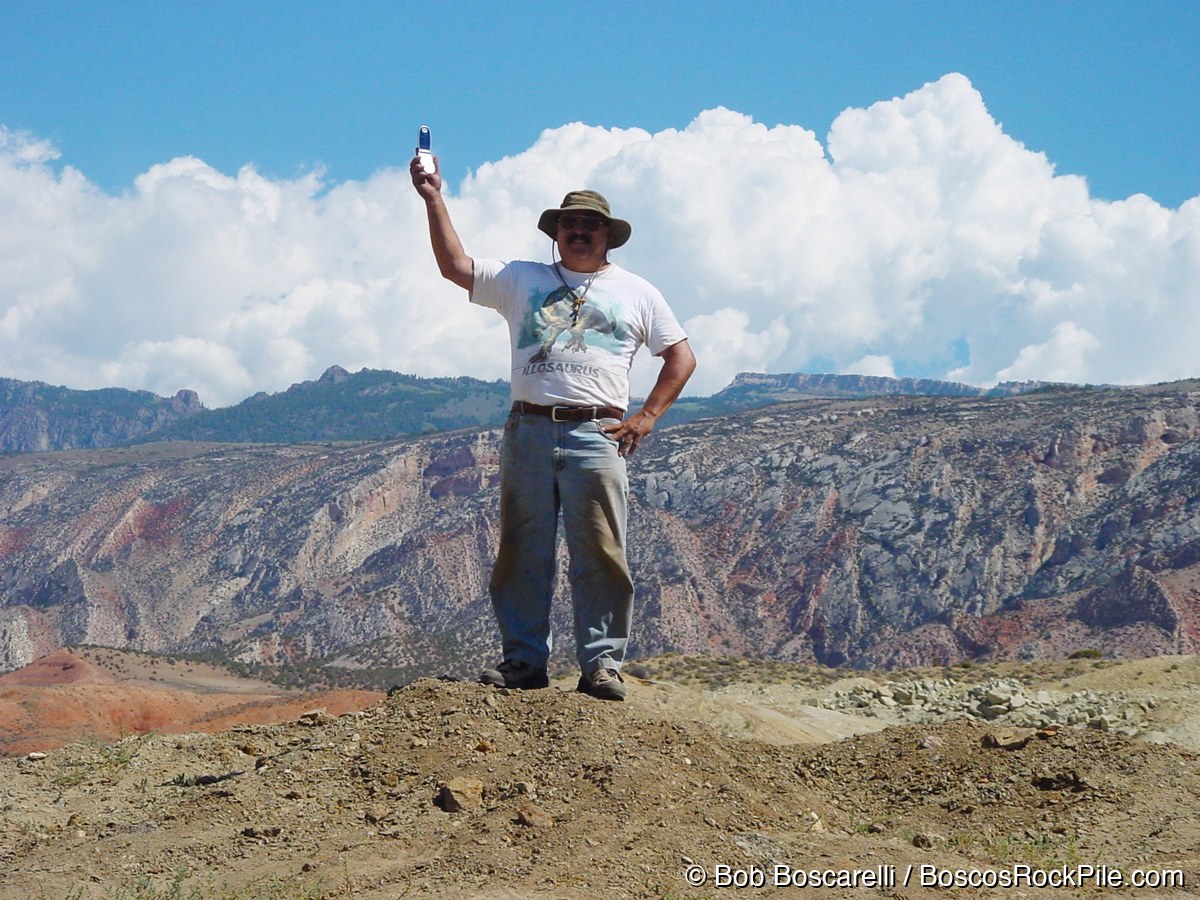
Red Canyon Ranch — owned by John Ed, a Native American landowner — became the site of a new excavation organized by Bob Simon, a retired Chevron geologist and president of the Virginia Dinosaur Company and Dinosaur Safaris. A BLM boundary dispute had complicated access to the site until Bob Simon paid for an independent survey of the property lines. Bosco joined the Red Canyon Ranch digs, working the site across multiple seasons alongside a university field school running a concurrent dig immediately adjacent.
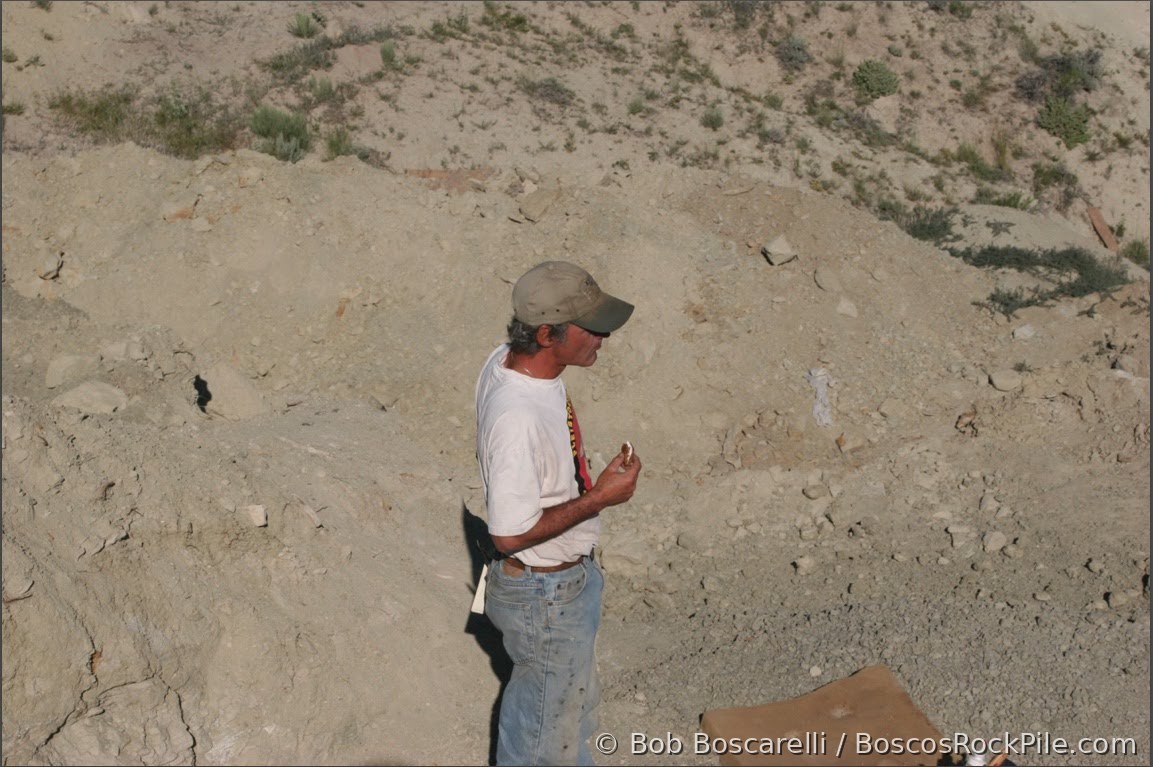
The first bones broke the surface in the summer of 2004 — plates, tail spines, and limb bones lying in the pale grey Morrison Formation matrix exactly where they had settled 155 million years ago. The photographs below are Bosco’s own field documentation from those first days of discovery. At the time, none of us knew how complete the skeleton would turn out to be.
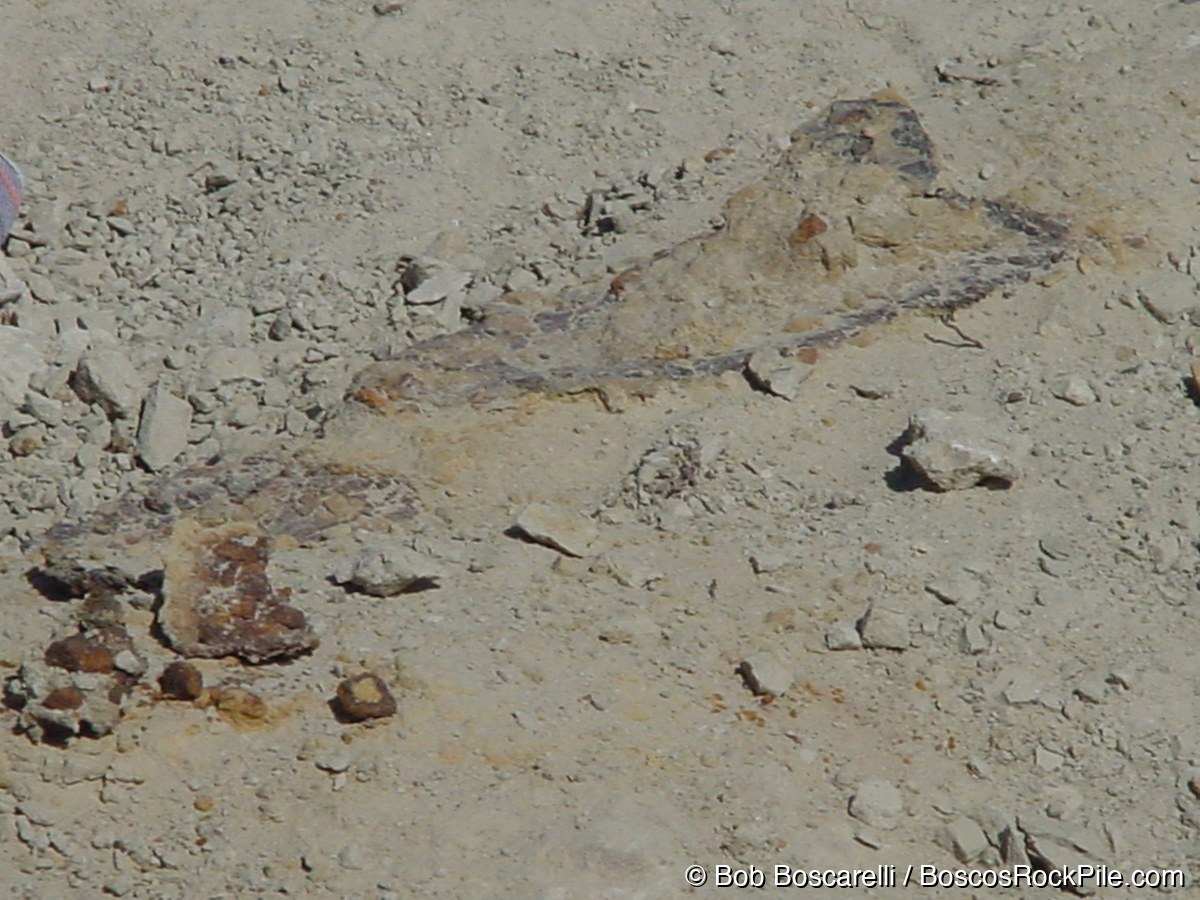
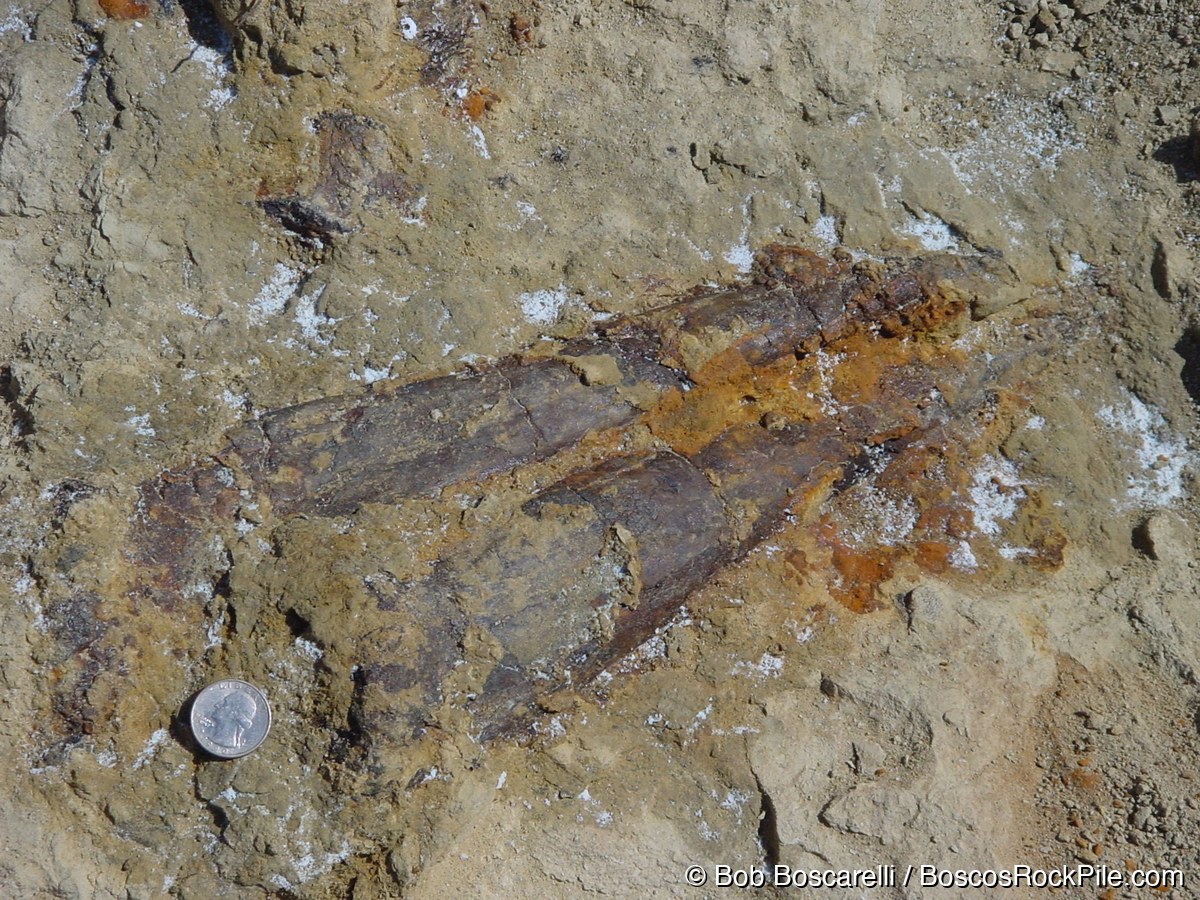
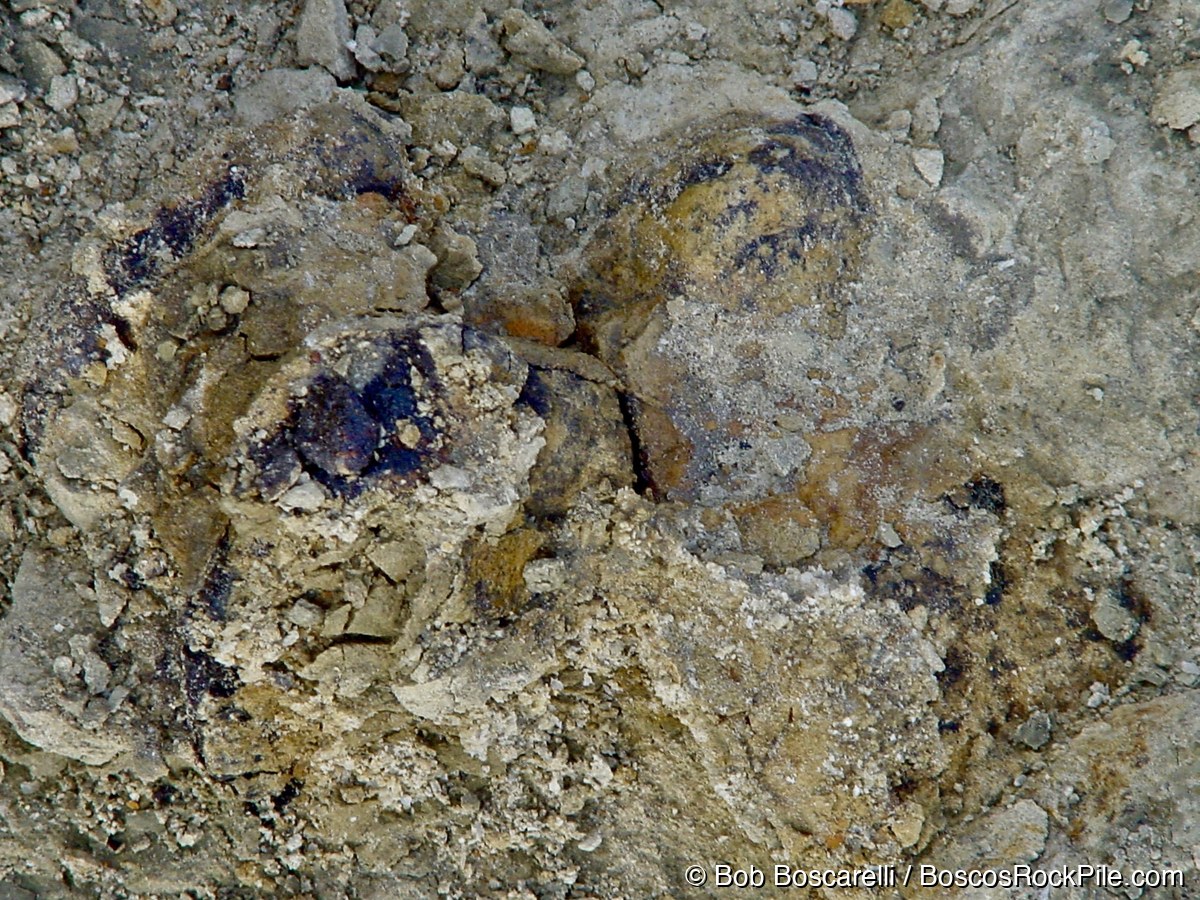
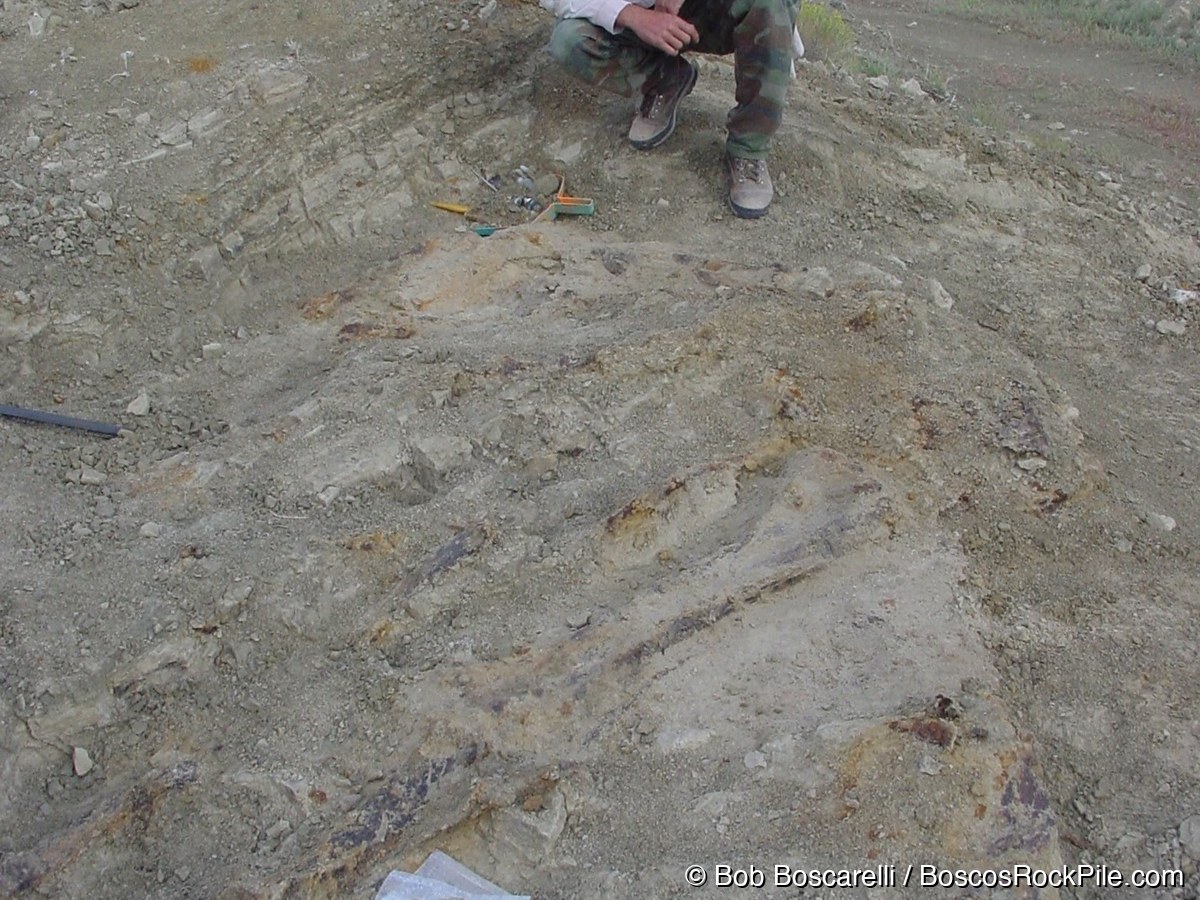
When Bosco’s team finished their season, they covered Sarah following standard practice and planned to return the following year to complete the excavation. That next season brought an unexpected development: Kirby Siber’s Swiss crew had arrived in Shell to work the Howe Quarry — but were locked out before they could start, due to a BLM access dispute. With a full, experienced crew and nowhere else to go, Kirby’s team stepped in and finished excavating Sarah. What Bosco’s team had begun, Kirby’s team completed — and the result was extraordinary.
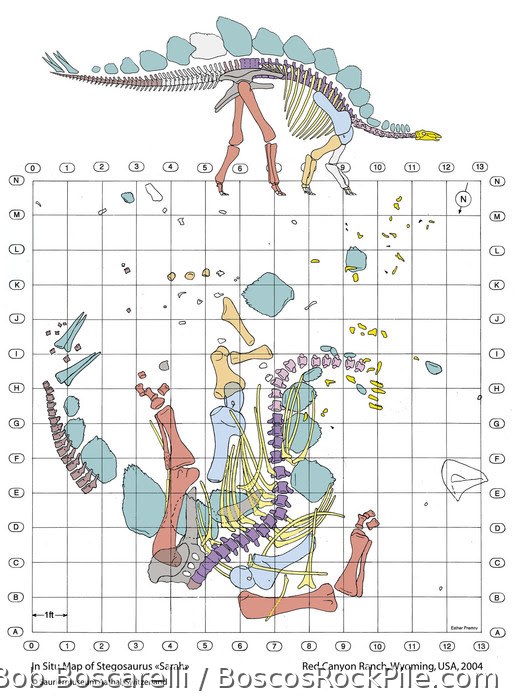
The full-bed view tells the story immediately: Sarah was articulated — the bones still in their original anatomical positions. Articulated skeletons are relatively rare; most dinosaur finds are scattered and fragmentary. An articulated stegosaur of this completeness was immediately recognized as scientifically significant.
Paul Sereno — National Geographic Explorer-in-Residence and University of Chicago paleontologist — visited the Sarah dig. He would return to Bosco’s Wyoming fieldwork again at the 2007 Camarasaurus excavation.
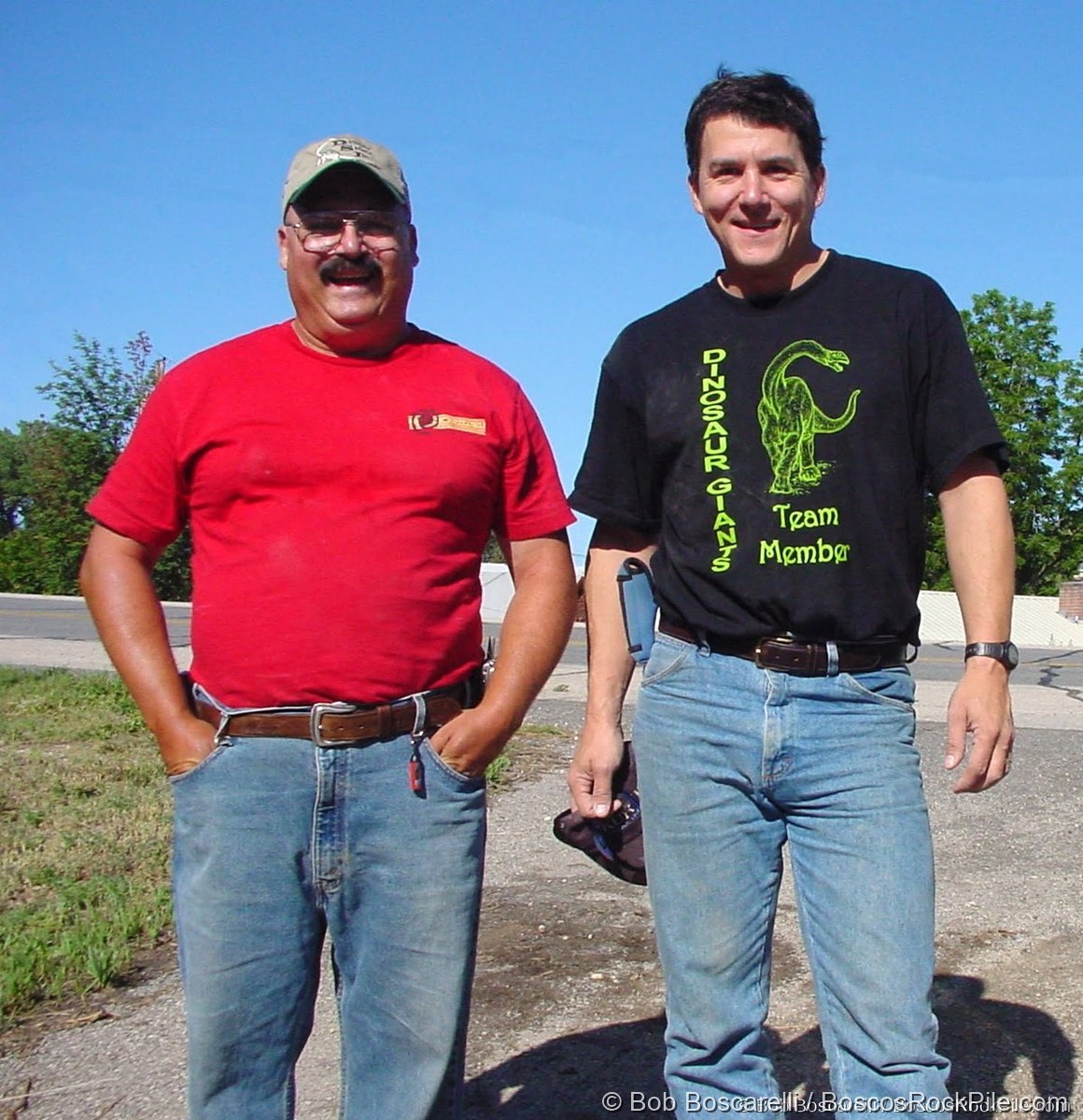
The team named her Sarah — after the daughter of John Ed, the Native American landowner of Red Canyon Ranch whose land they were working. It was a gesture of respect and gratitude to the man who had made the dig possible.
After Kirby Siber’s team completed the excavation, the specimen was shipped to the Sauriermuseum Aathal in Switzerland for preparation. From there, a cast was made at Peter Larson’s Black Hills Institute of Geological Research in Hill City, South Dakota. That cast appeared at a gem and mineral show in Arizona. Dr. Paul Barrett of the Natural History Museum London saw the cast at the show, traced it back to the original specimen, and began the acquisition process.
When a London benefactor put up the funds for the acquisition, the Natural History Museum renamed her Sophie — after his daughter. The name Sarah, and the story of how she got it, were not part of the official record that traveled with the specimen. Dr. Barrett — who had found and acquired her — was unaware of it when Bosco and Dani visited the museum after she went on display and Dr. Barrett took them to lunch.
Two daughters. Two continents. One remarkable animal from the Morrison Formation. This archive holds the Wyoming half of her story — the part the museum wall doesn’t tell.
Stegosaurus was a large herbivorous dinosaur of the Late Jurassic, living approximately 155–150 million years ago. The genus is immediately recognizable by its distinctive double row of tall, diamond-shaped dorsal plates running along the spine and the paired spikes at the end of the tail — the formidable “thagomizer.” Adults could reach 9 meters in length and weigh up to 5 tons.
Complete, articulated Stegosaurus specimens are exceptionally rare. Most museum mounts are composites assembled from the bones of multiple individuals. Sarah represents one of the most scientifically valuable stegosaur finds in the history of vertebrate palaeontology — over 90% complete, in near-perfect articulation, from the same Morrison Formation bone beds that produced Camarasaurus, Diplodocus, Allosaurus, and Brachiosaurus.
All photographs on this page are original field documentation images taken by Bob Boscarelli — from the 2004 initial discovery through the full excavation seasons at Shell, Wyoming. These are among the earliest field photographs of the specimen now displayed at the Natural History Museum, London as Sophie. High-resolution archival files are available for scientific publications, museum exhibition, documentary production, and fine art printing.
For licensing inquiries or research access, please use the contact form. Include “Sarah Stegosaurus — Shell Wyoming” in your subject line and specify intended use and resolution requirements.