Volcanoes
Volcanoes are one of Earth’s most dramatic forces — the surface expression of plate tectonics, where molten rock from deep below breaks through the crust. They build mountains, islands, and whole plateaus, and they have shaped landscapes across the American West.
Types of volcanoes
Not all volcanoes look or behave alike:
- Shield volcanoes — broad, gently sloping mountains built by runny basalt lava (Hawaii’s Mauna Loa and Kīlauea).
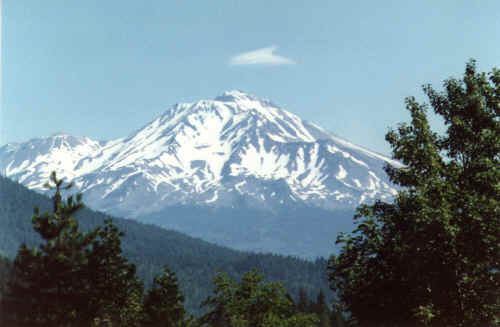
- Stratovolcanoes — the classic steep, cone-shaped peaks, built of alternating lava and ash and capable of violent eruptions. California’s Mount Shasta is one.
- Cinder cones — small, steep cones built from blobs of lava blasted into the air.
Lava flows
Geologists borrow Hawaiian words for the two main textures of basaltic lava: aʻa (“ah-ah”), a jagged, rubbly flow that is brutal to cross, and pāhoehoe, a smoother, ropy flow. Both are the same lava — what differs is how fast it moves and cools.
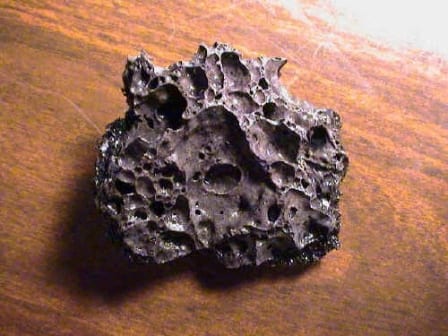 Aʻa lava flow
Volcanic rock
When lava and ash cool, they harden into igneous rock: dark, fine-grained basalt; glassy obsidian; and pumice — lava so full of gas bubbles that it can float on water.
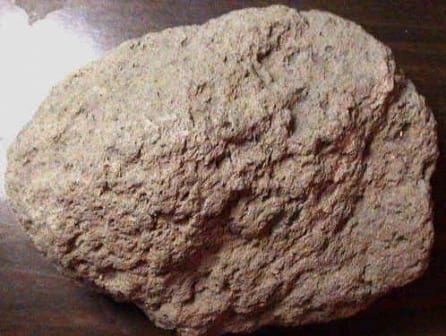 Pumice — frothy, glassy volcanic rock