Cyberzoic — Silversmithing
The same hands that lift bone out of the Morrison Formation cut stone and raise silver. The two habits are more alike than they look — you are reading a material, working slowly, and trying not to break the thing you came for.
Cyberzoic is the silversmithing side of that. Every piece is one of a kind, made start to finish by me: forging, fabrication, lapidary, sawing, patination.
Burtis Blue
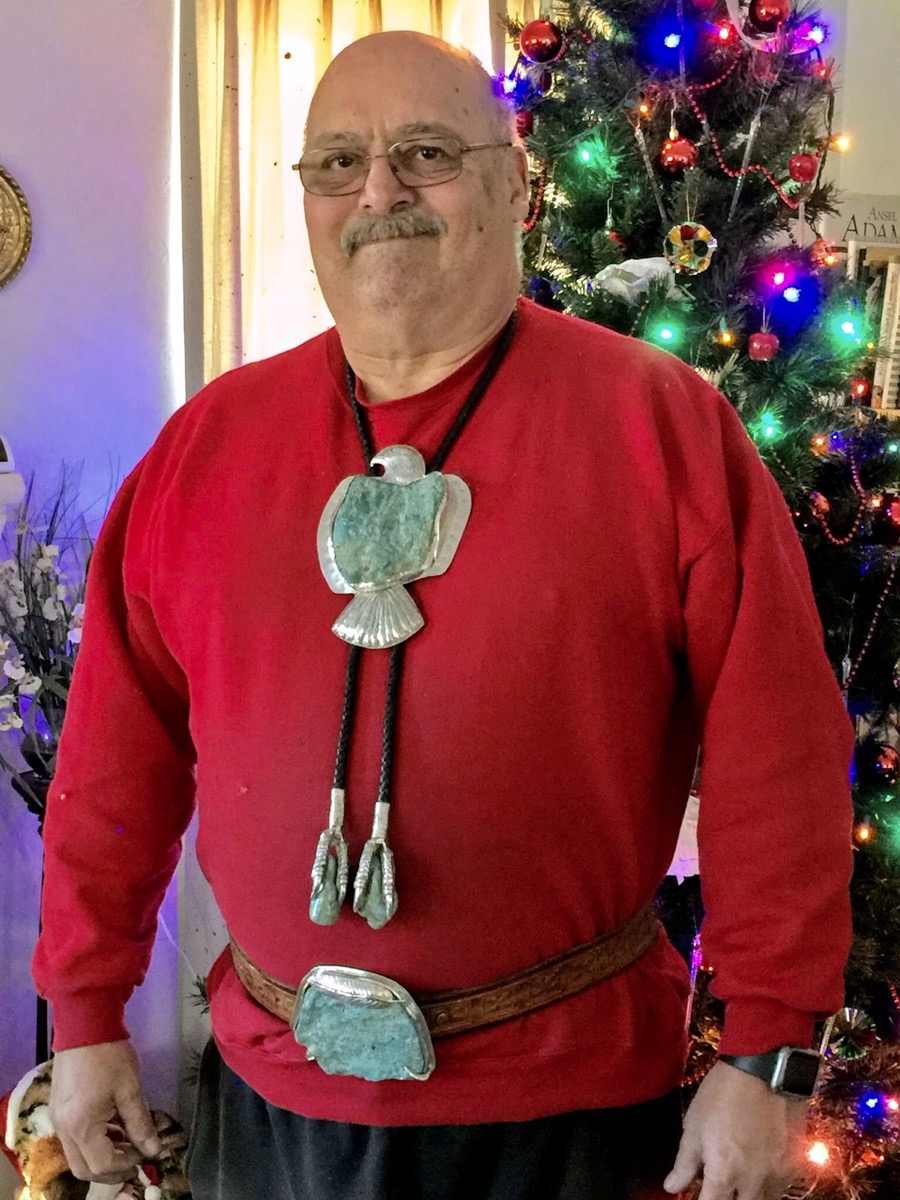
The turquoise above is Burtis Blue — from the Florence Mine at Cripple Creek, Colorado, worked by the Burtis family since 1939 and the oldest continuously worked family-owned turquoise mine in the country. It is natural and untreated — lab-certified so, by Stone Group Laboratories in 2014 — and it is the stone I keep coming back to.
The rough for that eagle bolo and buckle was sent to me by Clint Cross, who works the mine — he dug that turquoise, not me. I didn’t buy it, either. We bartered: I made him jewelry, he sent me stone.
Everything after that is mine, and all of it is my design. I cut and polished the cabochons — look at the stones and you can see the shapes I was working to. The talons on the cord ends I cast myself, from a pair of plastic talons I had, and set a large piece of turquoise into each one. The eagle, the tail, the buckle, the talons: my drawing, my bench.

In August 2015 Dani and I drove out to Colorado and stayed a few days at Clint’s place, in a travel trailer. We dug at the mine ourselves while we were there — though none of that particular rough is in these two pieces.
On that same trip we visited Wally Burtis at his home. Wallace Burtis Jr. first went up to Cripple Creek with his family at seven years old, in 1938; his father bought the claim the following year and renamed it the Florence Lode, and taught himself gem cutting and silversmithing on the stone that came out of it. Then he taught Wally.
Wally put my bolo and buckle on. And he wore his father’s bracelet on his wrist at the same time — both makers at once, deliberately, so he could hold the two side by side. Then he told me I create like his dad did.
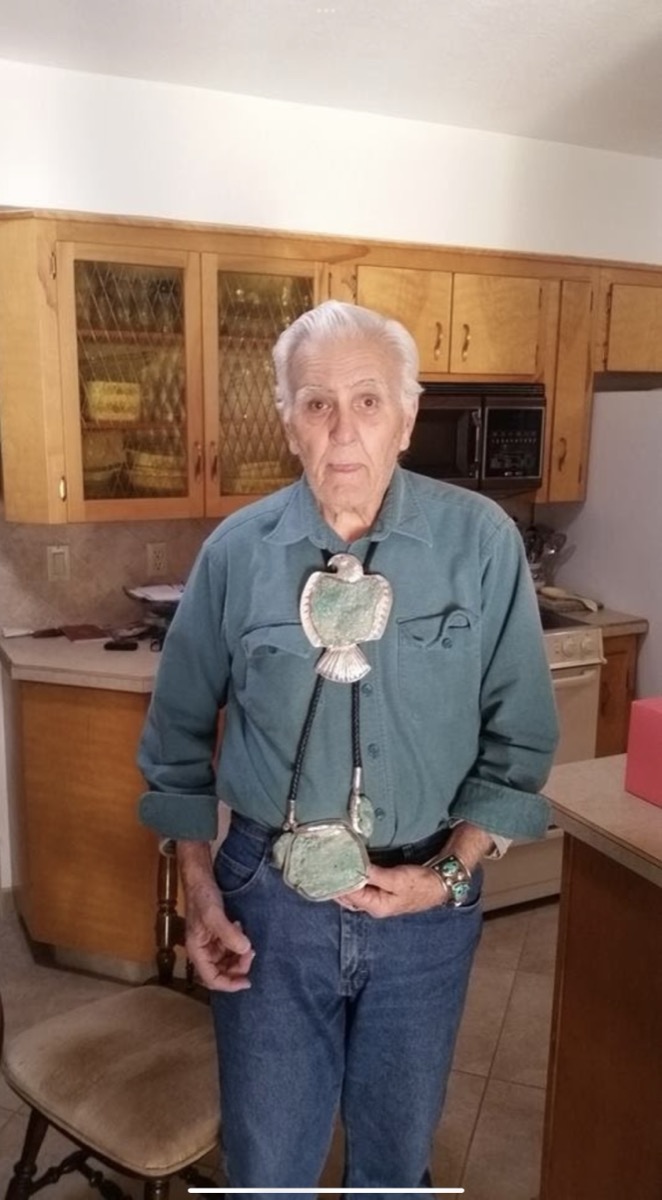
Dani was standing right there and heard him say it, which is the only reason I am comfortable repeating it.
Both pieces are gone, and that is the right ending. The bola and the buckle went to Clint as the trade. I think he sold them — honestly, I don’t know what happened to them after they left me. The photograph above is me wearing the set before it went.
Somewhere there is a good chance a stranger has that eagle around their neck, and not knowing is easier to live with than a shelf.
The cuff, honestly
There is one more Burtis Blue piece I wear, and I want to be straight about it, because it is the one people assume I made.
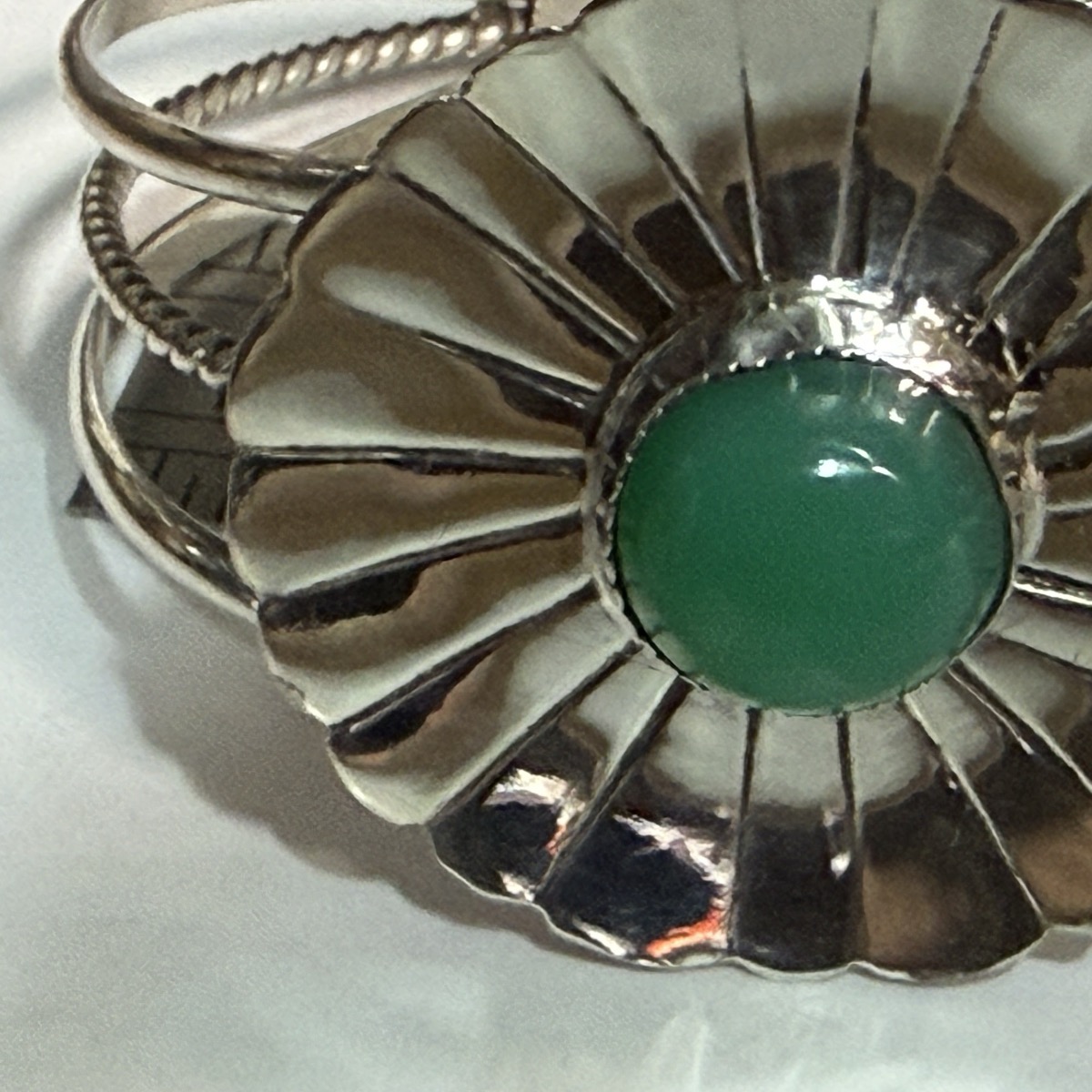
I didn’t. I bought the bracelet on the 1979 field camp — as a watch cuff, holding a Timex. I wore it to the bottom of the Grand Canyon. The watch was the problem: it kept breaking, and each time it went it took the metal pieces holding it with it. Decades later I finally got tired of it, pulled the watch parts off entirely, cut and polished a big Burtis Blue cabochon, and set it where the watch had been.
So the band is someone else’s work and the stone is mine. It is on my wrist today, and it is not for sale.

Where the craft came from
Not self-taught — I had teachers. Lapidary at Binkley’s Rock Shop in San Jose, and later silversmithing and metals at Cabrillo College with Dawn Nakanishi, whose standard I still hear every time I finish a piece: the back should be as nice as the front. Turn any of these over and you will find that is where the real work went.
The stones come from the same lifetime of looking that the fossils do — some cut by me from rough I picked up myself, some traded, some bought from people who knew exactly what they had.
Shown, and sold
I am a past member of the Monterey Bay Metal Arts Guild, and the work has been in guild shows on the Monterey peninsula.
The one I would point at is “Winter Abundance” at ZFolio Gallery, 750 Cannery Row in Monterey — a guild members’ show that ran 1 December 2017 to 3 January 2018. ZFolio is fairly exclusive company. There was also a curated case at the Pacific Grove Art Center, a shared guild case at Haute Enchilada in Moss Landing, and a First Prize for Jewelry at the Santa Cruz County Fair.
The Pacific Grove case is the one I think about. The label panel lists two of mine: “Owl Spirit Mask” in sterling, and “Sarah the Stegosaurus” — a large hammered sterling disc with a stegosaurus raised in relief.
I named the piece for the animal I helped dig out of the ground at Shell, Wyoming. She went to London and became Sophie; in silver she is still Sarah. Of everything on this page that is the piece that says what I actually do — the same animal, twice, once with a brush and once with a hammer.
(There is no good photograph of her yet. That is my fault and it is on the list.)
The word
Cyberzoic is mine. The era after the Cenozoic — I coined it talking on a Southern California paleontology bulletin board in the nineties, long before I had anywhere to put it. I registered cyberzoic.com on 11 July 2001, and the Internet Archive’s first capture of it, in June 2002, opens with “Welcome to the Cyberzoic Age.”
I mention the dates because a toy company launched an unrelated “Cyberzoic” line in 2022. Mine predates theirs by twenty-one years, and I can show my work.
It also describes the range: I have raised trilobites in copper — Paleozoic — and set fordite, which is Cyberzoic by definition. Nothing else made that layer.
What I make
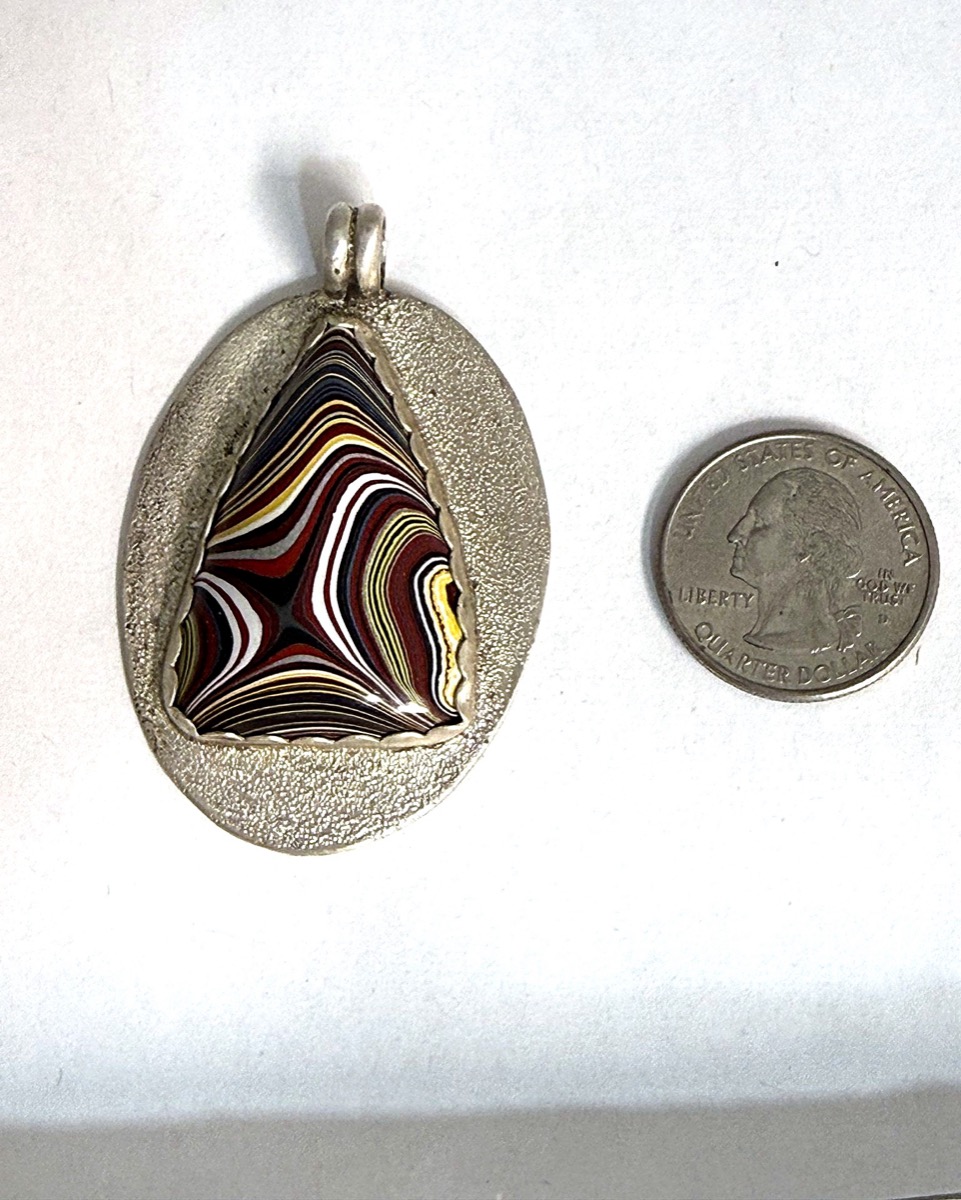
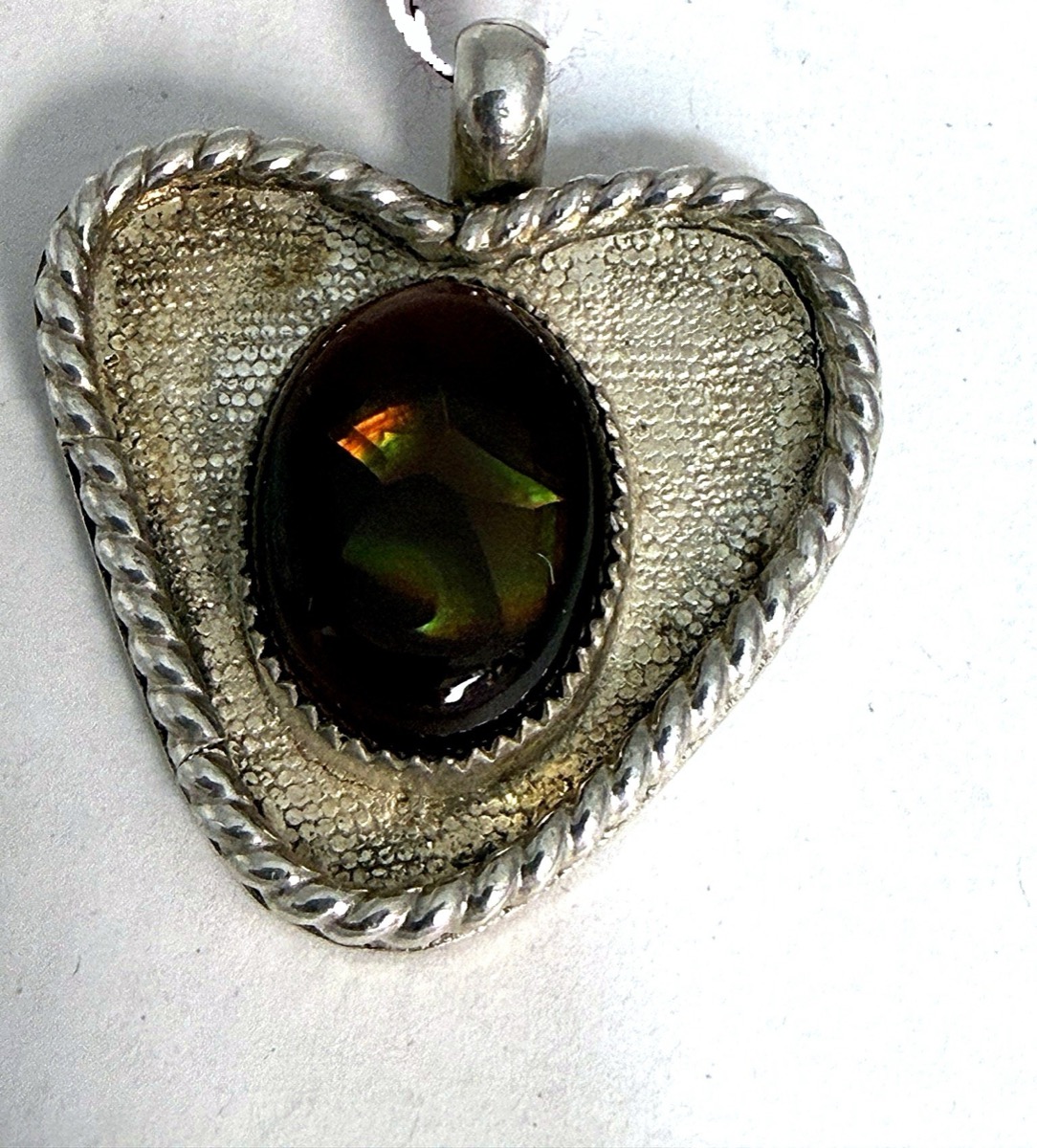
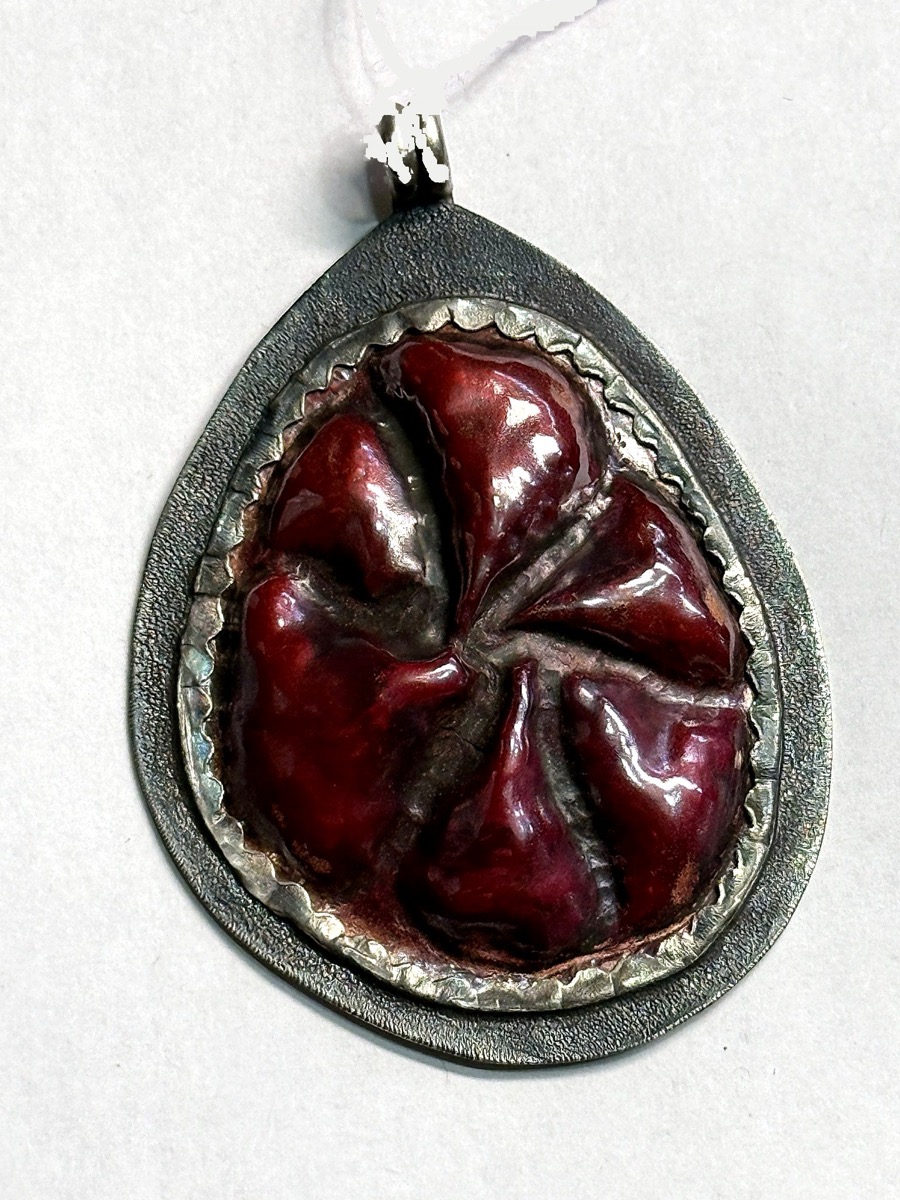
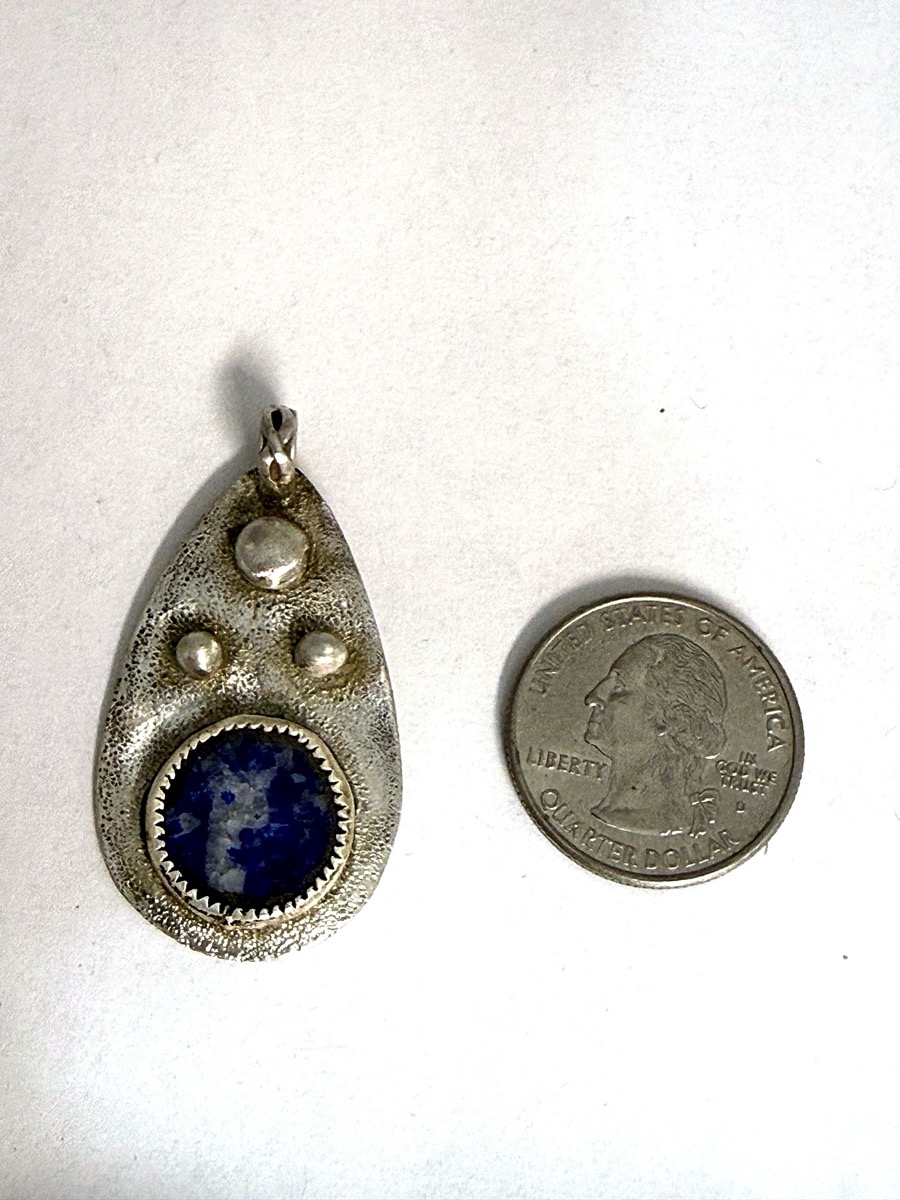
I work in sterling silver, brass and copper. No gold — it has never been the material I think in.
One rule about fossils
I sell no vertebrate fossil material — no dinosaur bone, no “gembone,” however beautiful the slab. That is a deliberate line, kept in step with the Society of Vertebrate Paleontology’s position that vertebrate fossils belong in public trust rather than private trade. I have pieces set with agatized dinosaur bone. They are not for sale and they are not listed.
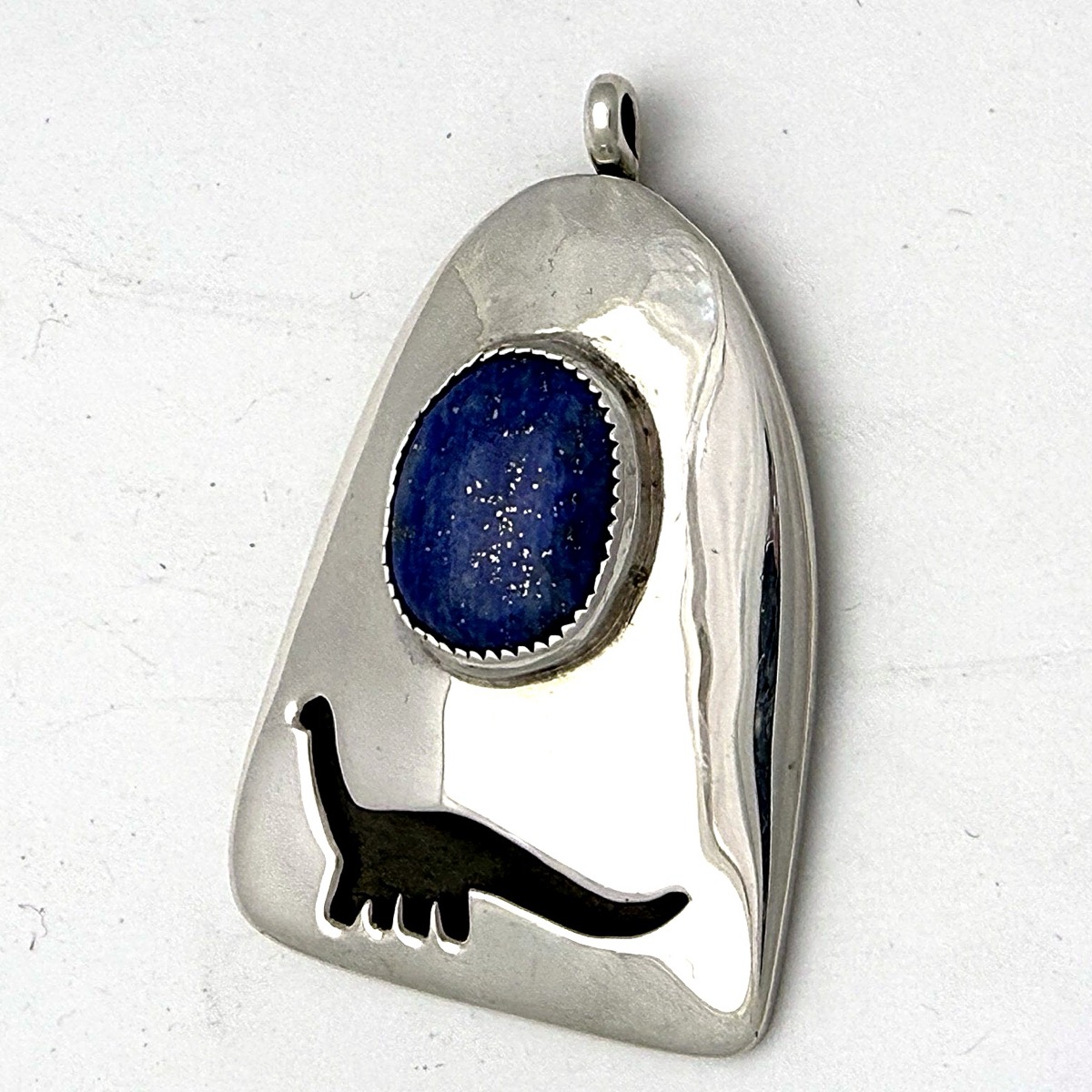
Fossil-inspired work is a different thing entirely — the sauropod above is sterling silver cut to a shape I know well from the quarry floor.
If that rule costs me a sale now and then, it is the cheapest thing I pay for.
Seeing the work
The pieces live at cyberzoic.com — The Cyberzoic Silversmith. Each one is a single object; when it is gone it is gone, because there is no second one.
I would rather a piece end up on someone who likes wearing it than sit in a case looking valuable. If something here suits you, it is there.
See the work at cyberzoic.com →
Questions about a piece, a stone, or a commission — the contact page reaches me directly.