Rock Identification
Most rocks can be named with a hand lens, a pocketknife, a piece of glass and a few questions asked in the right order. This guide walks through those questions and shows a real specimen for each rock, so you can compare what is in your hand with a named example.
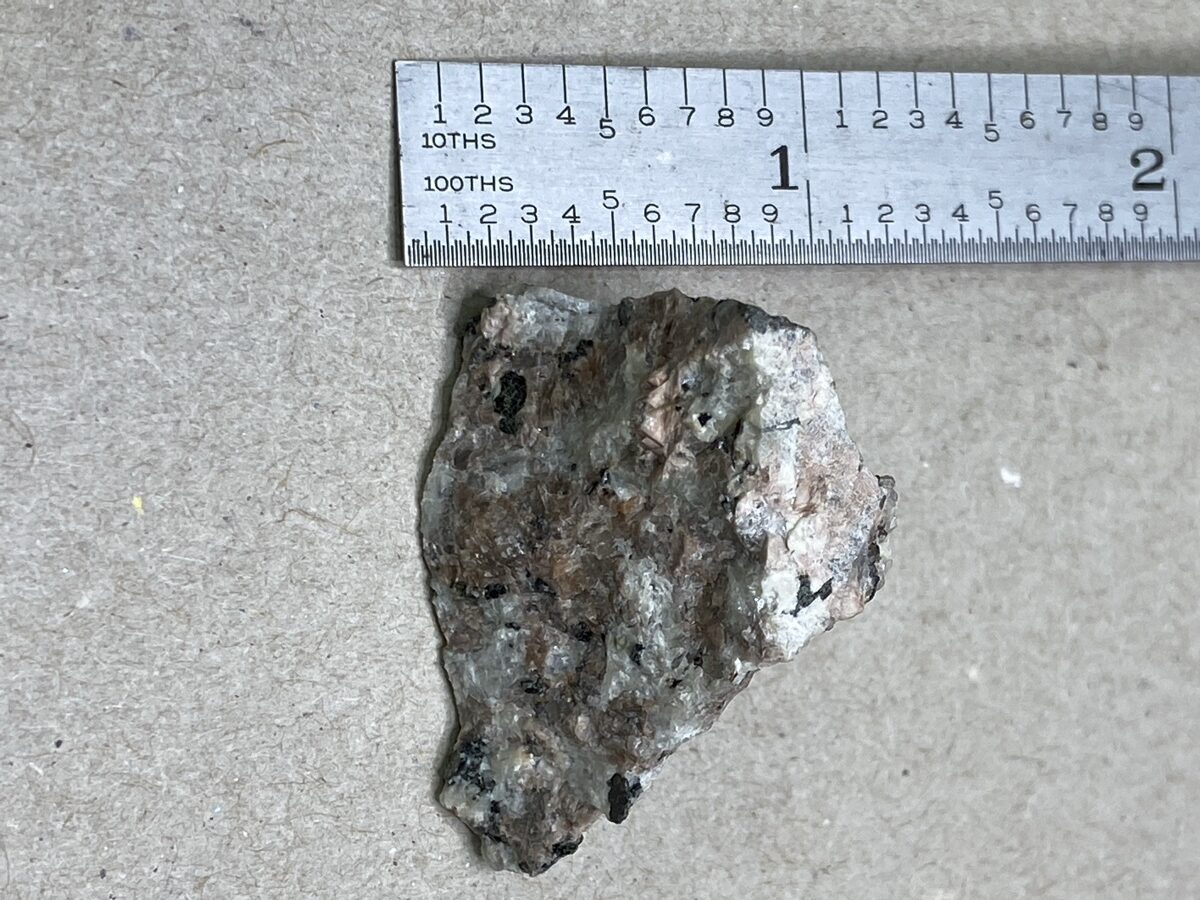
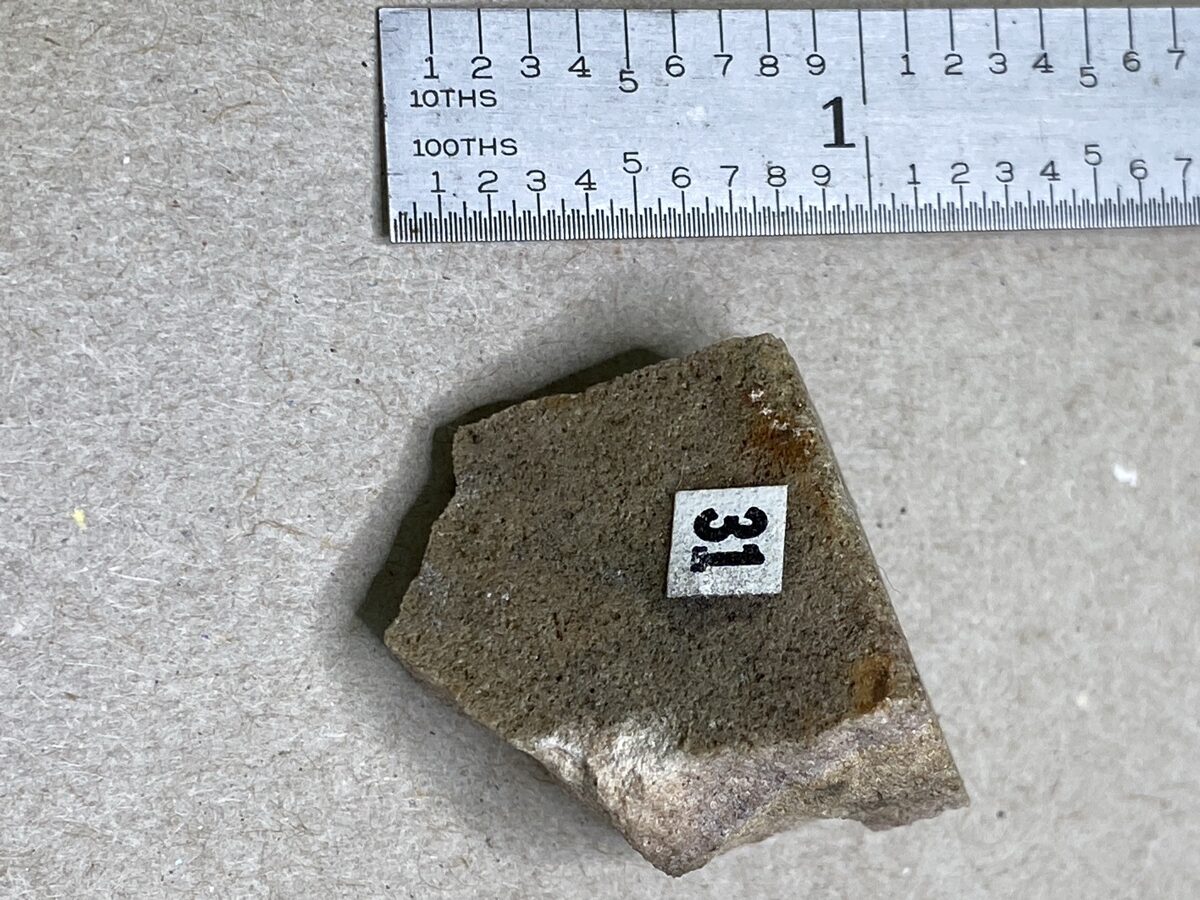
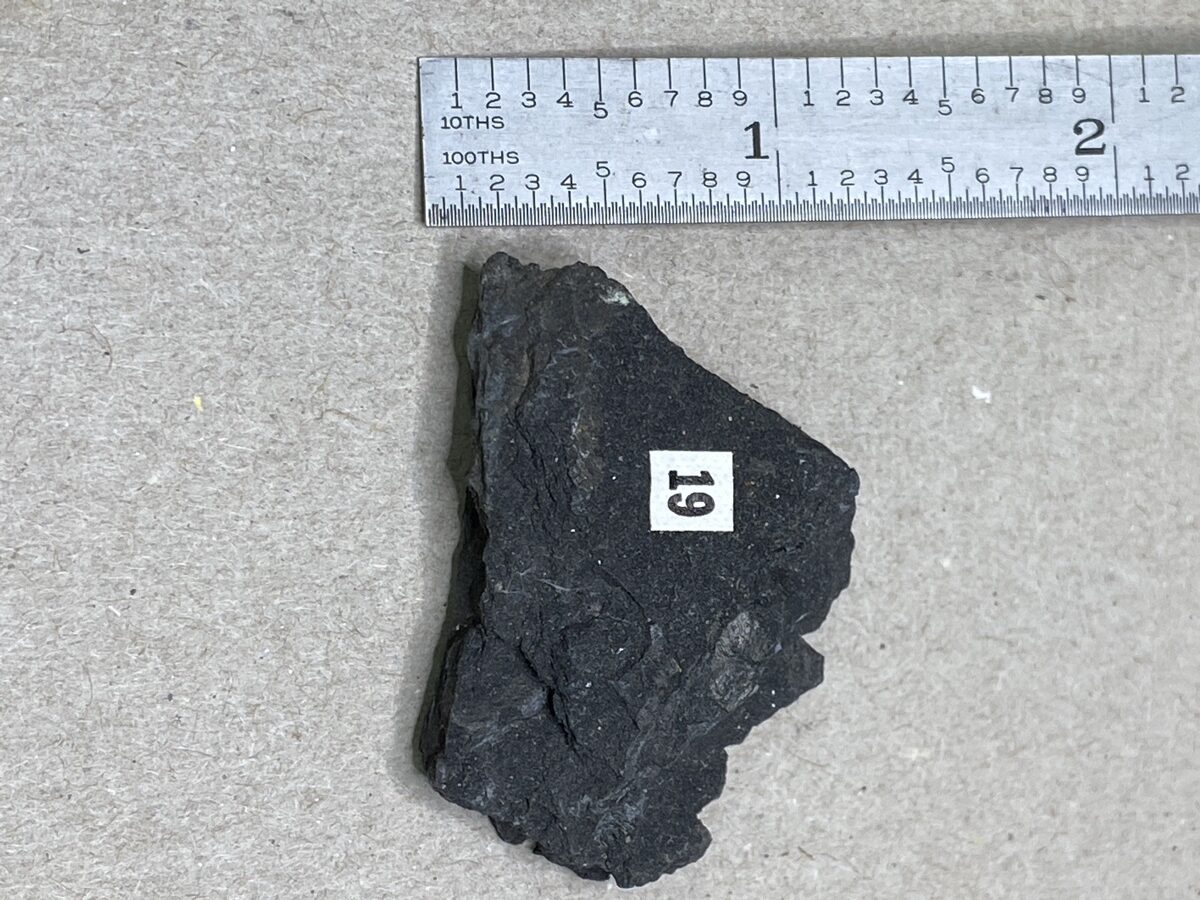
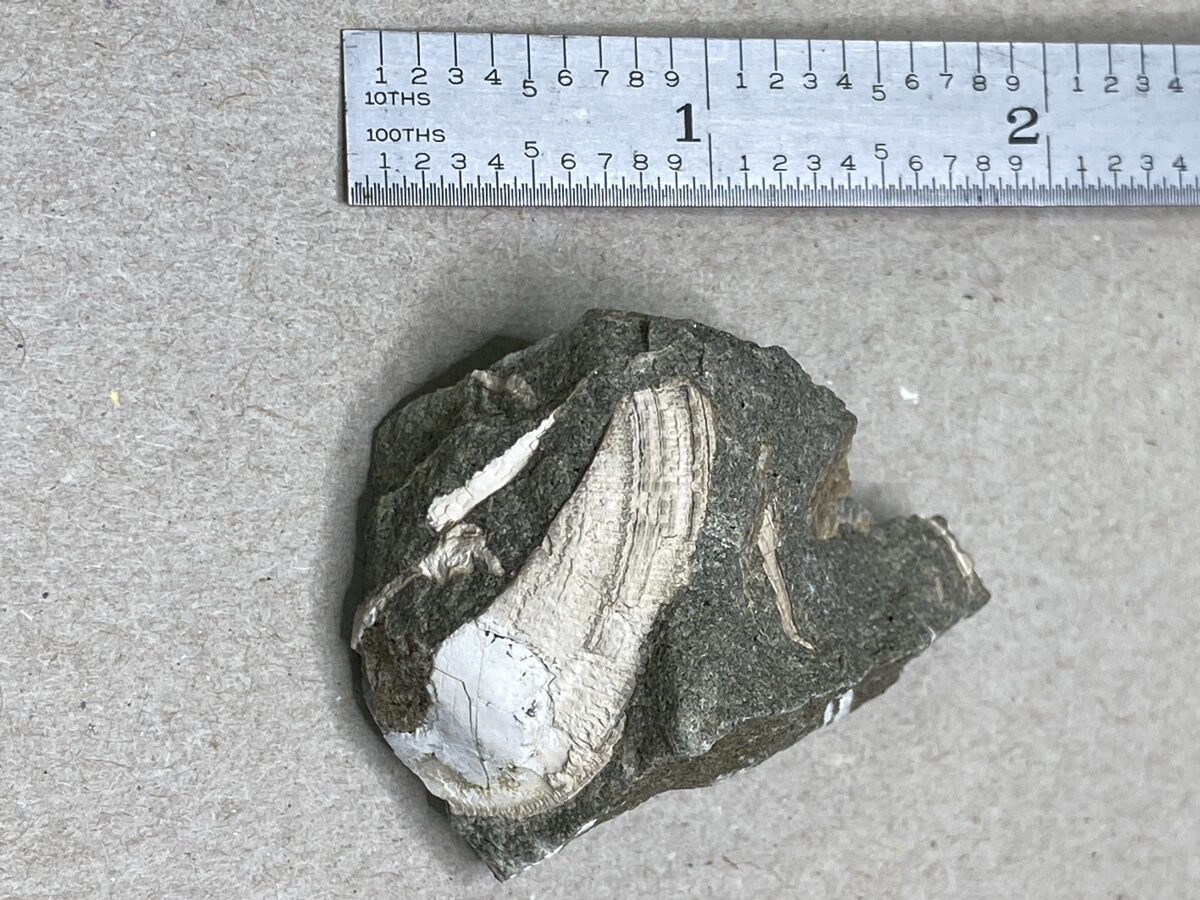
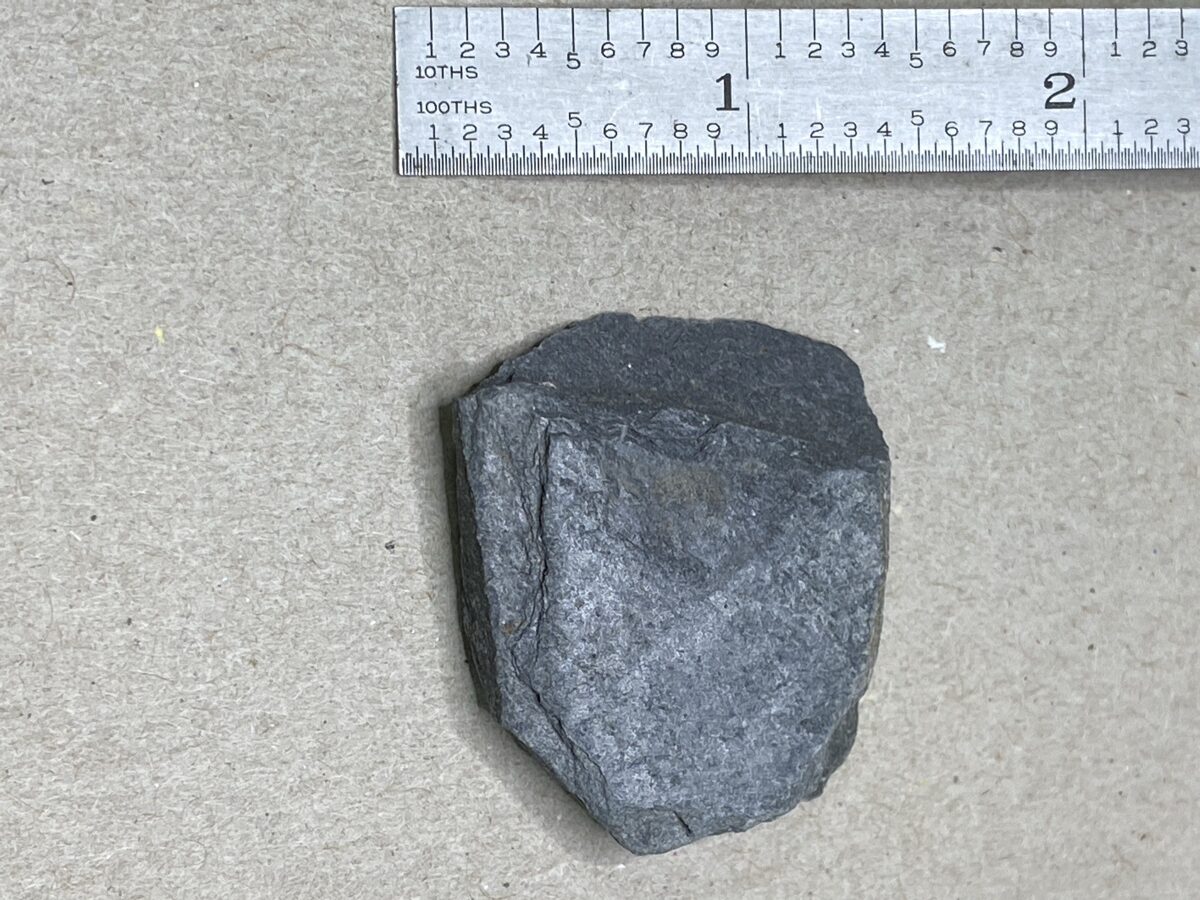
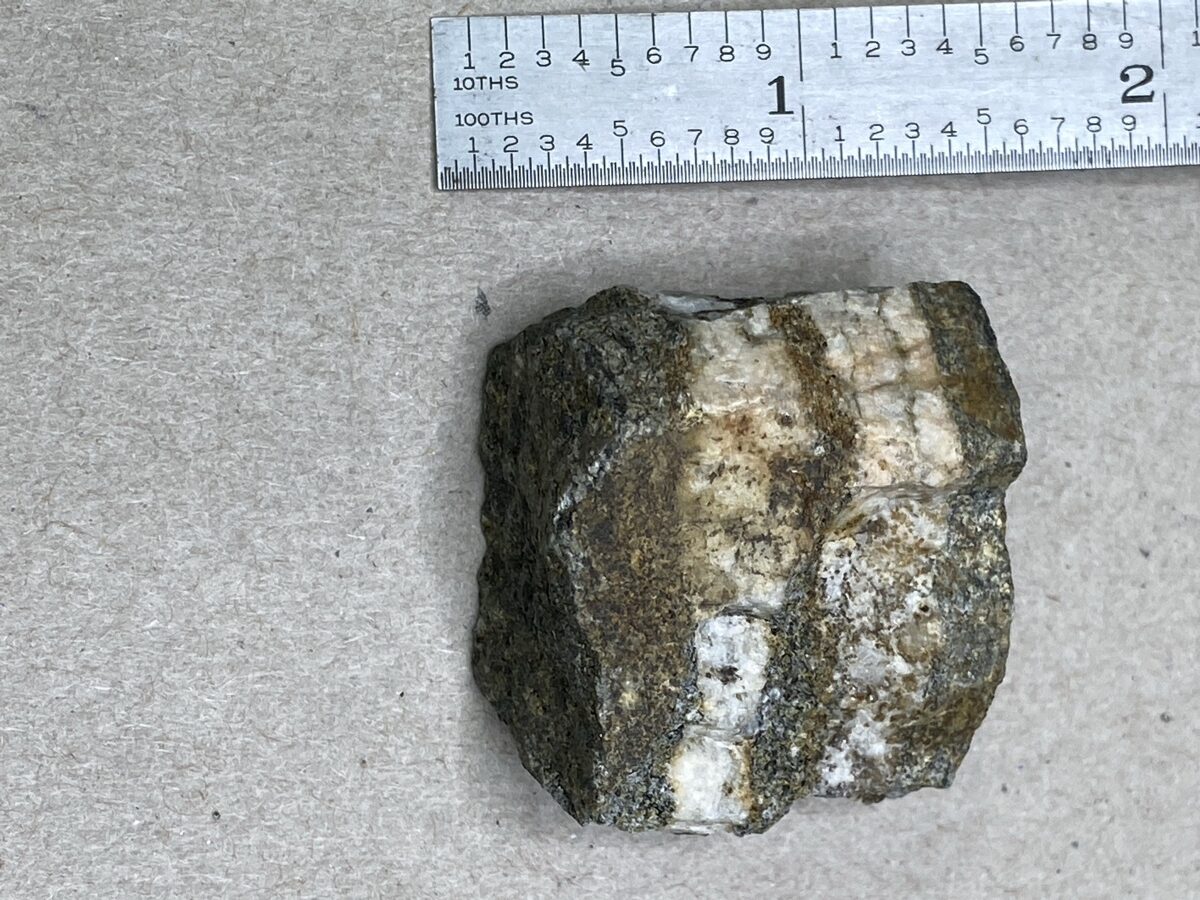
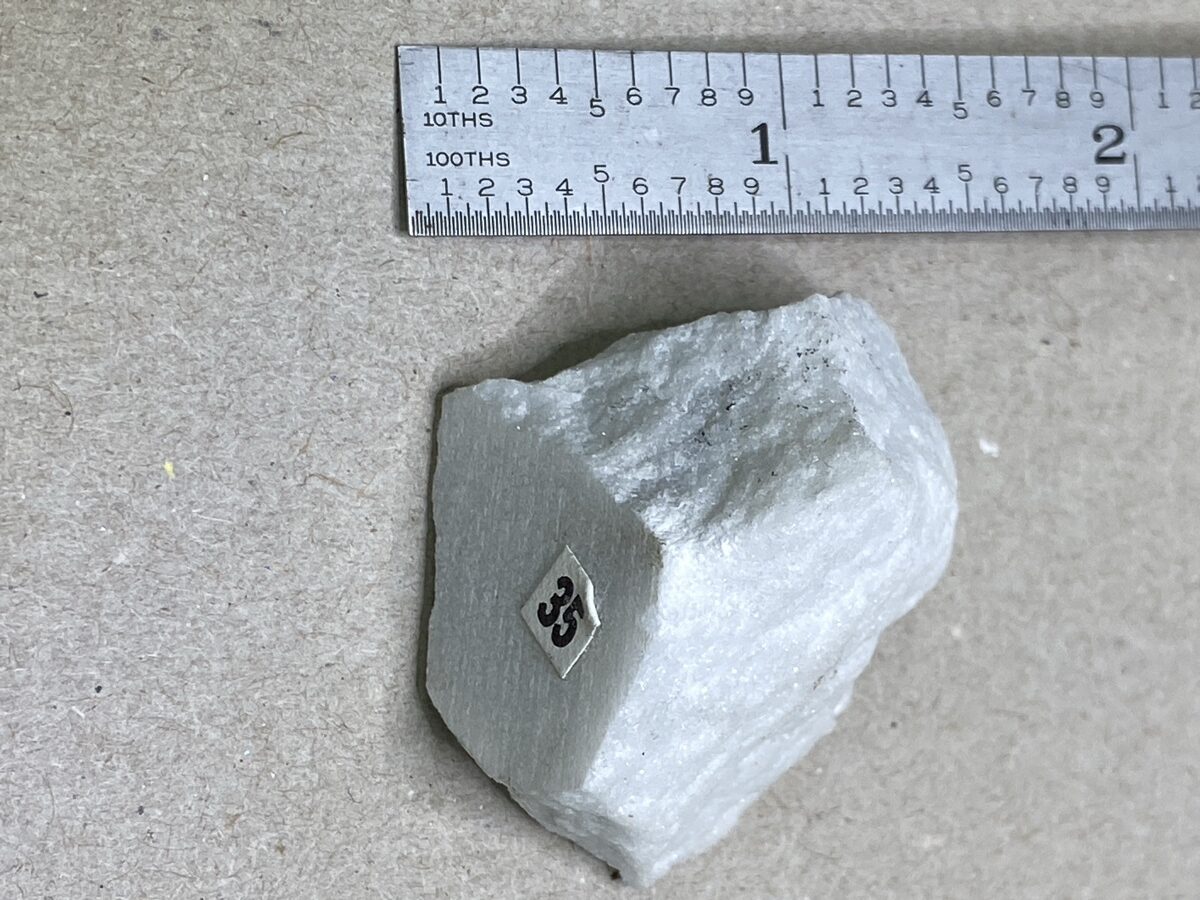
The specimens are from two teaching sets Bosco bought from his geology instructor at Cabrillo College: a 42-piece California rock set and a 37-piece California mineral set. Each name is the one printed on the set’s own legend sheet, and every photo is Bosco’s, shot against a steel ruler marked in inches.
Step 1: Rock or mineral?
A mineral is one substance all the way through, with its own hardness, lustre and way of breaking: quartz, calcite, pyrite. A rock is a mixture of mineral grains. If your specimen looks the same throughout and shows flat crystal faces or breaks along flat planes, go to mineral identification. If you can see grains, layers or more than one material, keep going here.
Step 2: Look at the texture
Texture, meaning the size, shape and arrangement of the grains, tells you more than colour does.
- Interlocking crystals, no layering — the grains grew together as molten rock cooled. This is igneous rock. Large crystals mean slow cooling underground; crystals too small to see, glass or bubbles mean a volcano.
- Grains or fragments cemented together, flat layers, or fossils — the rock was laid down as sediment. This is sedimentary rock.
- Minerals lined up in sheets or bands, or a sugary recrystallised look — heat and pressure have remade an older rock. This is metamorphic rock.
Step 3: Run three quick tests
- Hardness. Try a fingernail (2.5), a copper coin (3), a knife blade or window glass (5.5). A rock that scratches glass is rich in quartz or feldspar; one a knife scratches easily may be limestone, marble, shale or serpentinite. The full scale is on the Mohs Hardness Scale page.
- Acid. A drop of dilute acid (strong vinegar works slowly, especially on powder) fizzes on calcite. That separates limestone, marble and travertine from their look-alikes.
- Heft. Dark, heavy rocks are rich in iron and magnesium (gabbro, basalt, peridotite). Pale, lighter rocks are rich in quartz and feldspar (granite, rhyolite). Pumice may float.
Step 4: Compare with a named specimen
Igneous — cooled from molten rock
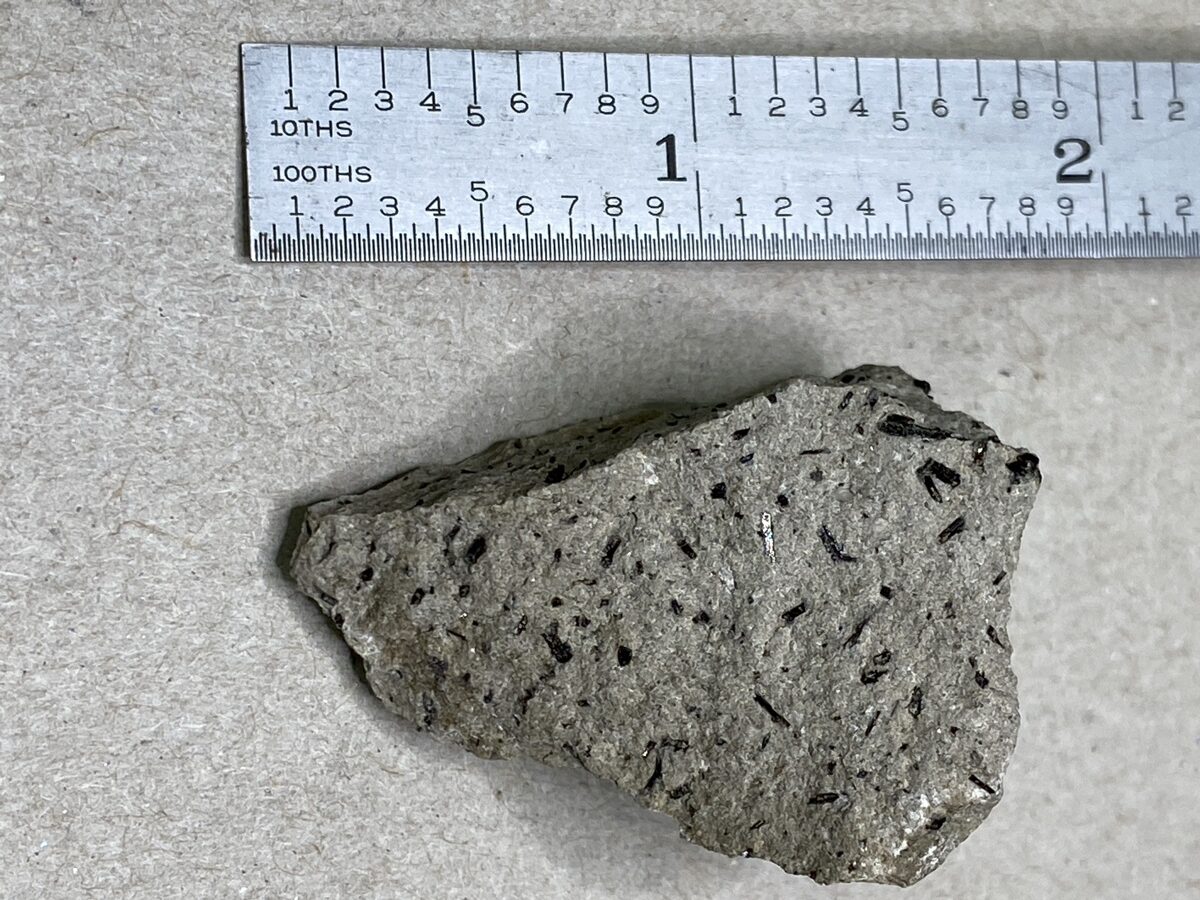
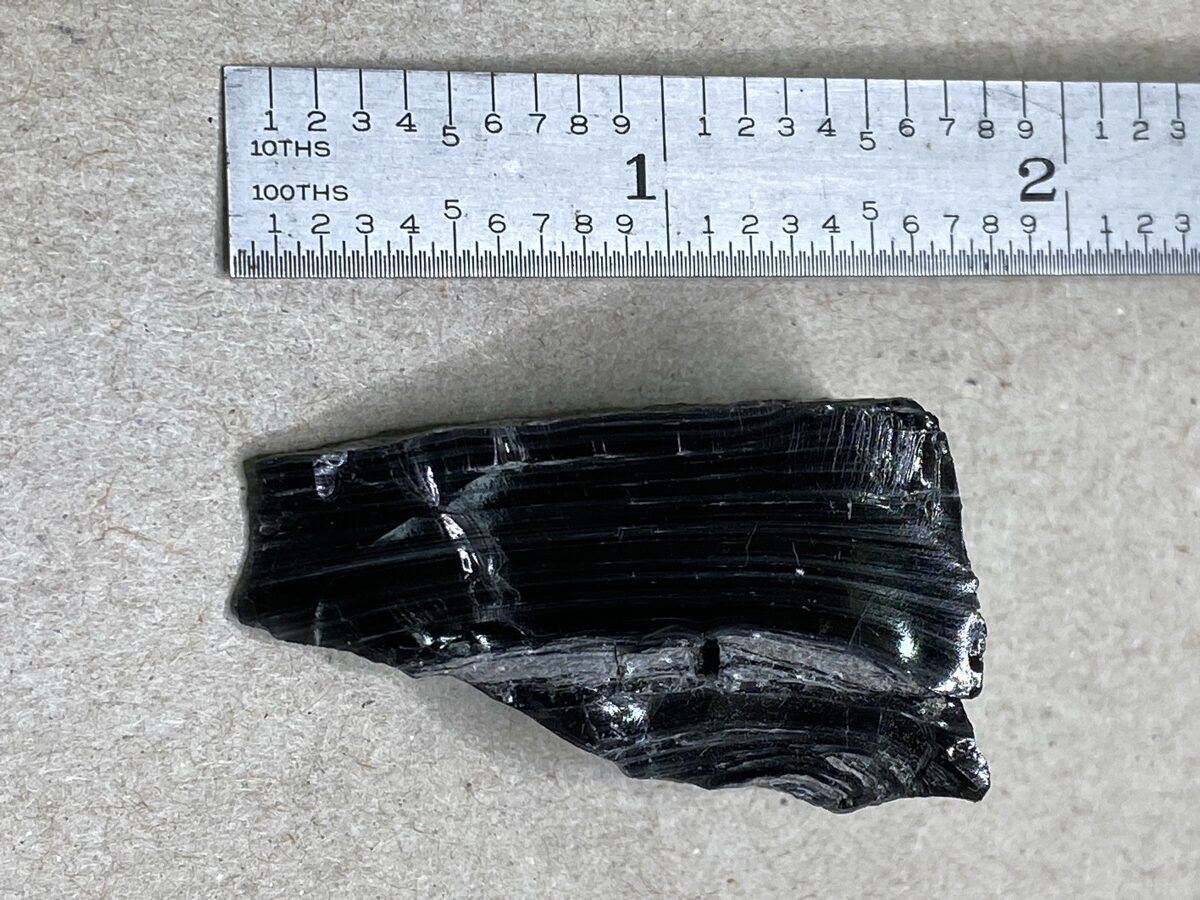
Sedimentary — laid down in layers
Metamorphic — remade by heat and pressure
Where to go from here
- Mineral identification — 29 minerals with hardness and the feature that gives each away
- Mohs Hardness Scale — the scratch test in detail
- Geology basics — the three rock families and the rock cycle
- Rocks and Minerals — more of Bosco’s collection
- Where to dig — places to collect