Sedimentary rocks are built from sediment: sand, mud, shell and material that settles out of water. They are the rocks that carry fossils, and the ones most likely to show flat layers.
Reading a sedimentary rock
Made of fragments (clastic)? Name it by grain size. Pebbles and larger make conglomerate if rounded and breccia if angular. Sand-sized grains you can feel make sandstone. Grains too fine to feel make shale (splits in sheets) or mudstone (blocky).
Fizzes in acid? It is a carbonate. Limestone fizzes readily; dolostone only weakly or when powdered; travertine is spring-deposited calcite.
Scratches glass, with a smooth waxy surface? It is chert or one of its coloured relatives, such as jasper.
The specimens
The specimens are from two teaching sets Bosco bought from his geology instructor at Cabrillo College: a 42-piece California rock set and a 37-piece California mineral set. Each name is the one printed on the set’s own legend sheet, and every photo is Bosco’s, shot against a steel ruler marked in inches.
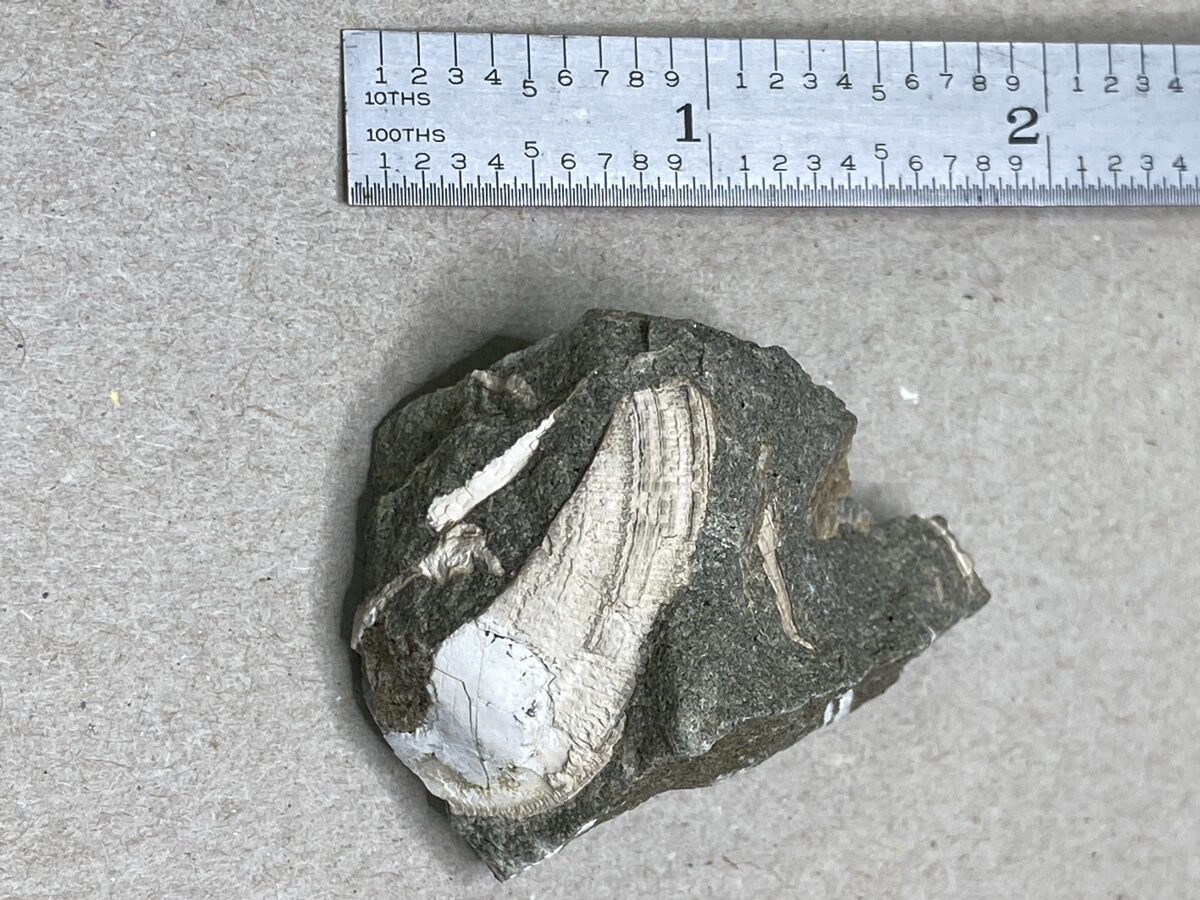
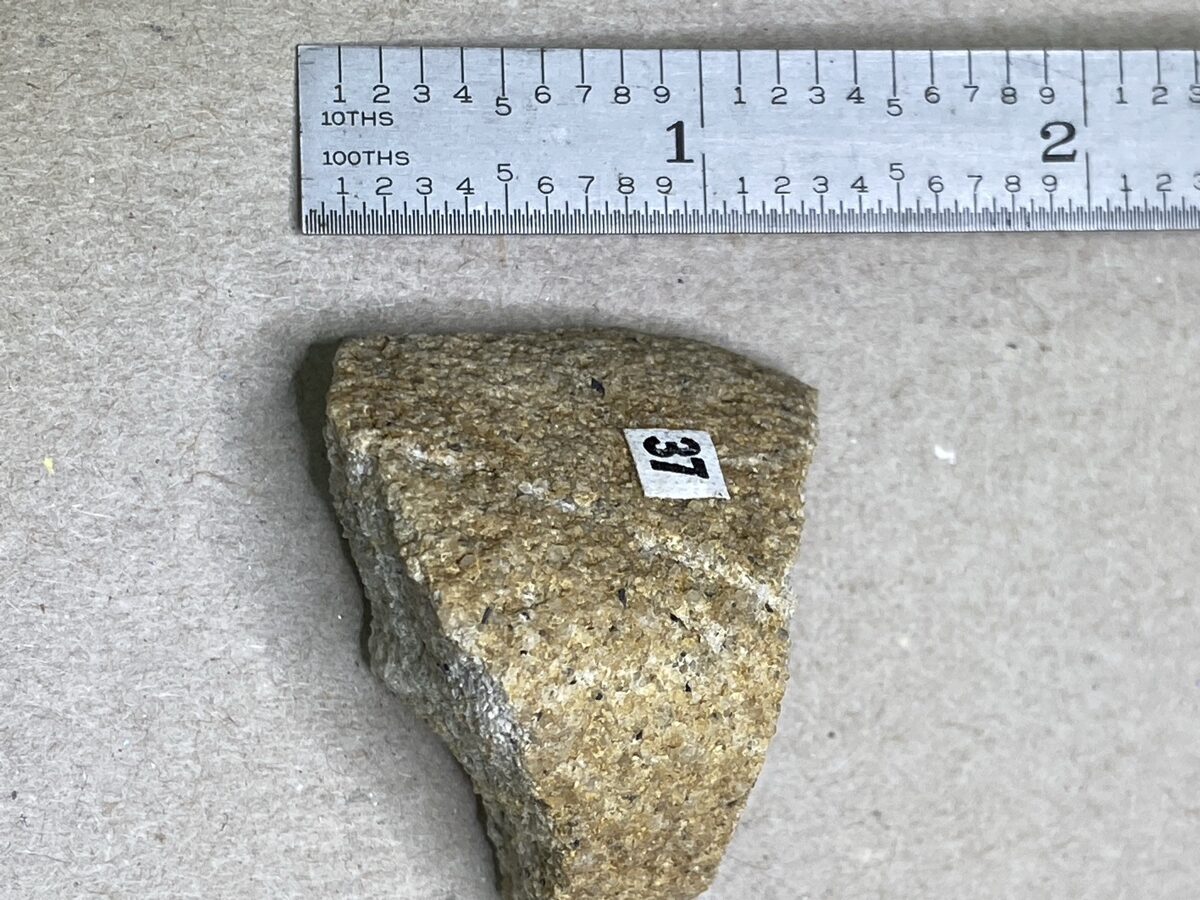
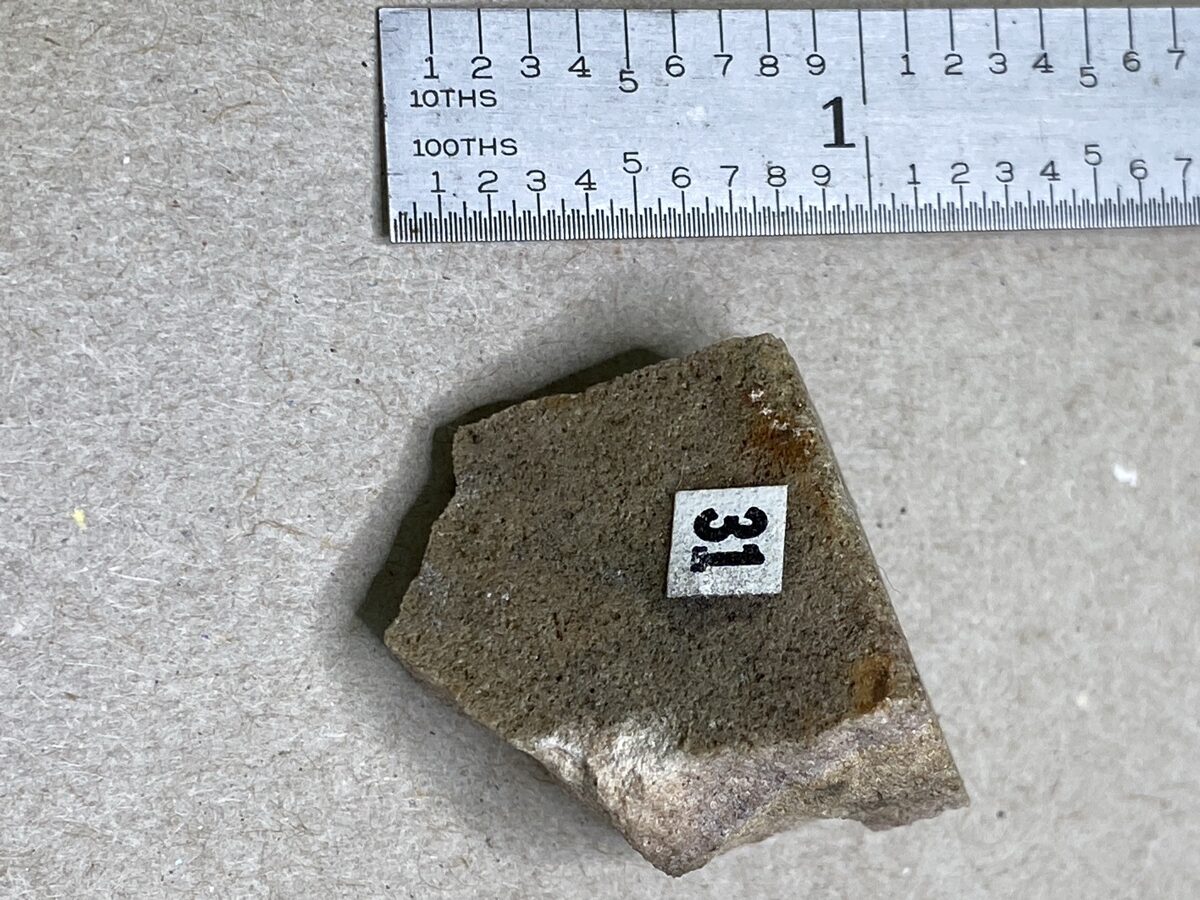
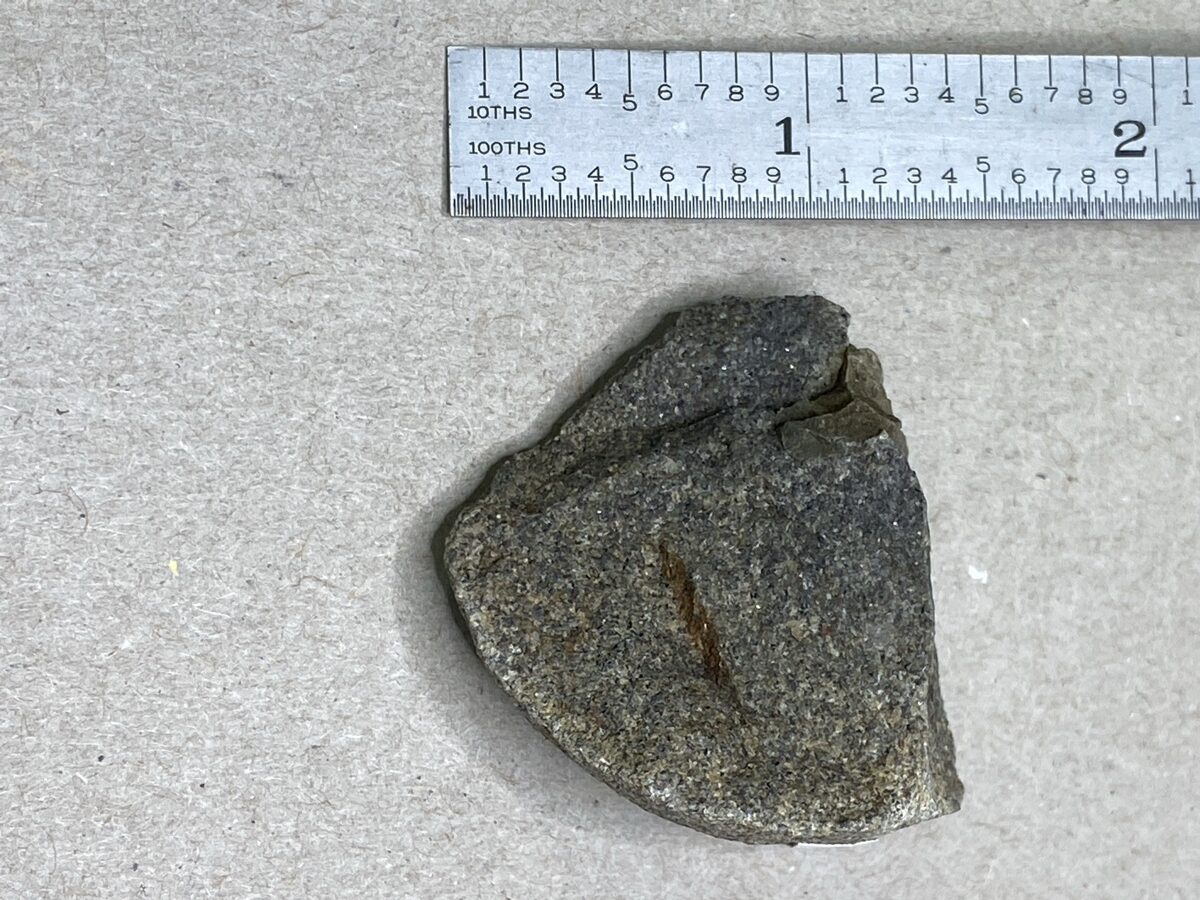
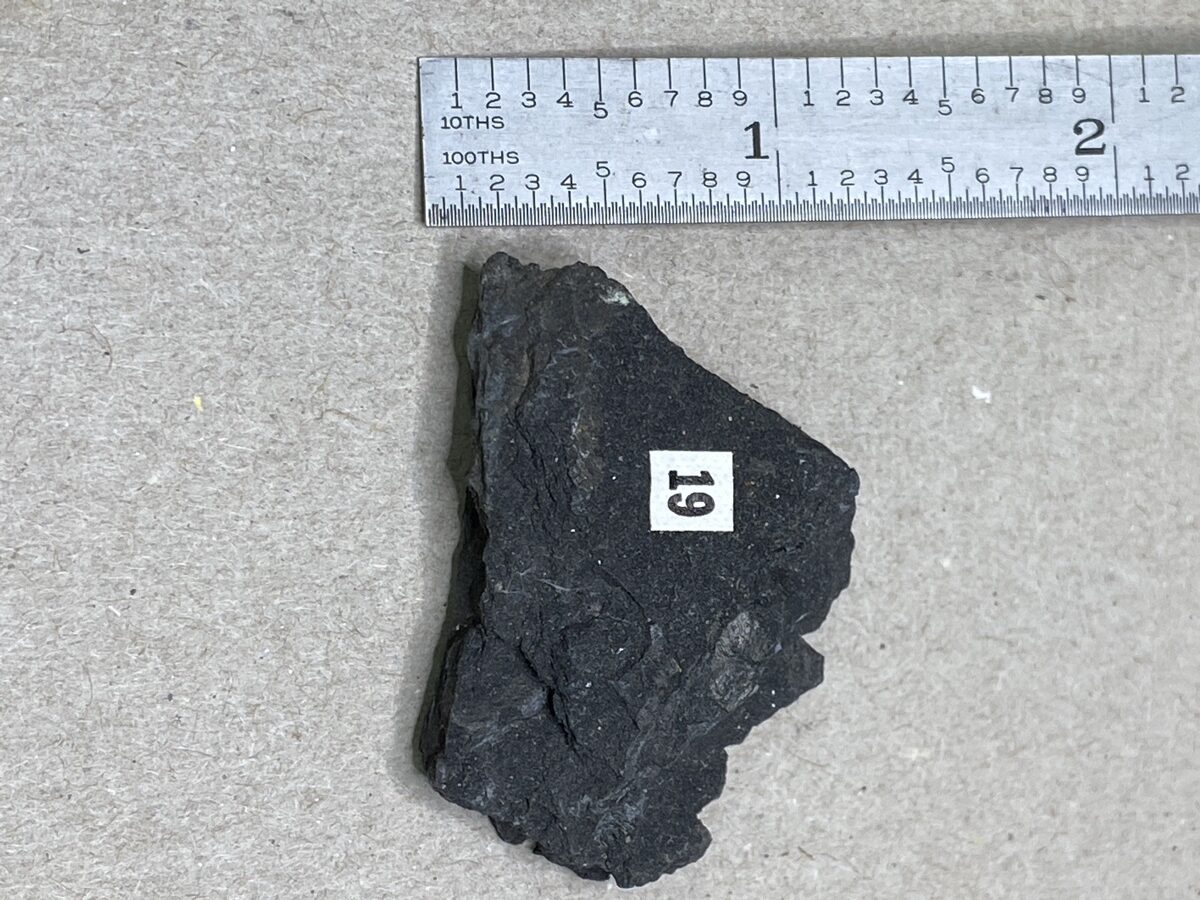
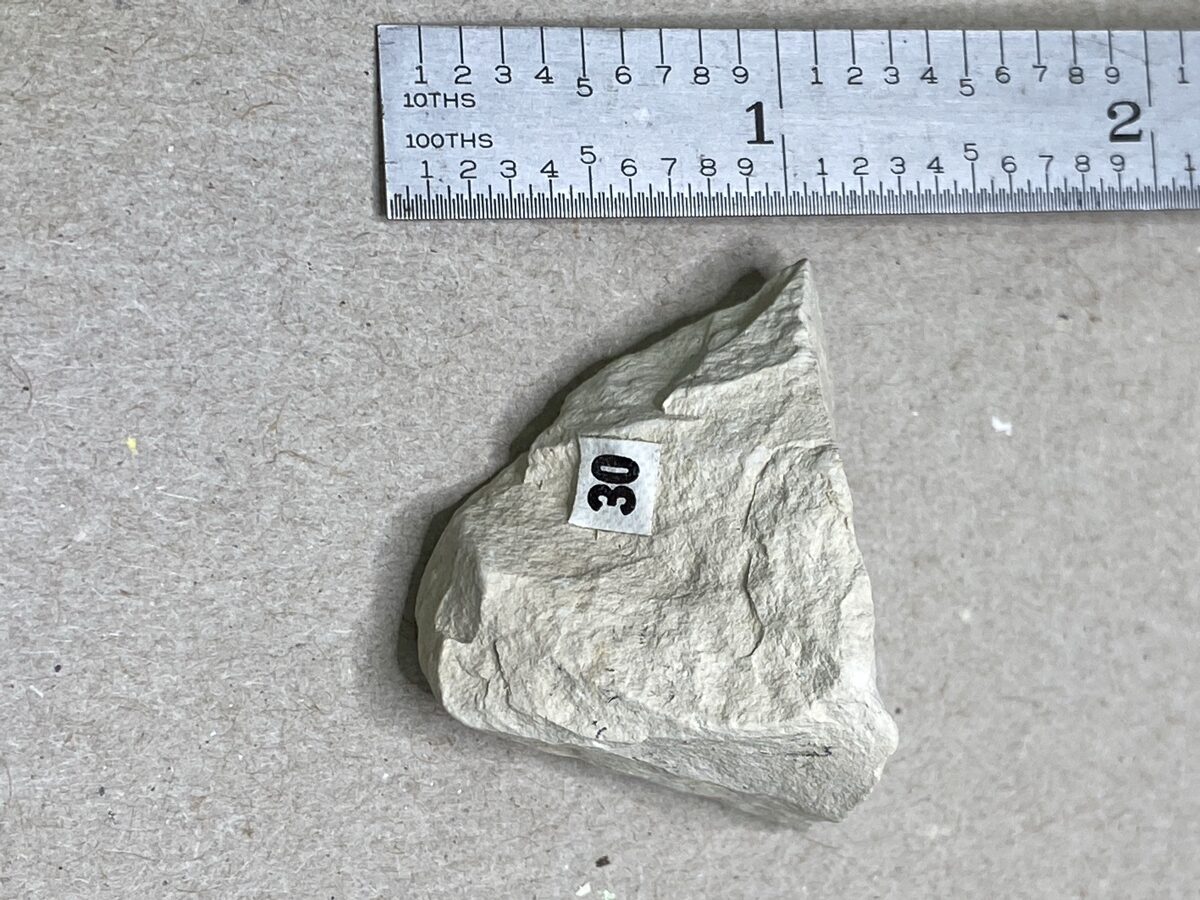
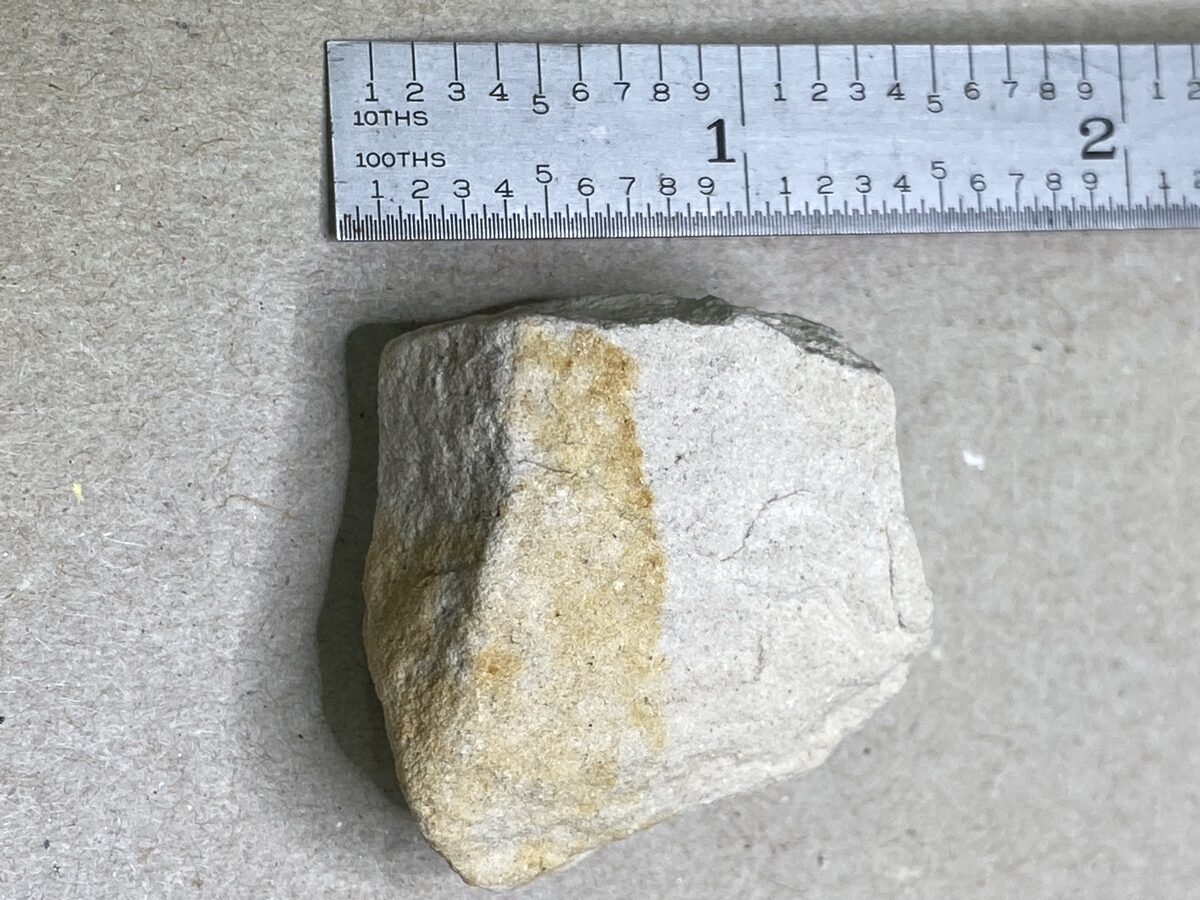
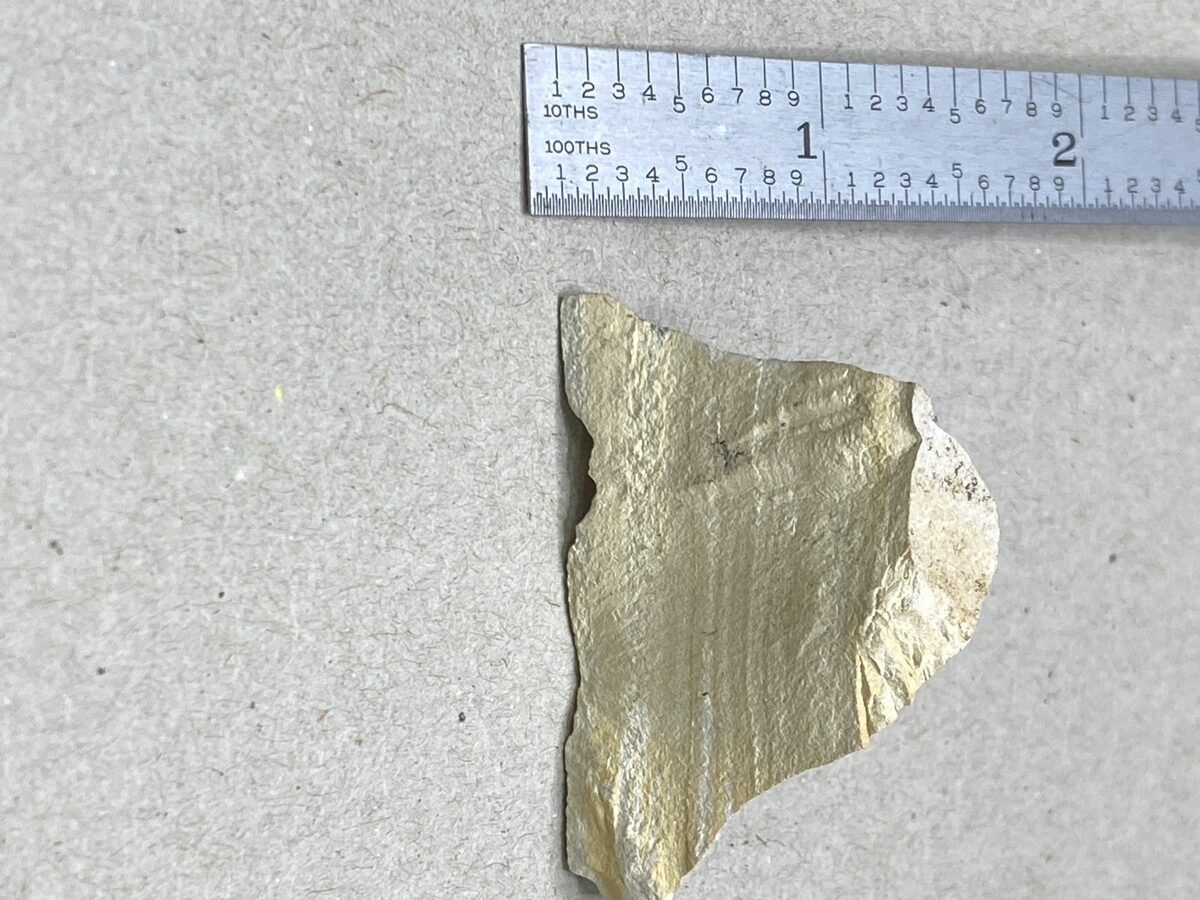
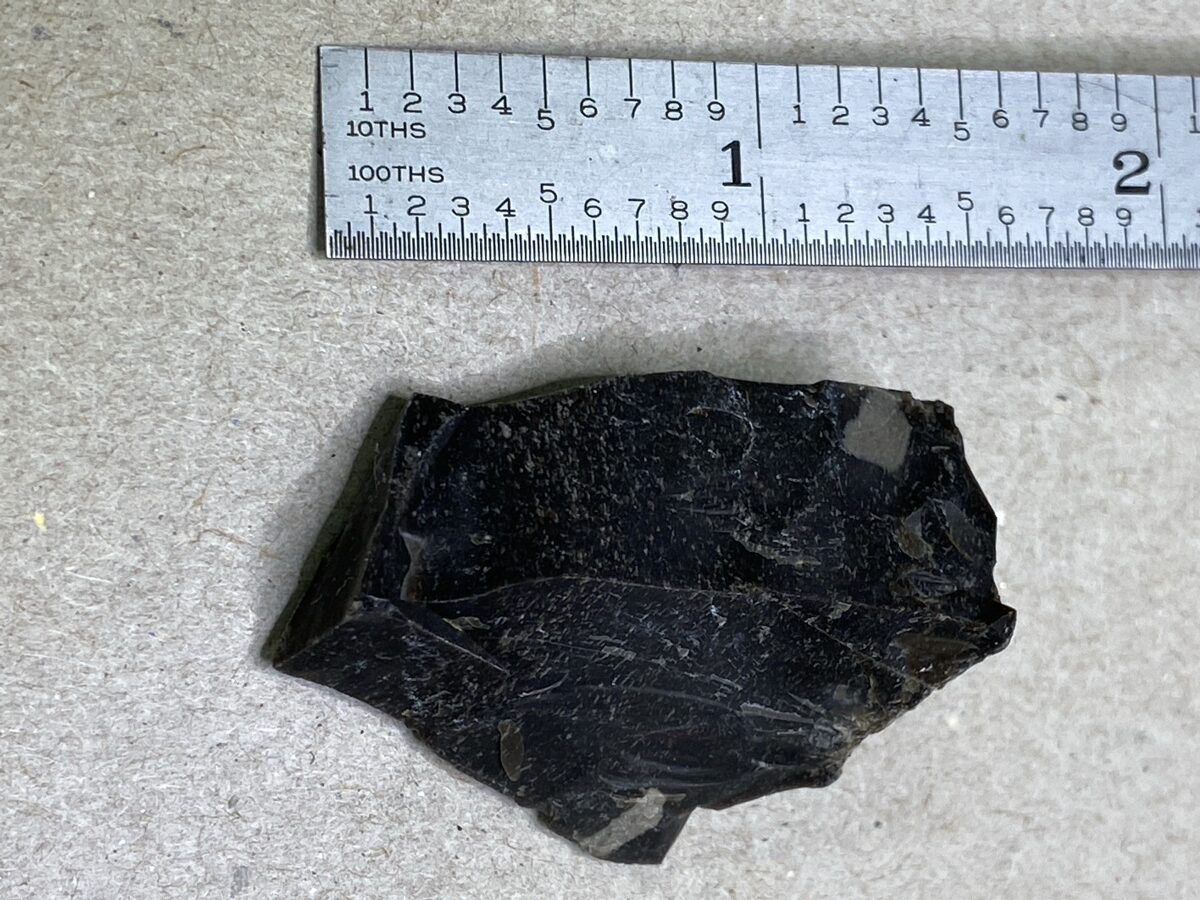
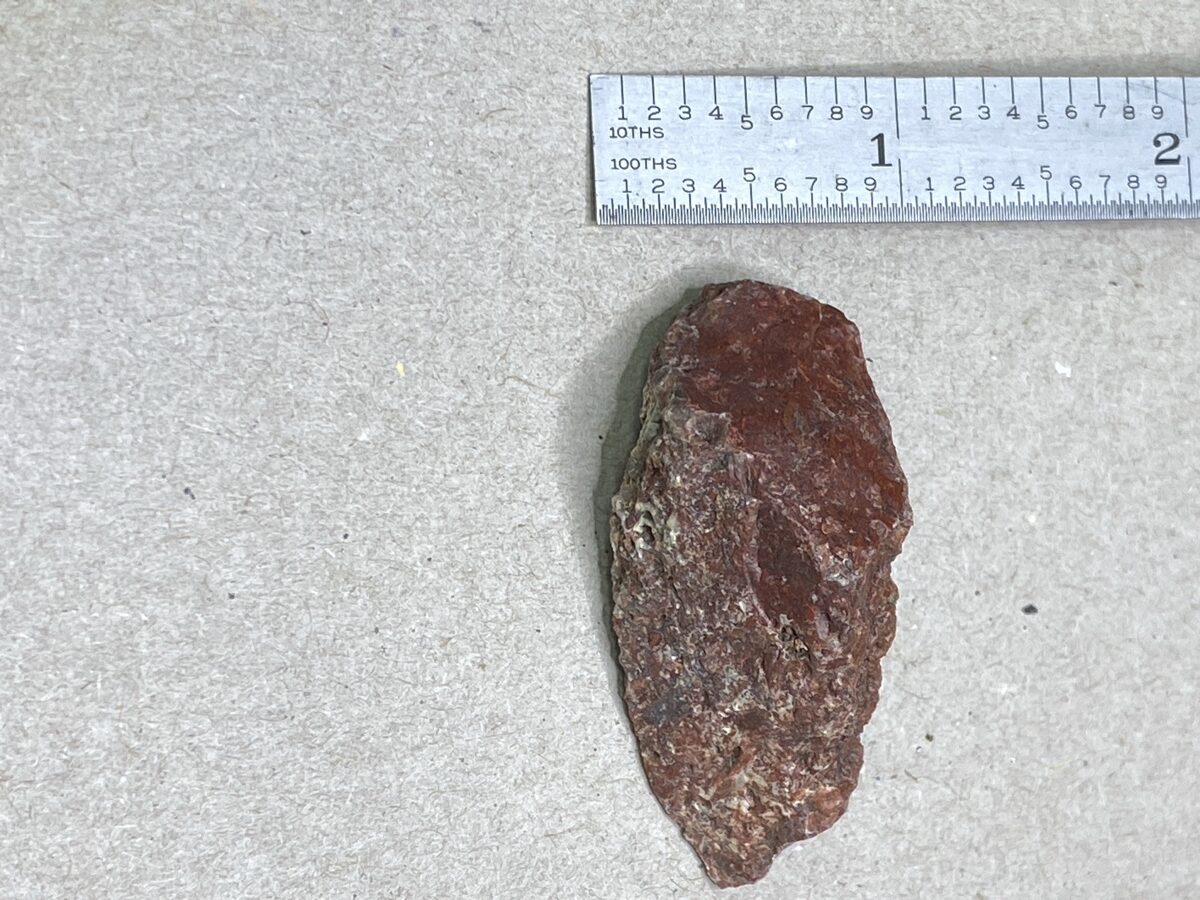
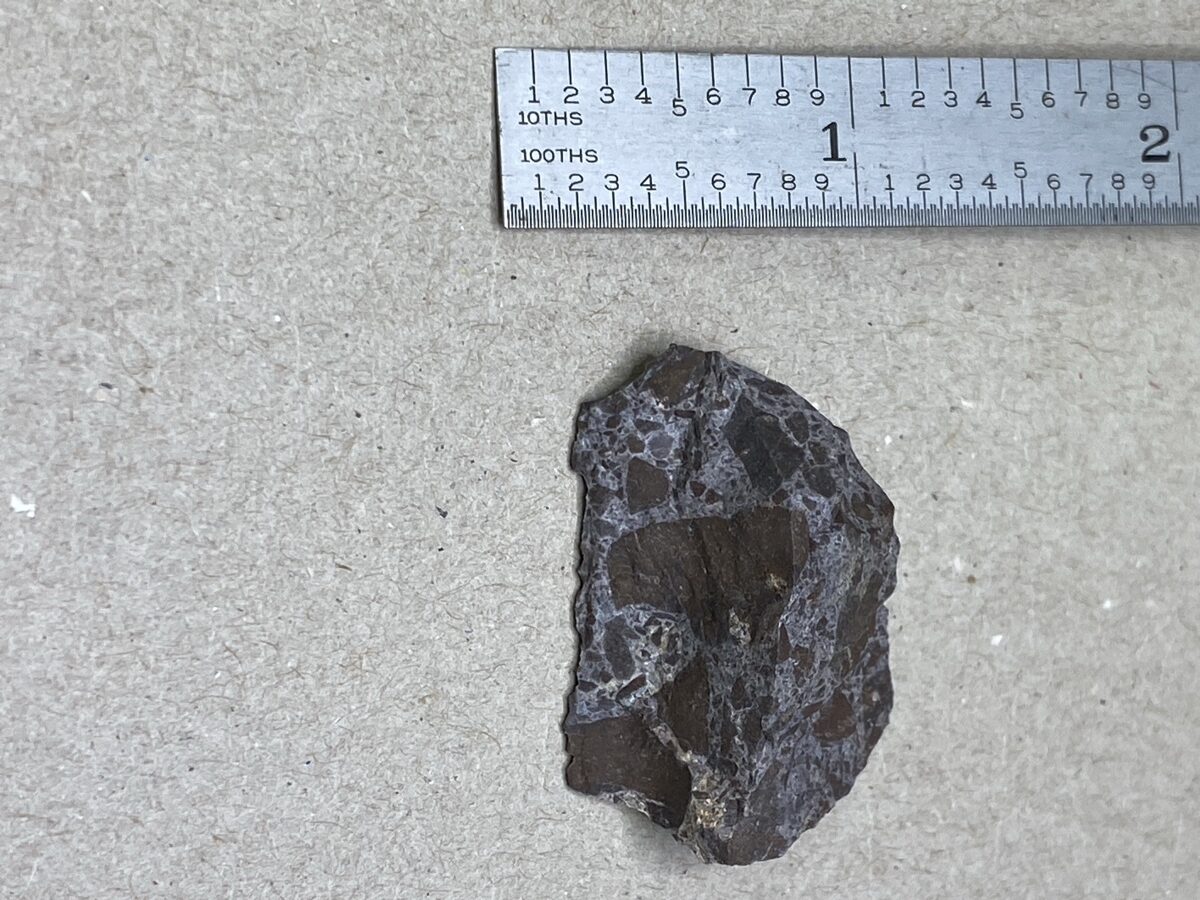
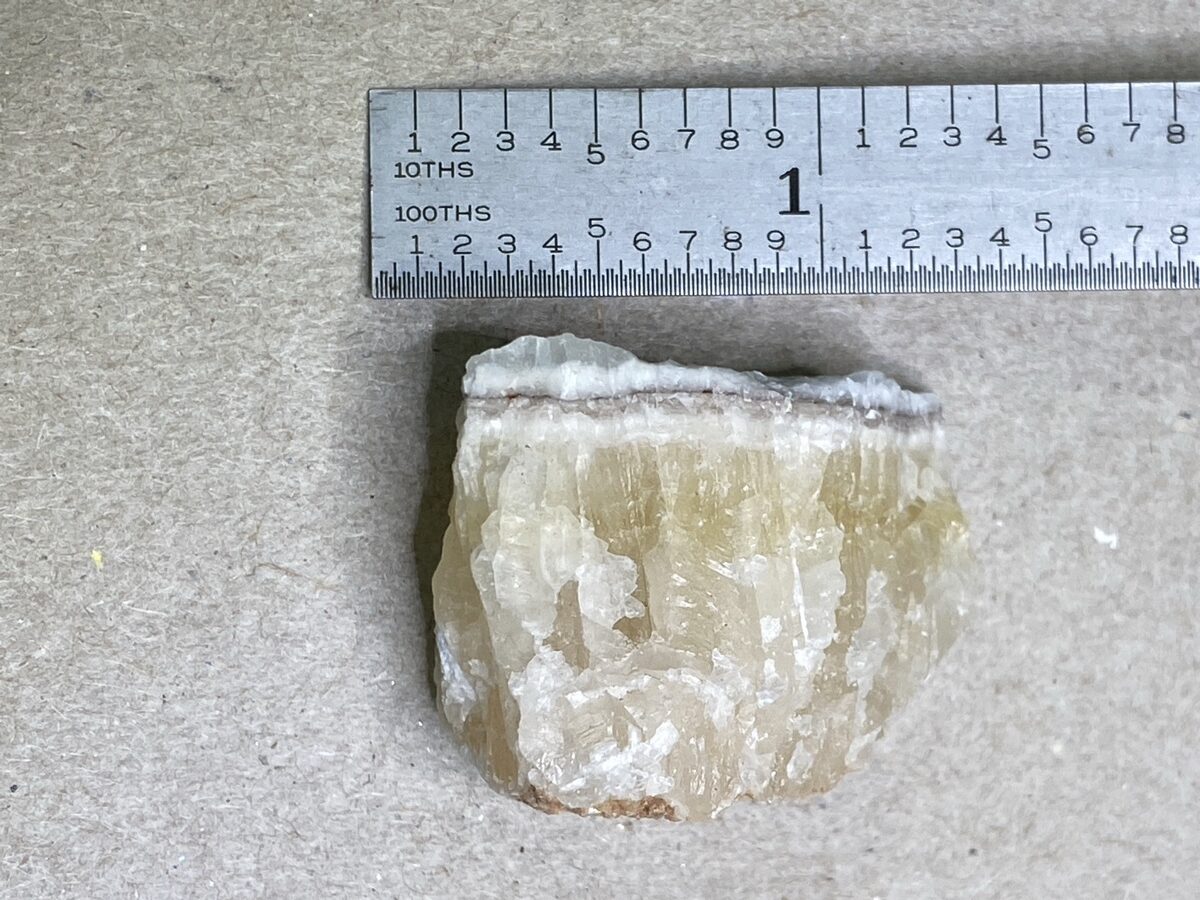
Arkosic sandstone (set no. 37). Sandstone rich in feldspar grains as well as quartz, usually tan or pinkish; it feels like coarse sandpaper.Sandstone (quartz) (set no. 31). Sand grains, mostly quartz, cemented together. Rub it and grains come off on your fingers.Sandstone (greywacke) (set no. 9). A dark, hard, 'dirty' sandstone: sand grains set in a muddy matrix. Very common in California's Coast Ranges.Sandstone with fossils (set no. 22). Sandstone carrying shell fossils; the white curved shapes are shells seen in cross-section.Shale (set no. 19). Hardened mud that splits into thin, flat layers. Soft enough to scratch with a knife.Mudstone (set no. 30). Hardened mud like shale, but blocky: it does not split into thin sheets.Limestone (set no. 39). Made of calcite, so it fizzes in dilute acid (vinegar on the powder works slowly) and a knife scratches it.Dolostone (set no. 3). Looks like limestone but is made of dolomite: it fizzes in acid only weakly, or only when powdered.Chert (black) (set no. 40). The same rock coloured black by organic matter, per the seller's sheet.Jasper, agate or petrified wood (set no. 13). Varieties of microcrystalline quartz. This brick-red piece shows the iron colouring typical of jasper.Breccia (set no. 1). Angular broken fragments cemented in a finer matrix. (Rounded fragments would make it a conglomerate.)Travertine (set no. 42). Calcite deposited by spring water, often banded or columnar and translucent. Fizzes in acid.