Igneous Rocks
Igneous rocks form when molten rock cools and hardens. Two things identify almost all of them: grain size, which tells you how fast the rock cooled, and colour, which tells you roughly what it is made of.
Reading an igneous rock
- Coarse grains you can see with the naked eye mean the magma cooled slowly underground (intrusive or plutonic rock): granite, granodiorite, diorite, gabbro, peridotite.
- Fine grains, too small to pick out, mean lava cooled quickly at the surface (extrusive or volcanic rock): rhyolite, andesite, basalt.
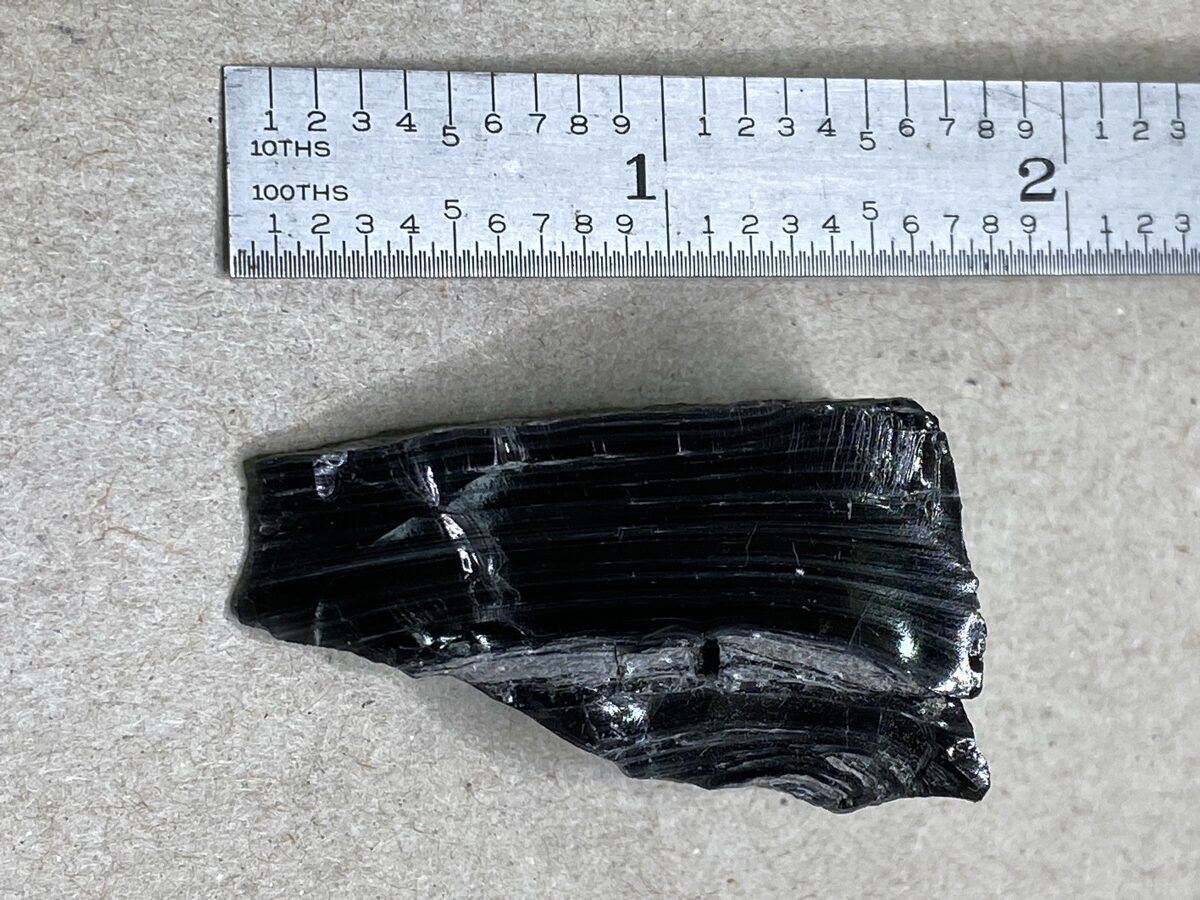
- Glass or bubbles mean it cooled almost instantly: obsidian and pumice.
- Fragments of ash and pumice welded or cemented together are pyroclastic rocks: tuff and ignimbrite.
Colour runs from light to dark as silica falls and iron and magnesium rise. Each coarse rock has a fine-grained twin of the same composition:
| Composition | Coarse (cooled underground) | Fine (erupted) |
|---|---|---|
| Light: quartz and feldspar | Granite, granodiorite | Rhyolite |
| Intermediate | Diorite | Andesite |
| Dark: pyroxene and feldspar | Gabbro | Basalt |
| Very dark green: olivine | Peridotite | (rare at the surface) |
The specimens
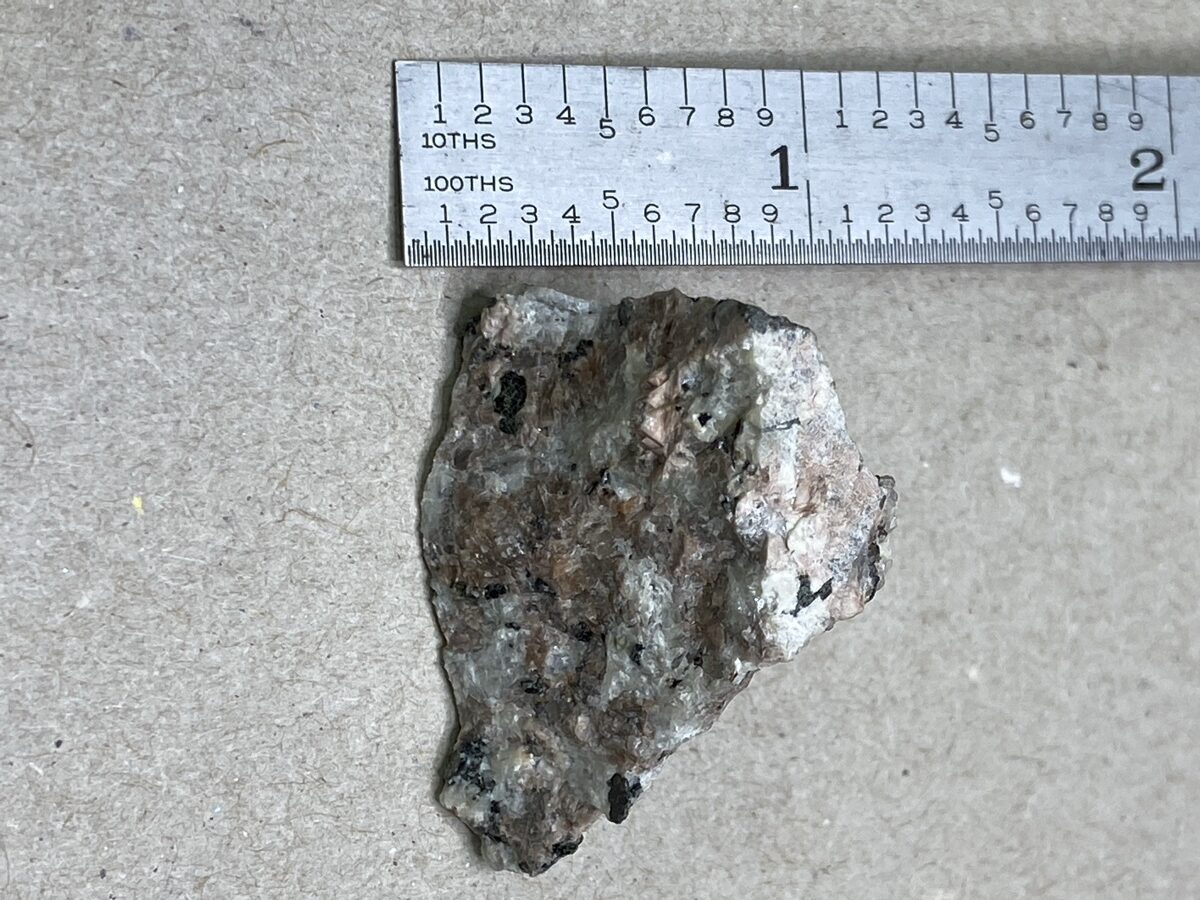
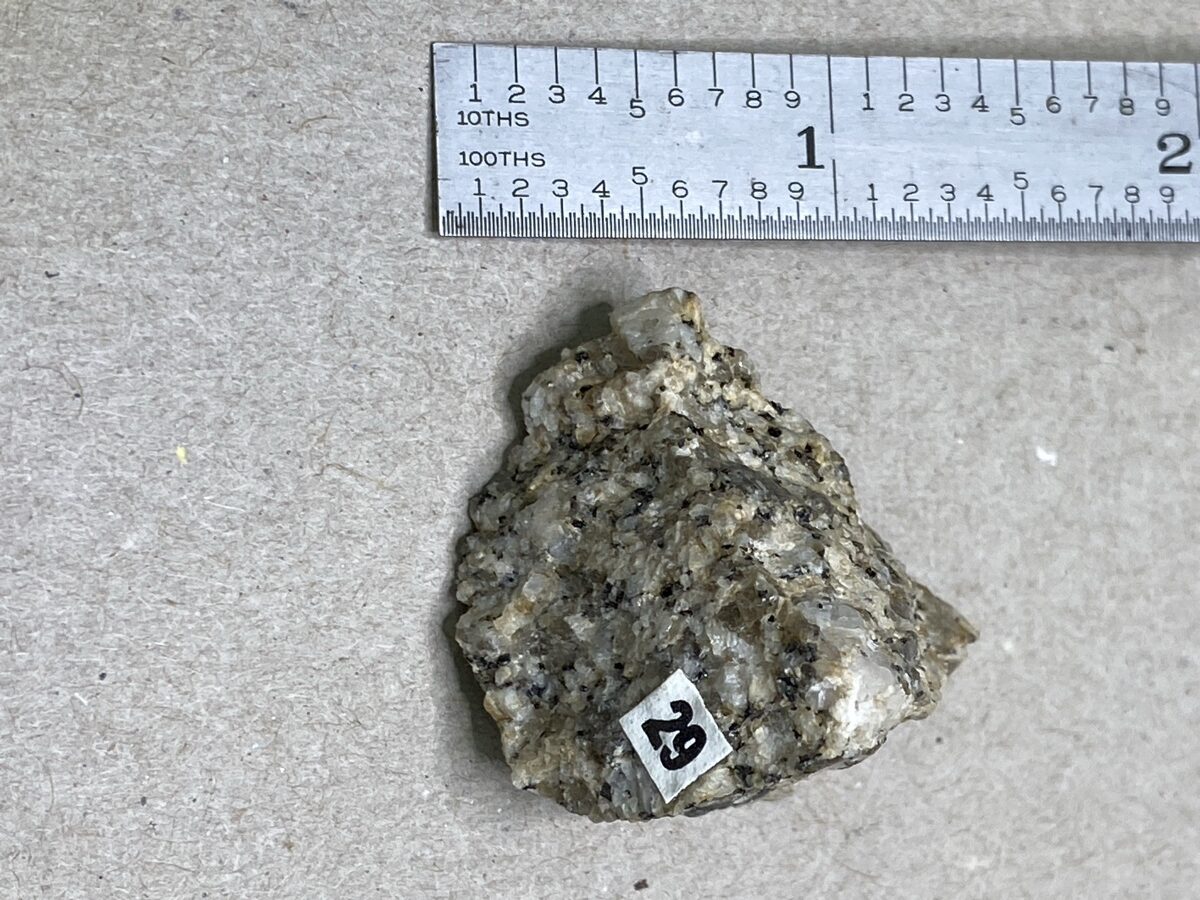
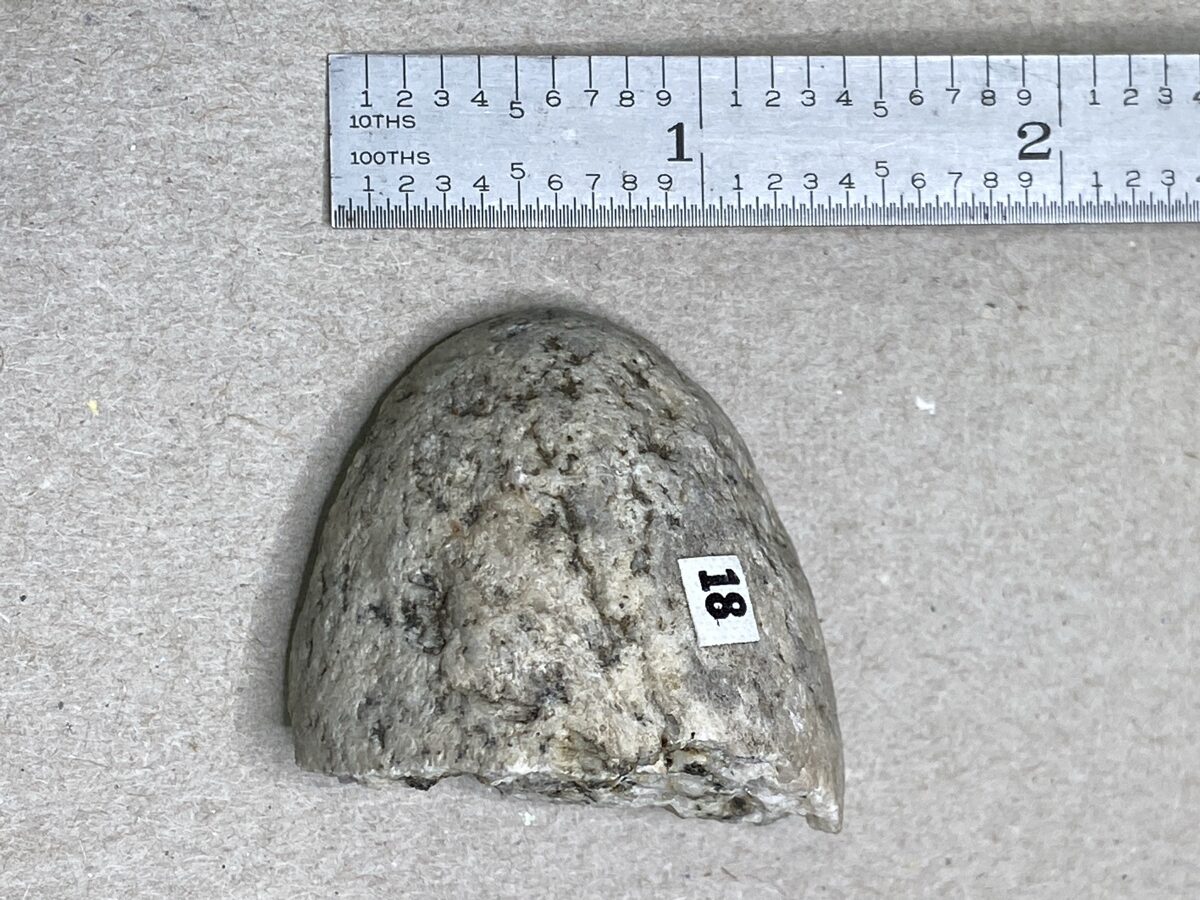
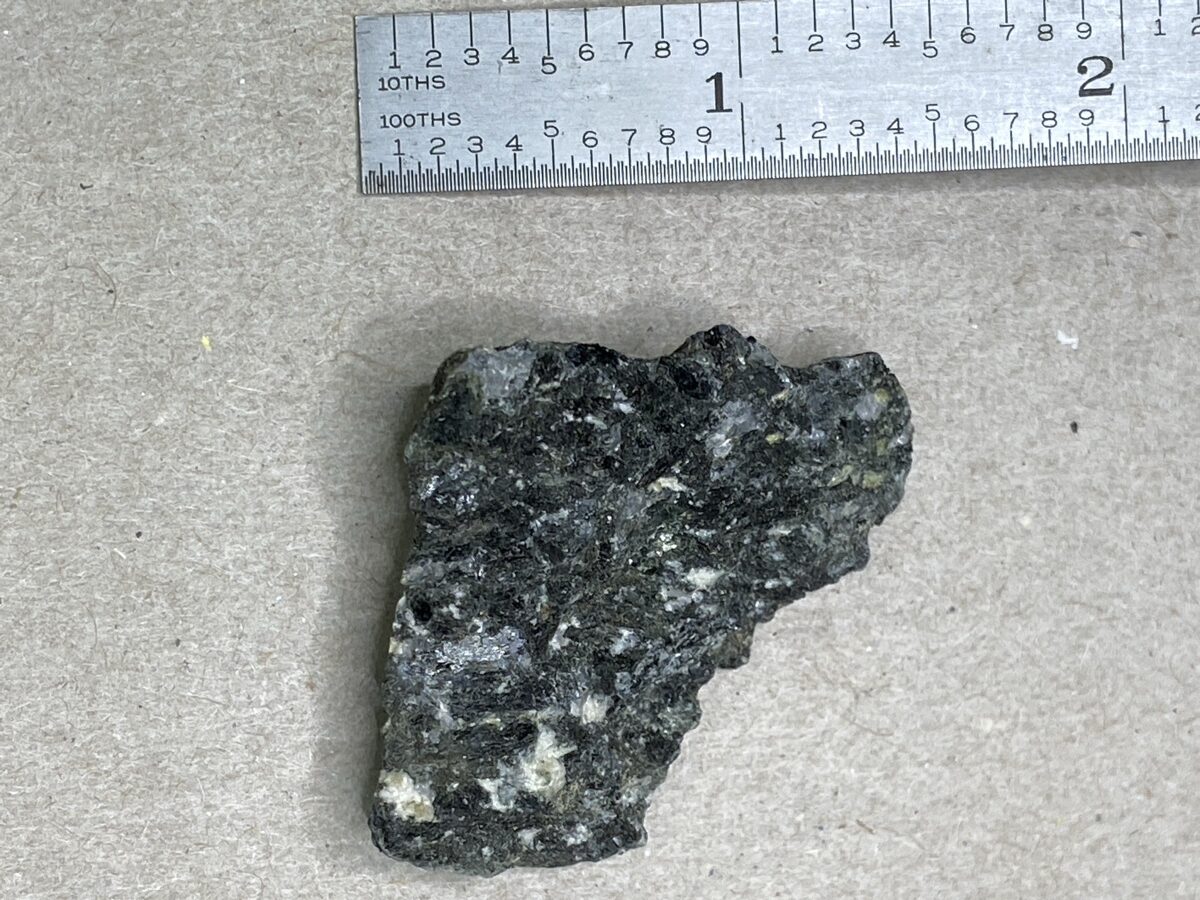
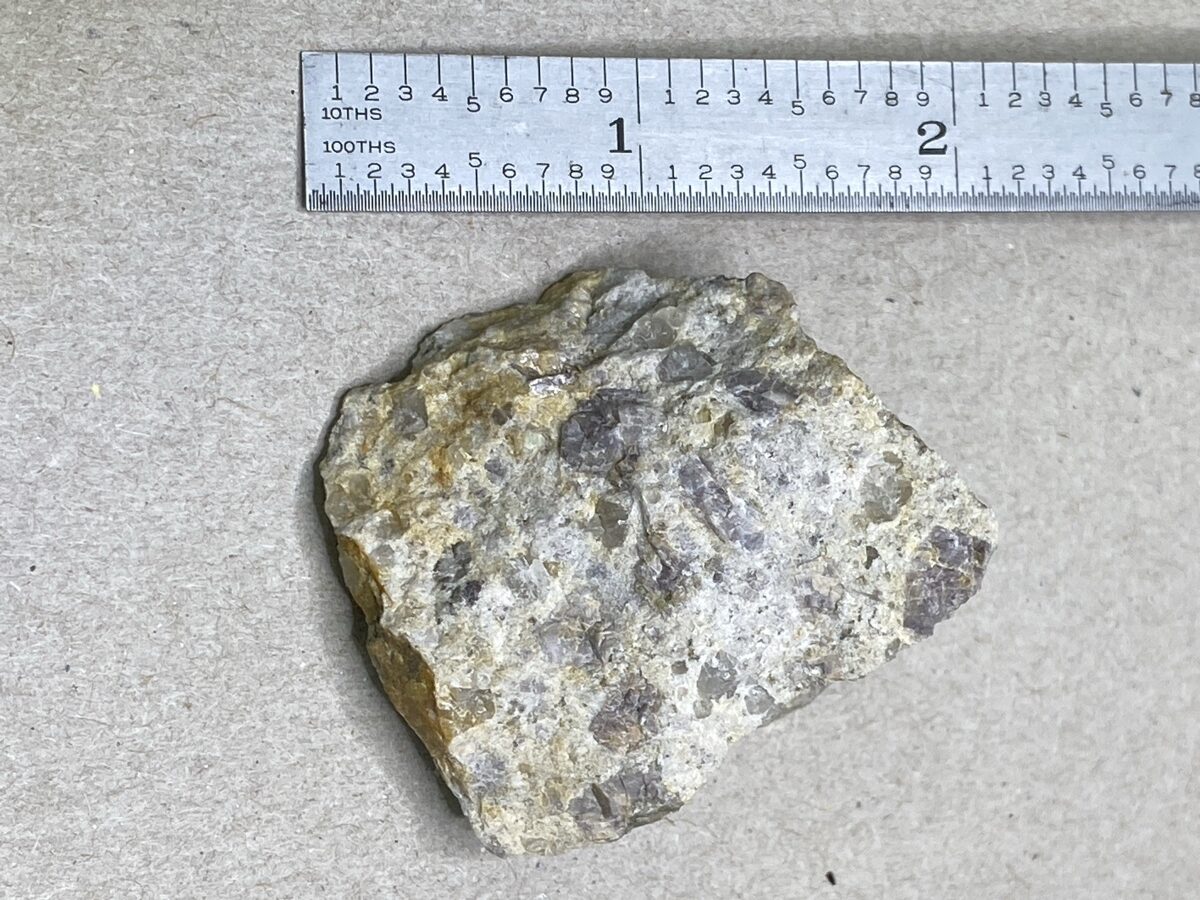
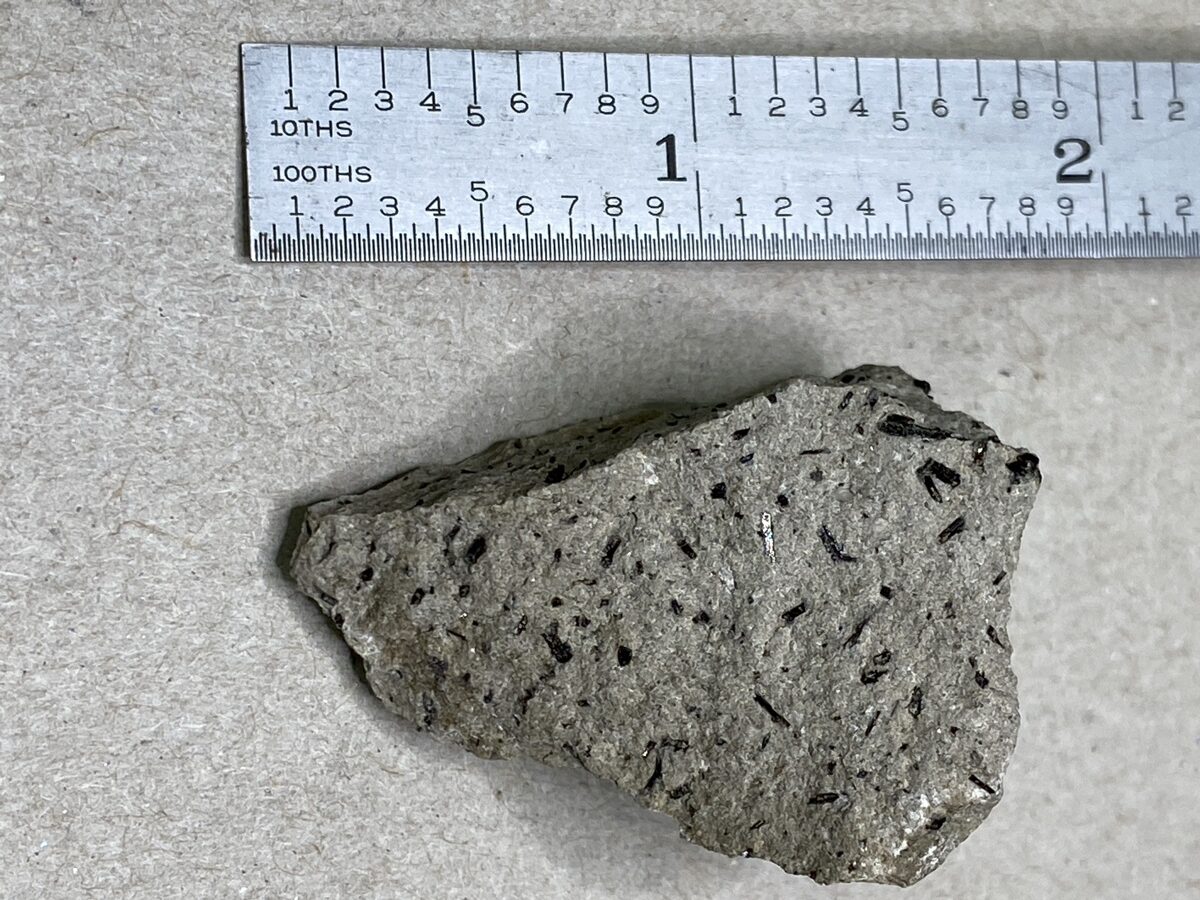
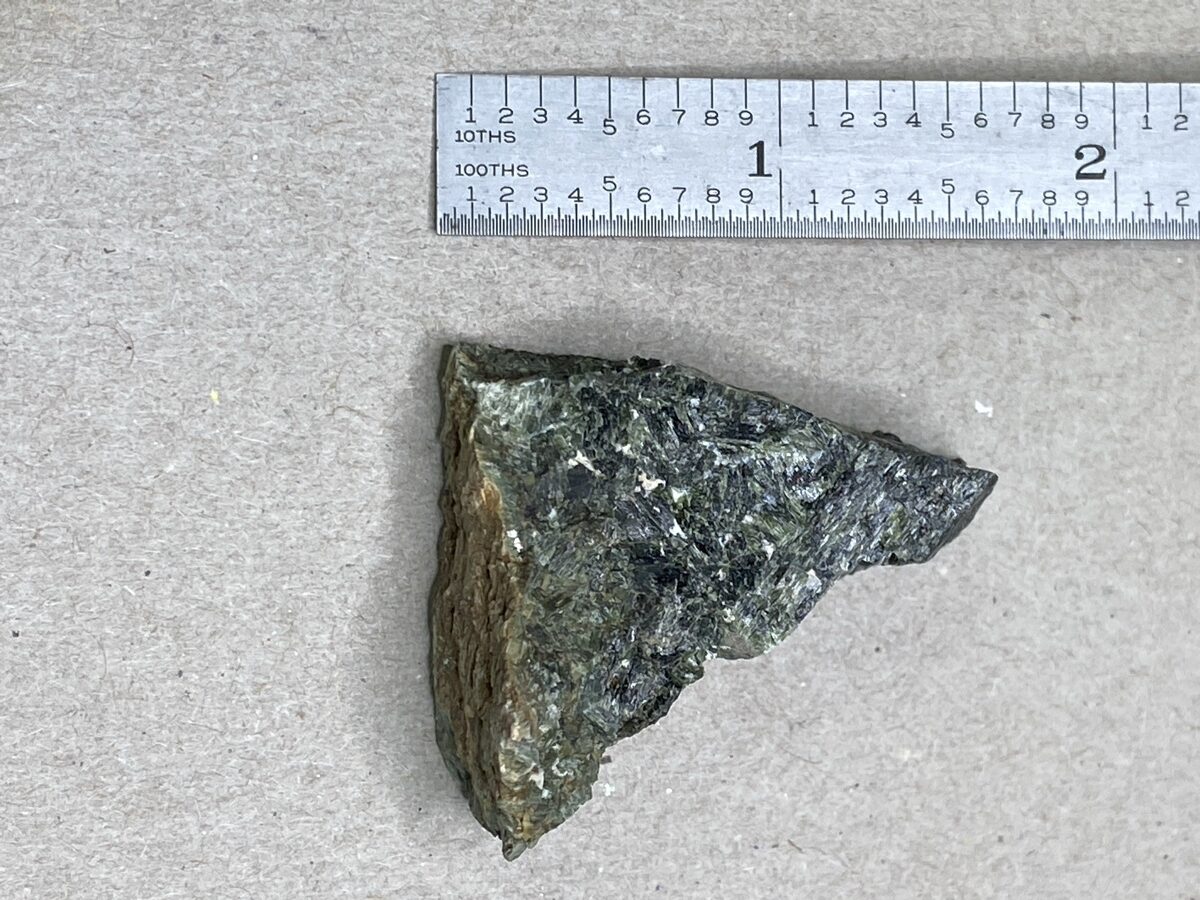
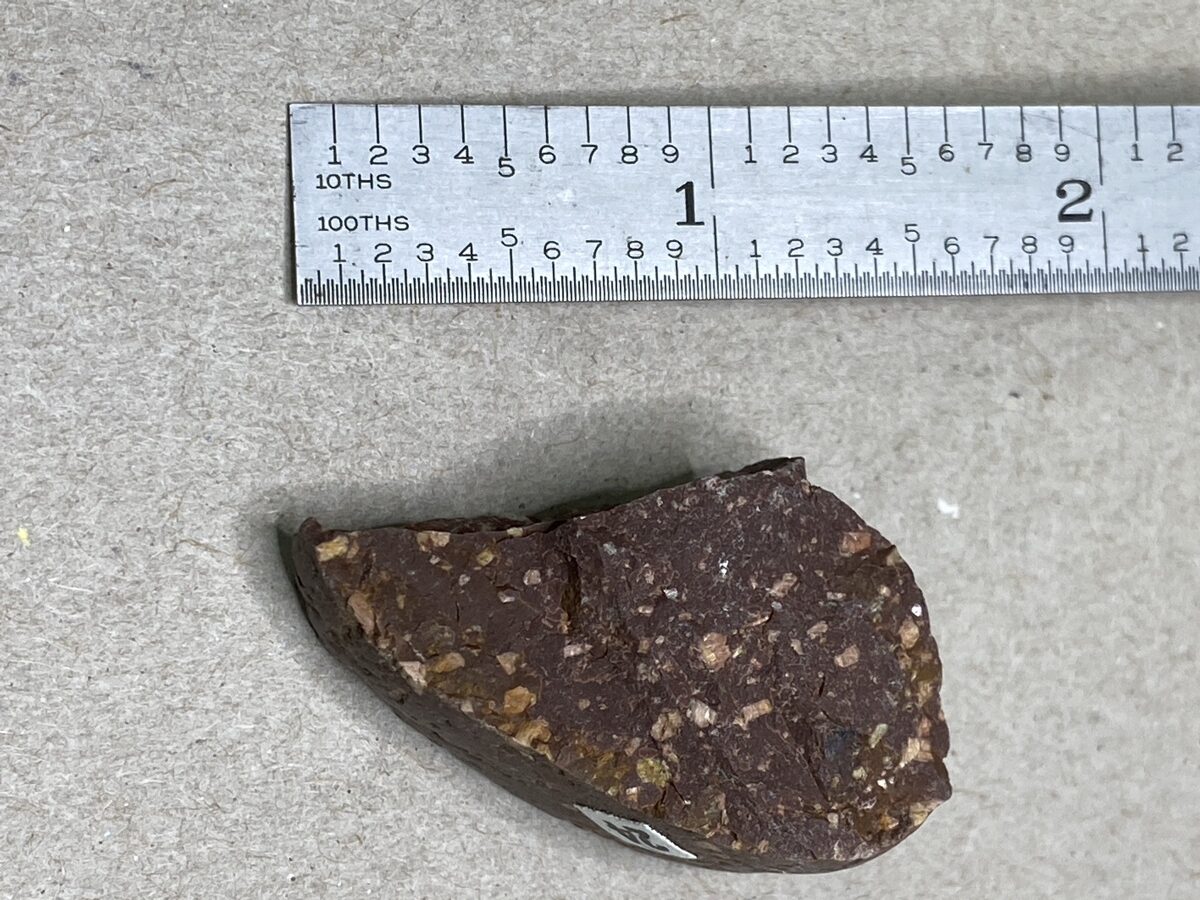
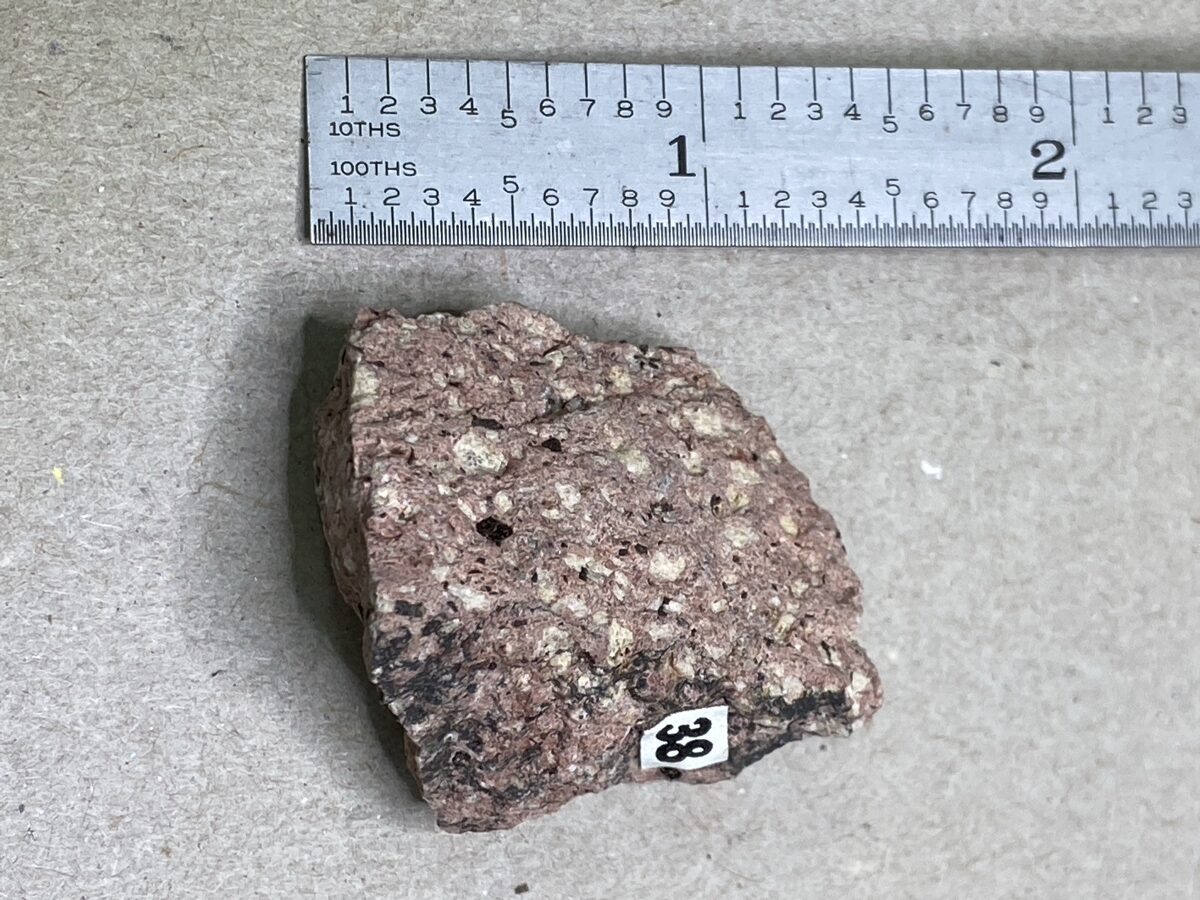
The specimens are from two teaching sets Bosco bought from his geology instructor at Cabrillo College: a 42-piece California rock set and a 37-piece California mineral set. Each name is the one printed on the set’s own legend sheet, and every photo is Bosco’s, shot against a steel ruler marked in inches.