A mineral is identified by its physical properties, not by its colour alone: the same mineral can come in many colours, and different minerals can share one. Work through these five and most common minerals give themselves up.
Five properties to check
Hardness — what scratches it, and what it scratches. See the Mohs Hardness Scale. A fingernail is about 2.5, a copper coin 3, a knife or glass 5.5.
Streak — the colour of its powder, made by rubbing it on unglazed white porcelain. Hematite always streaks red-brown; pyrite streaks greenish black.
Cleavage and fracture — whether it breaks along flat planes, and how many. Mica peels in sheets (one direction); feldspar breaks at right angles (two); halite into cubes (three); quartz has none and breaks in curves.
Special tests — calcite fizzes in dilute acid, magnetite sticks to a magnet, halite tastes salty, talc feels soapy, barite feels heavy.
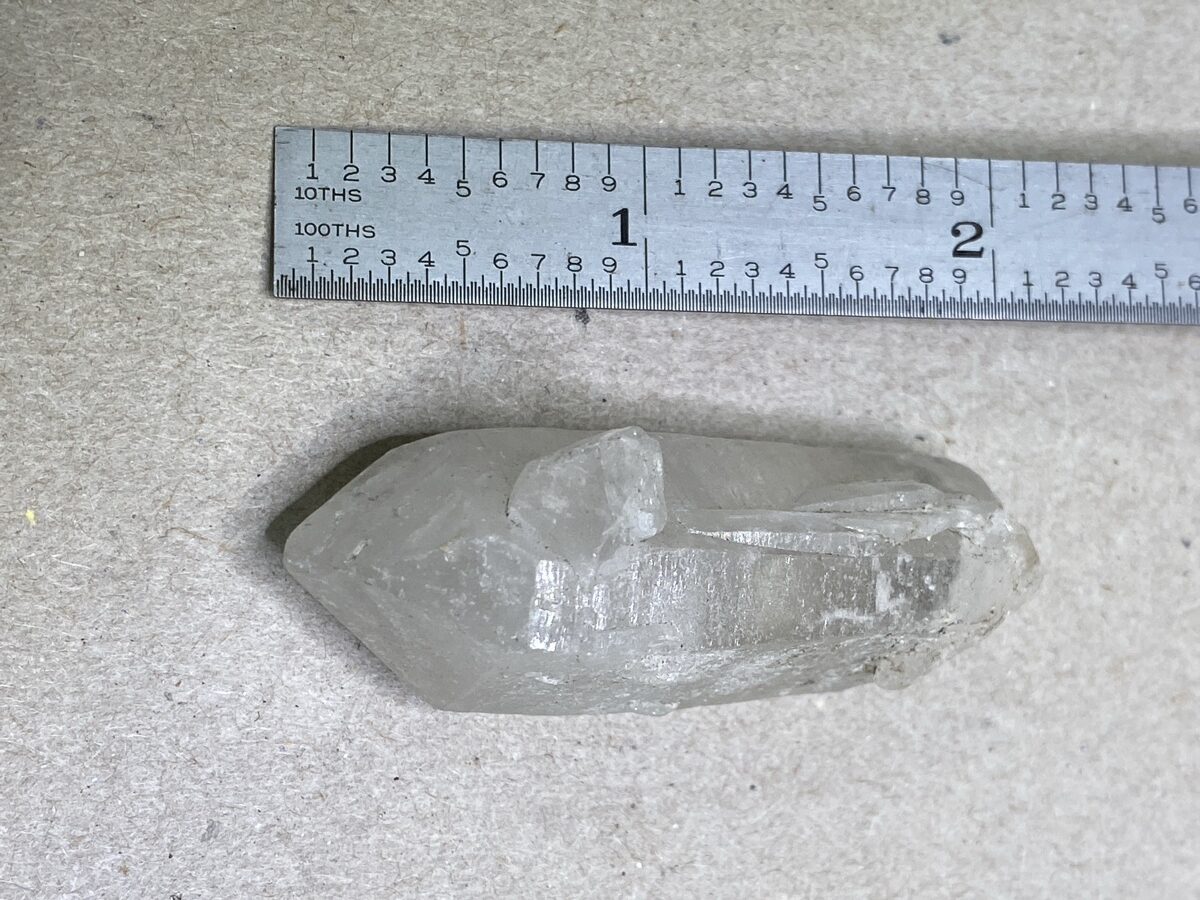
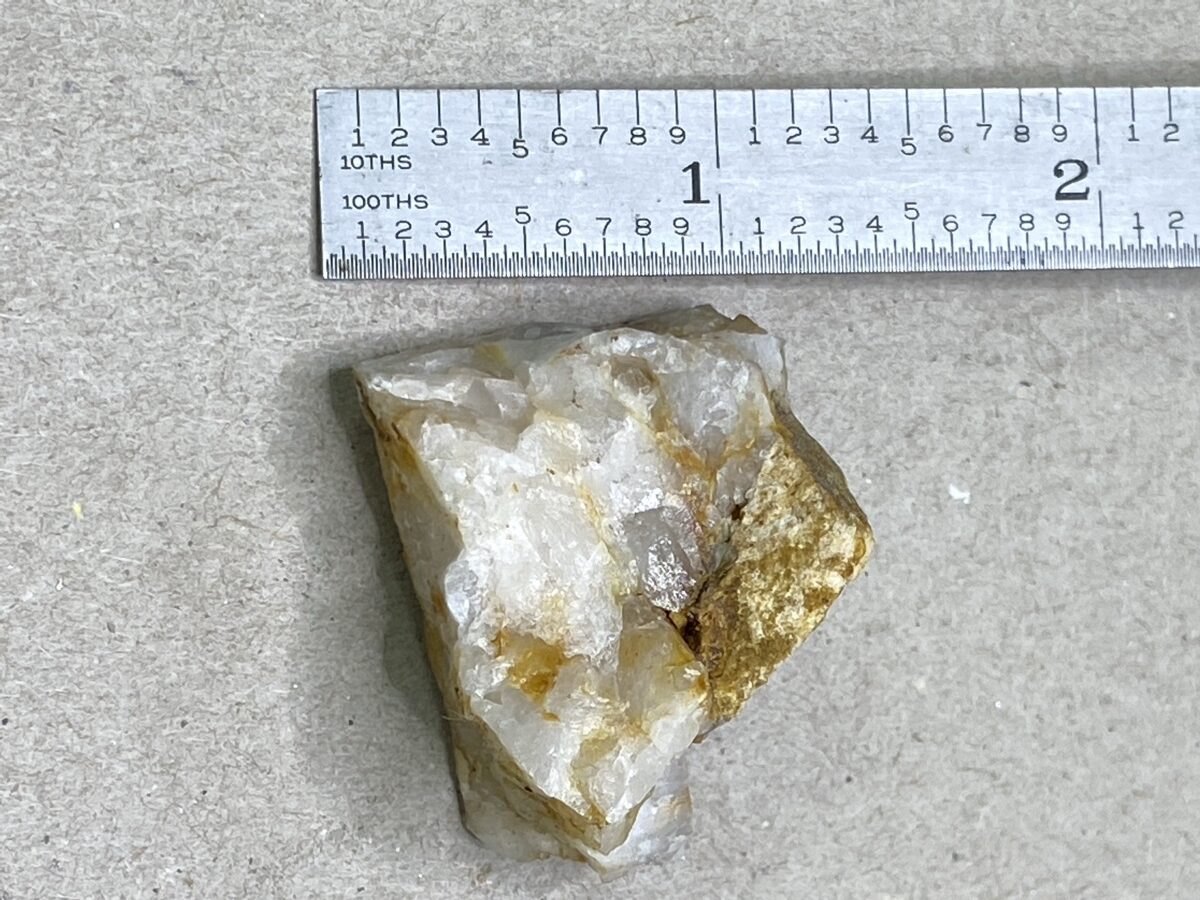
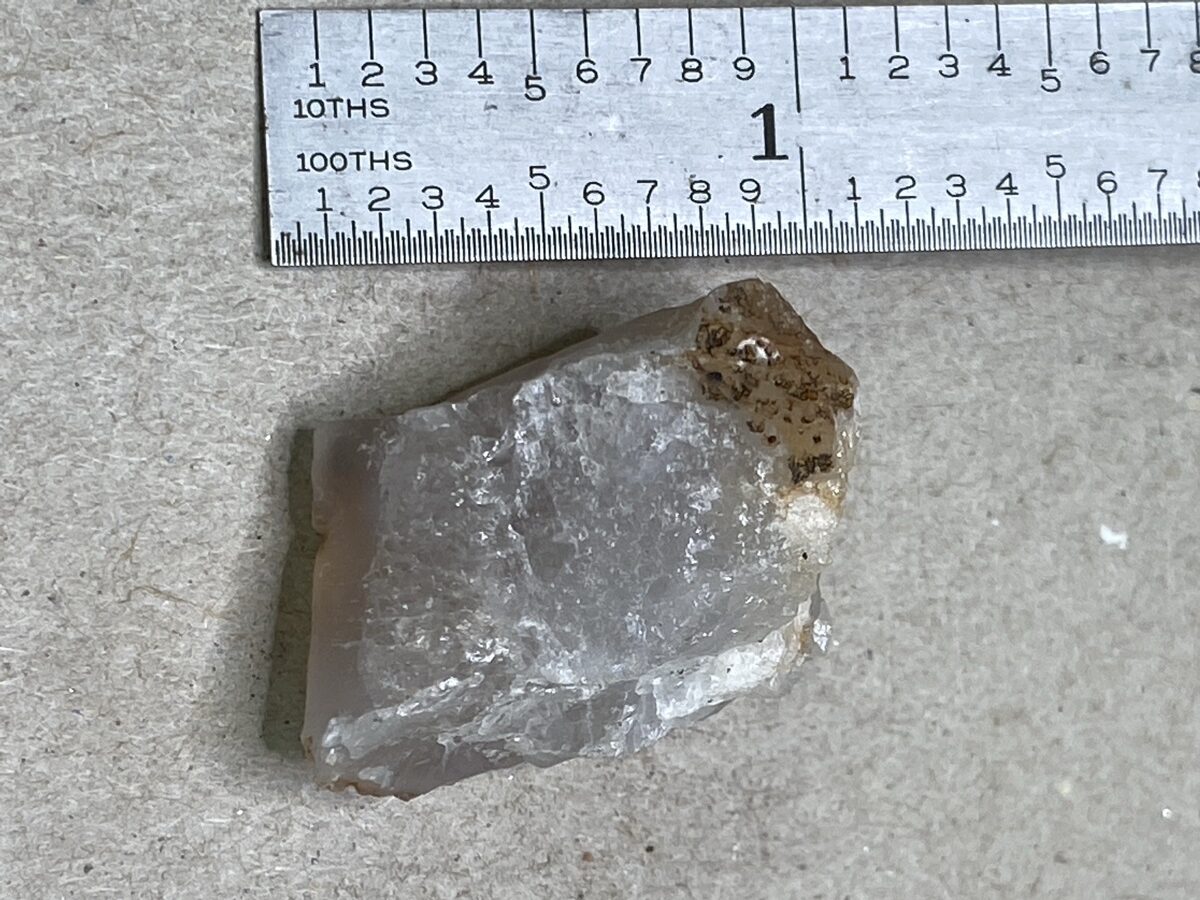
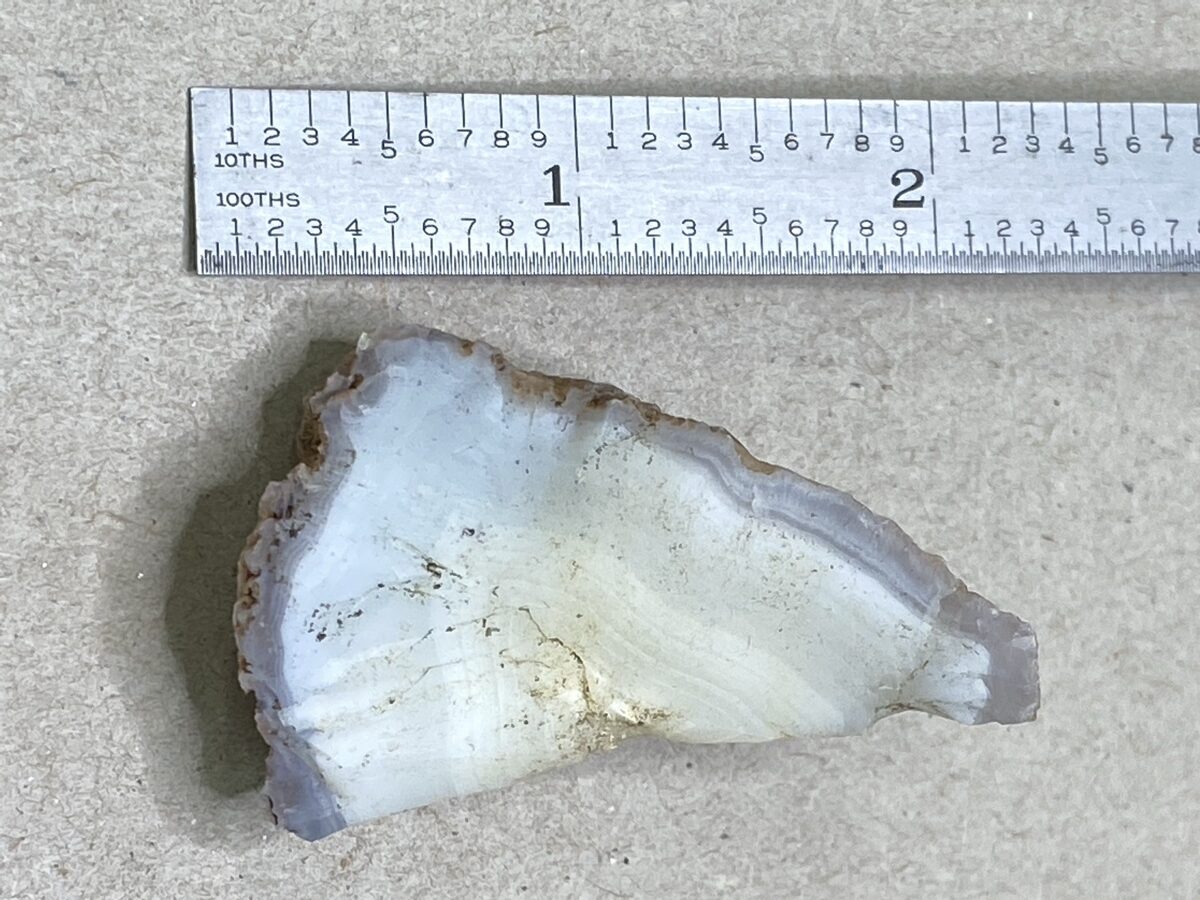
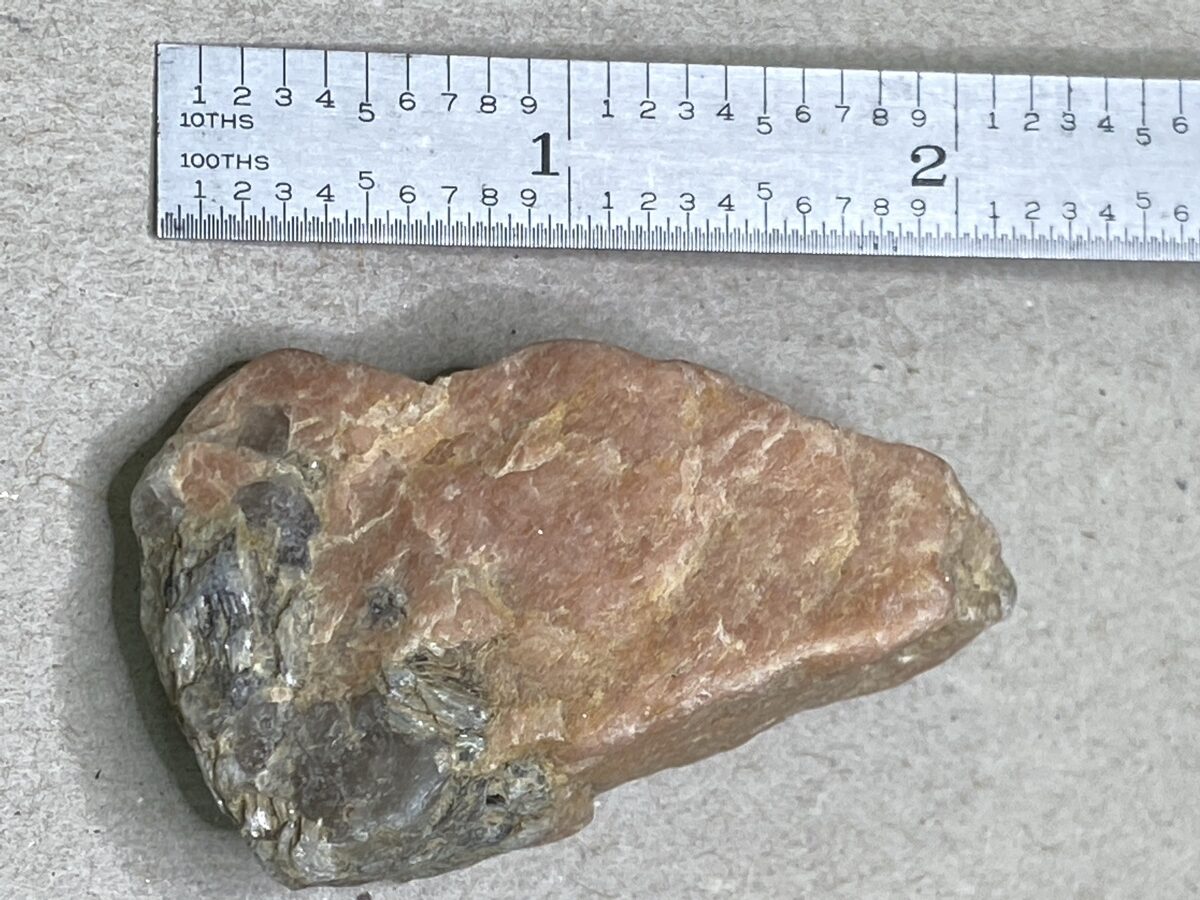
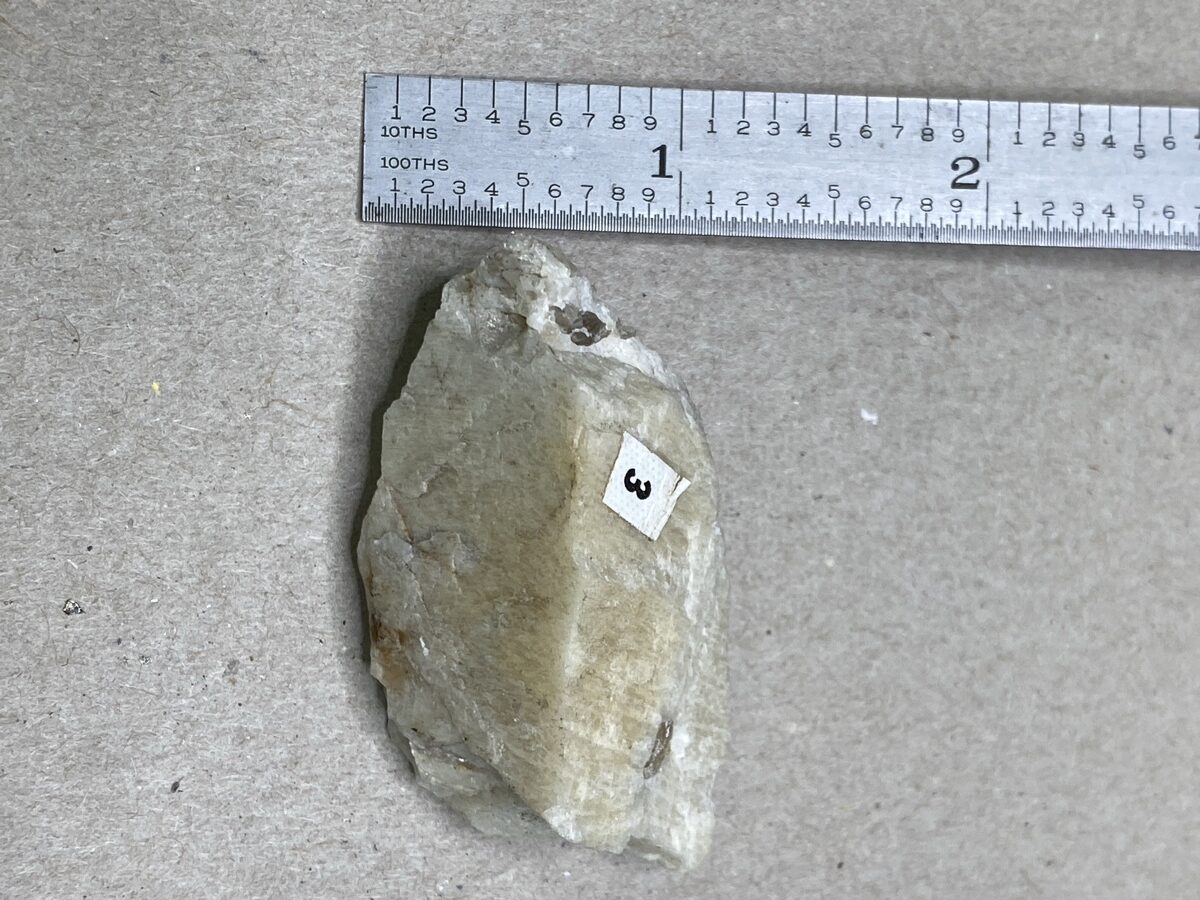
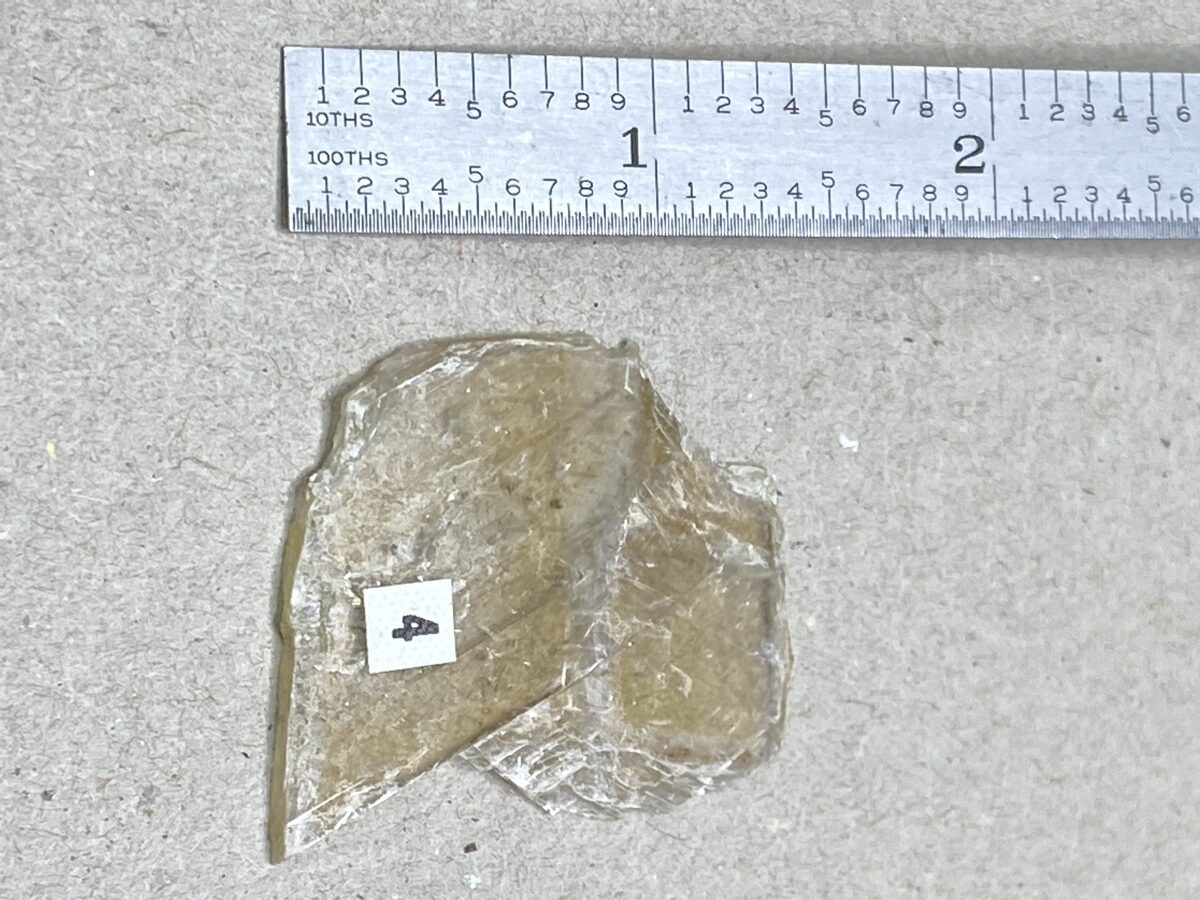
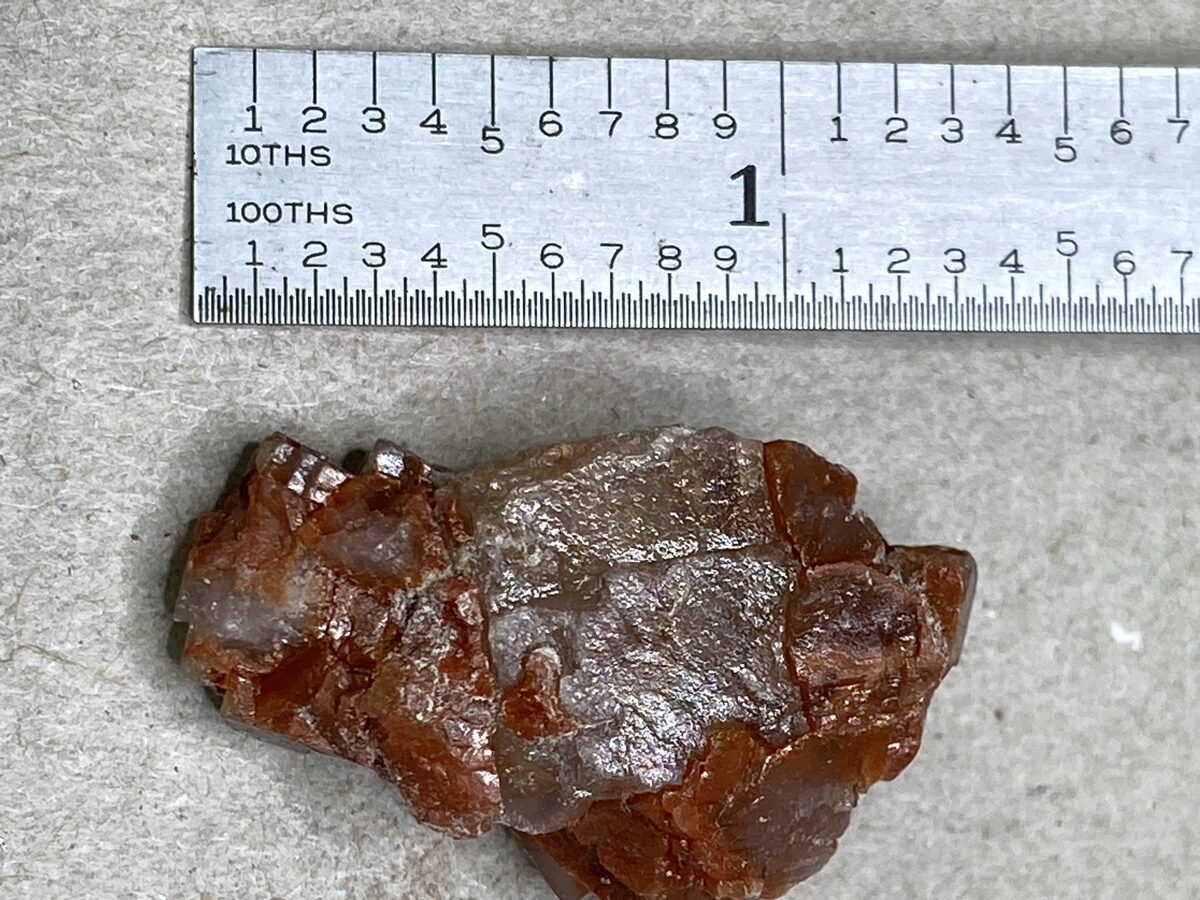
The specimens are from two teaching sets Bosco bought from his geology instructor at Cabrillo College: a 42-piece California rock set and a 37-piece California mineral set. Each name is the one printed on the set’s own legend sheet, and every photo is Bosco’s, shot against a steel ruler marked in inches.
Silicates
Minerals built on silicon and oxygen. They make up most of the Earth’s crust, and most of every rock in the rock identification guide.
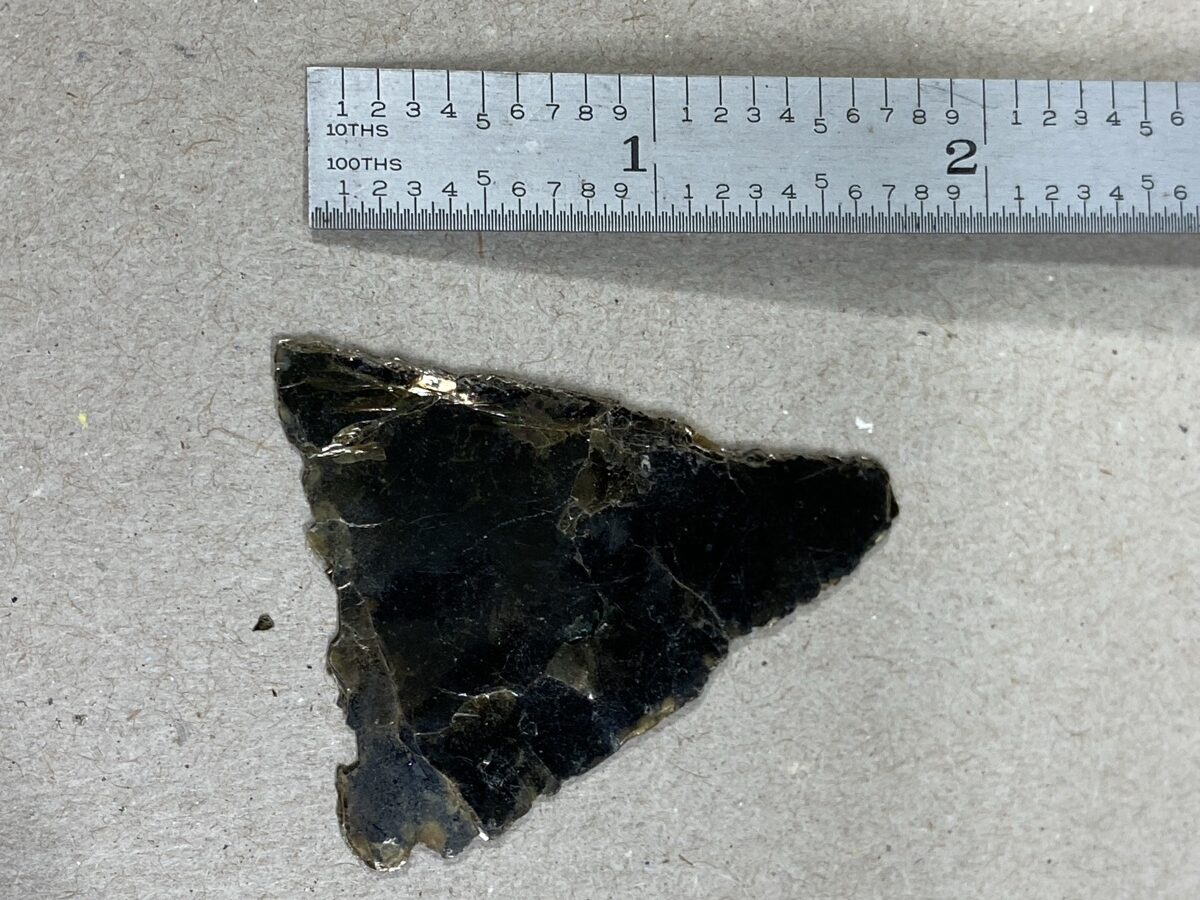
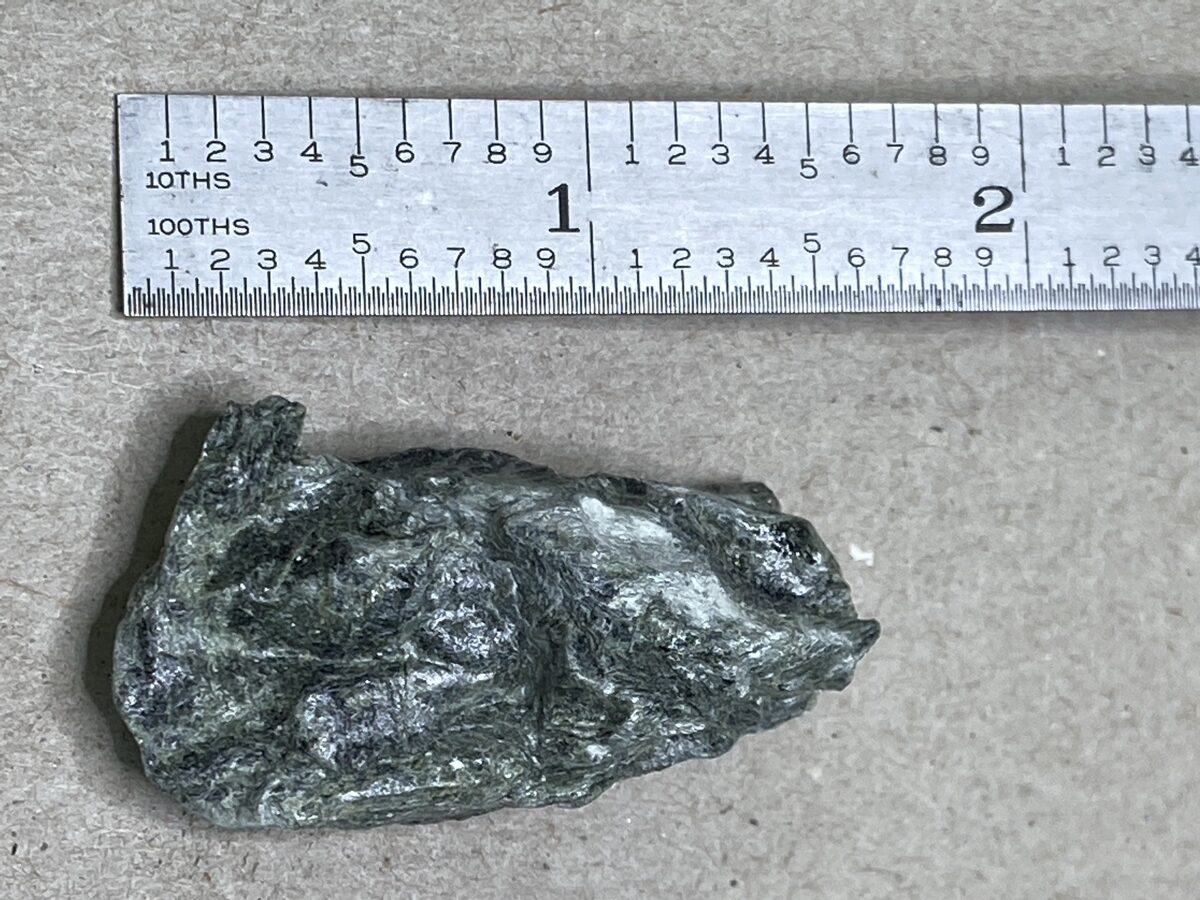
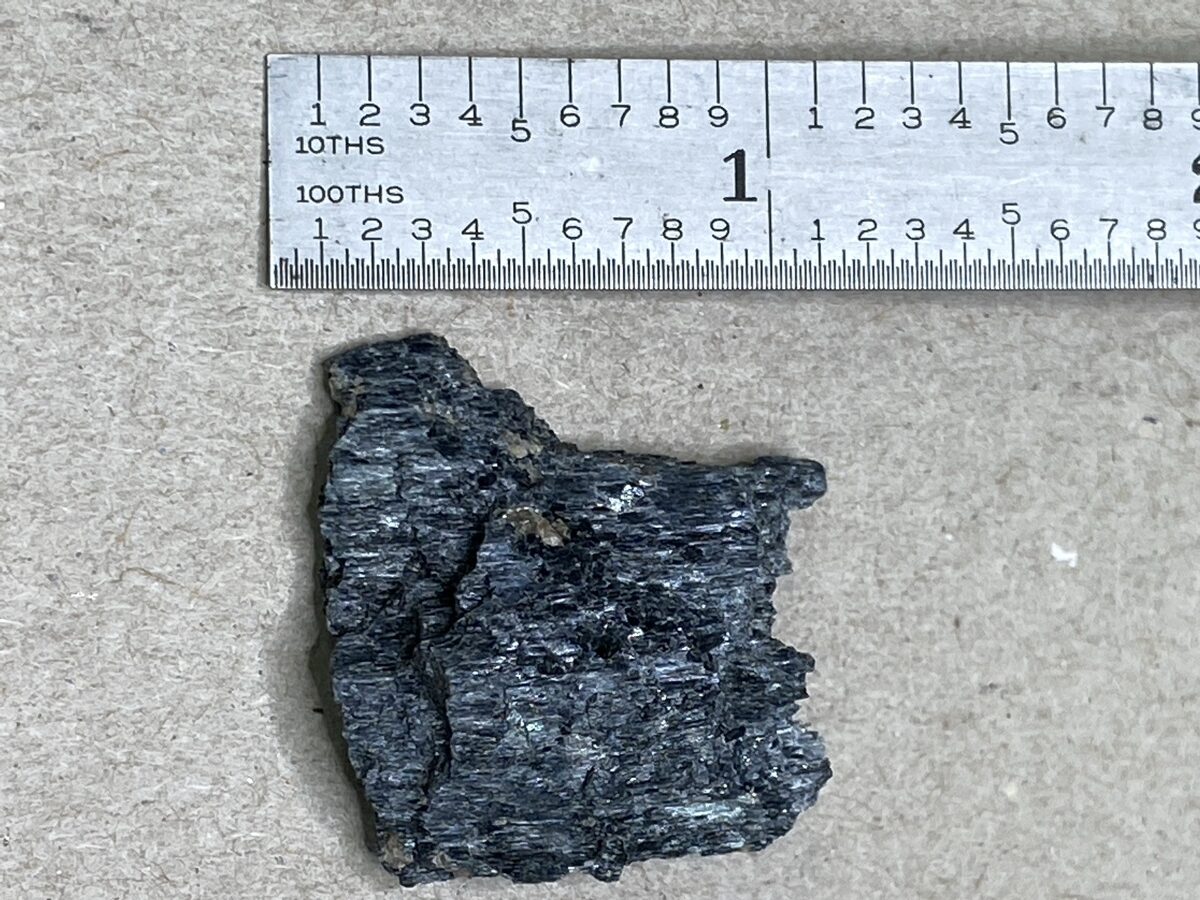
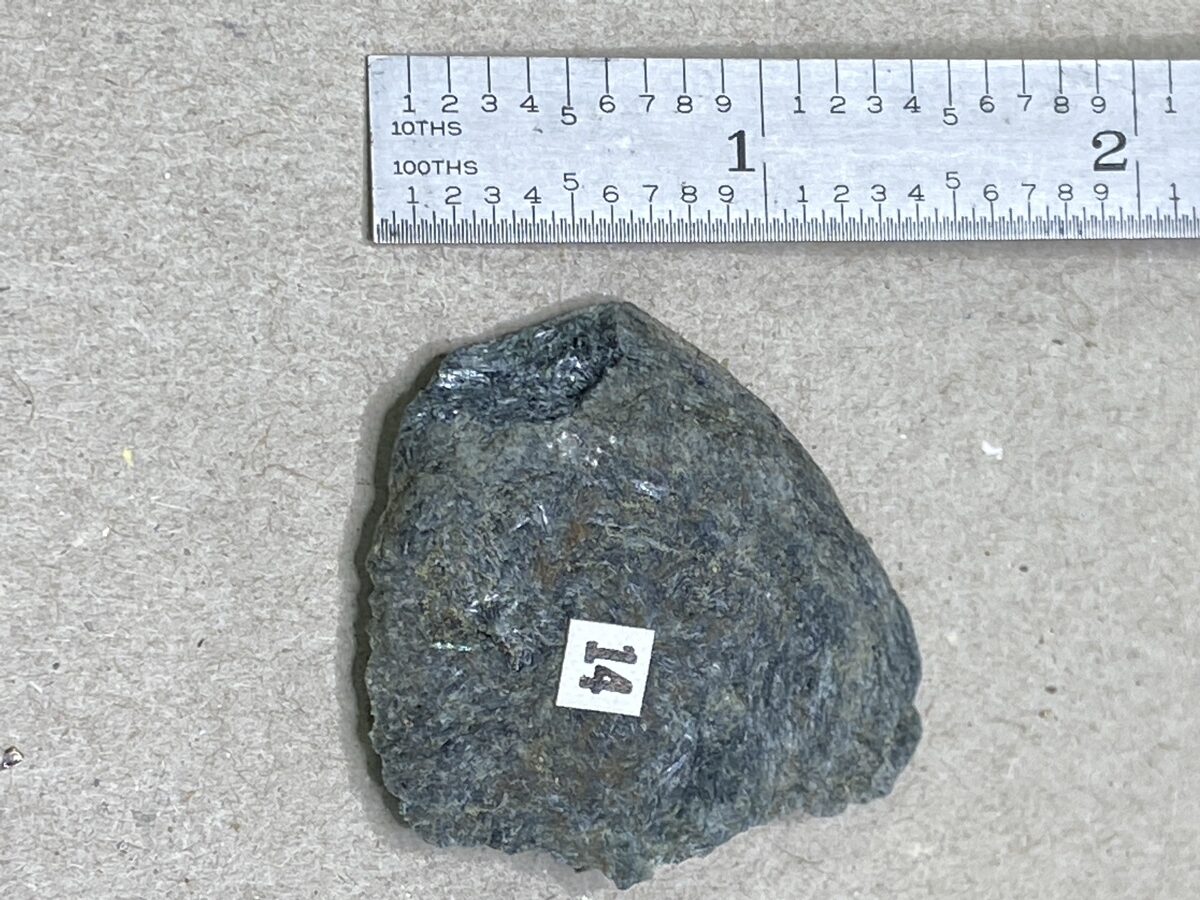
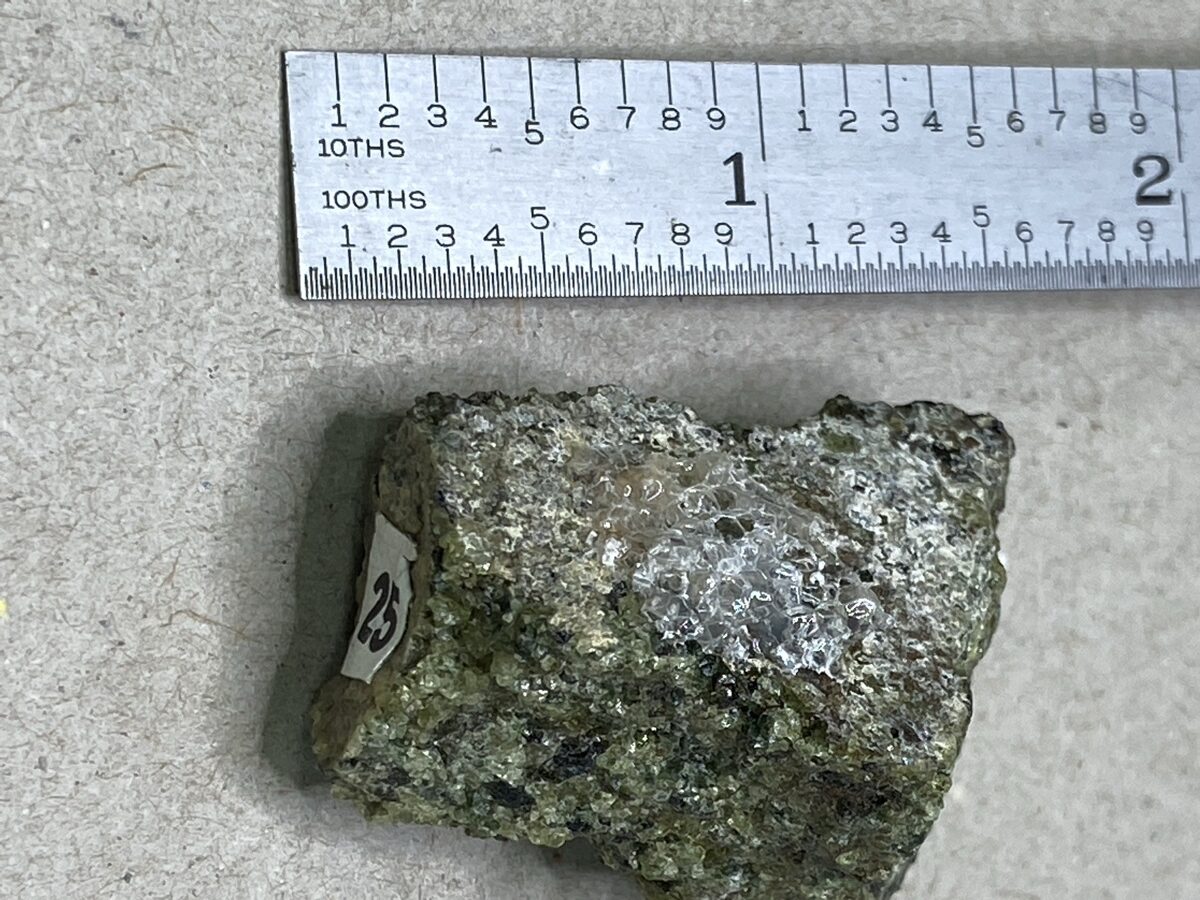
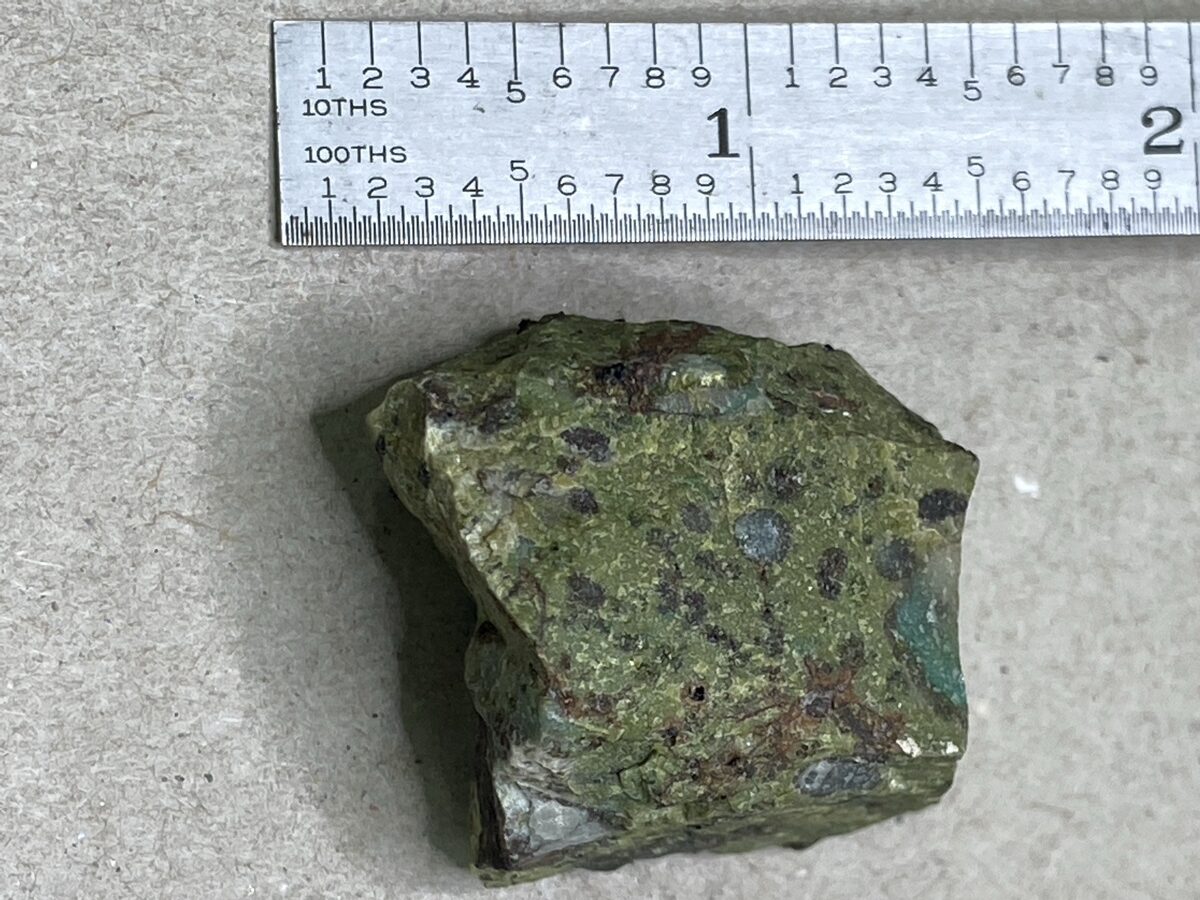
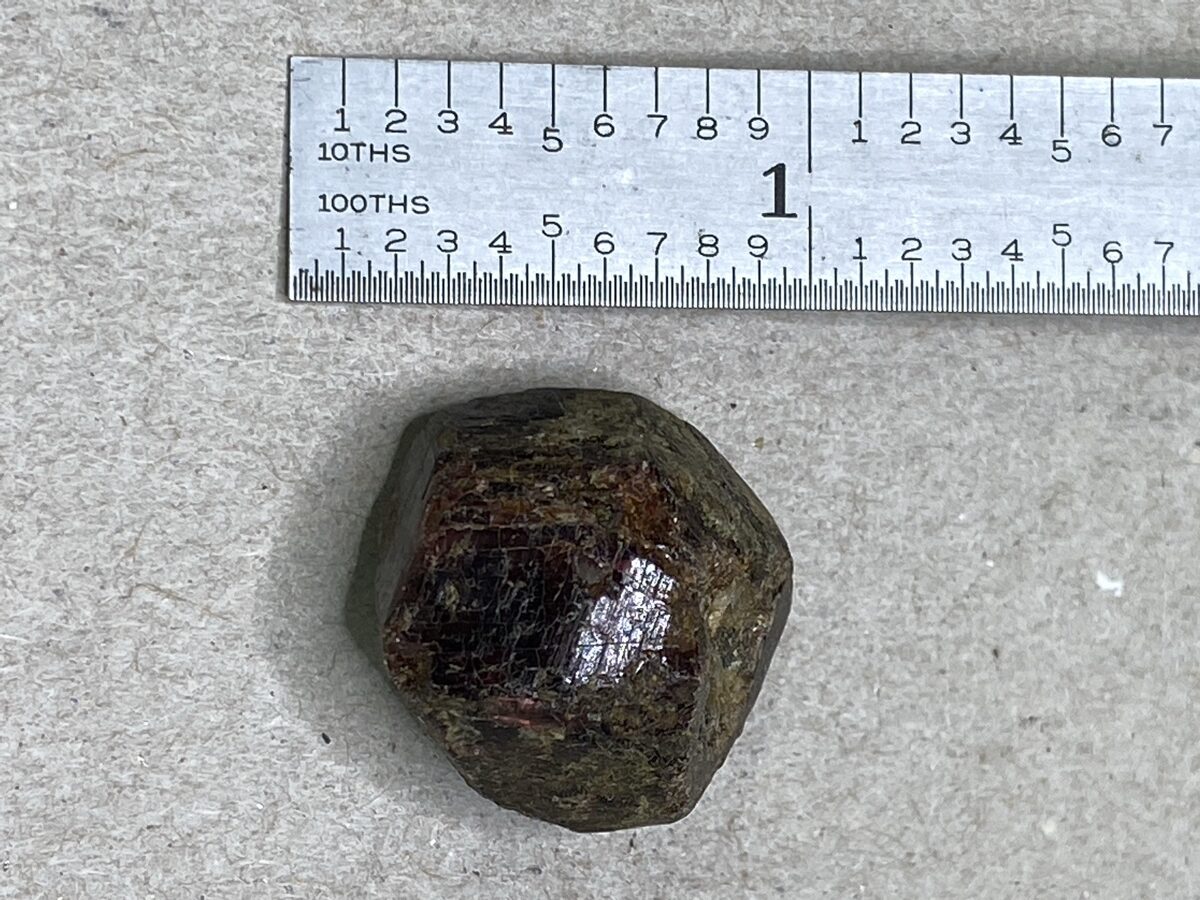
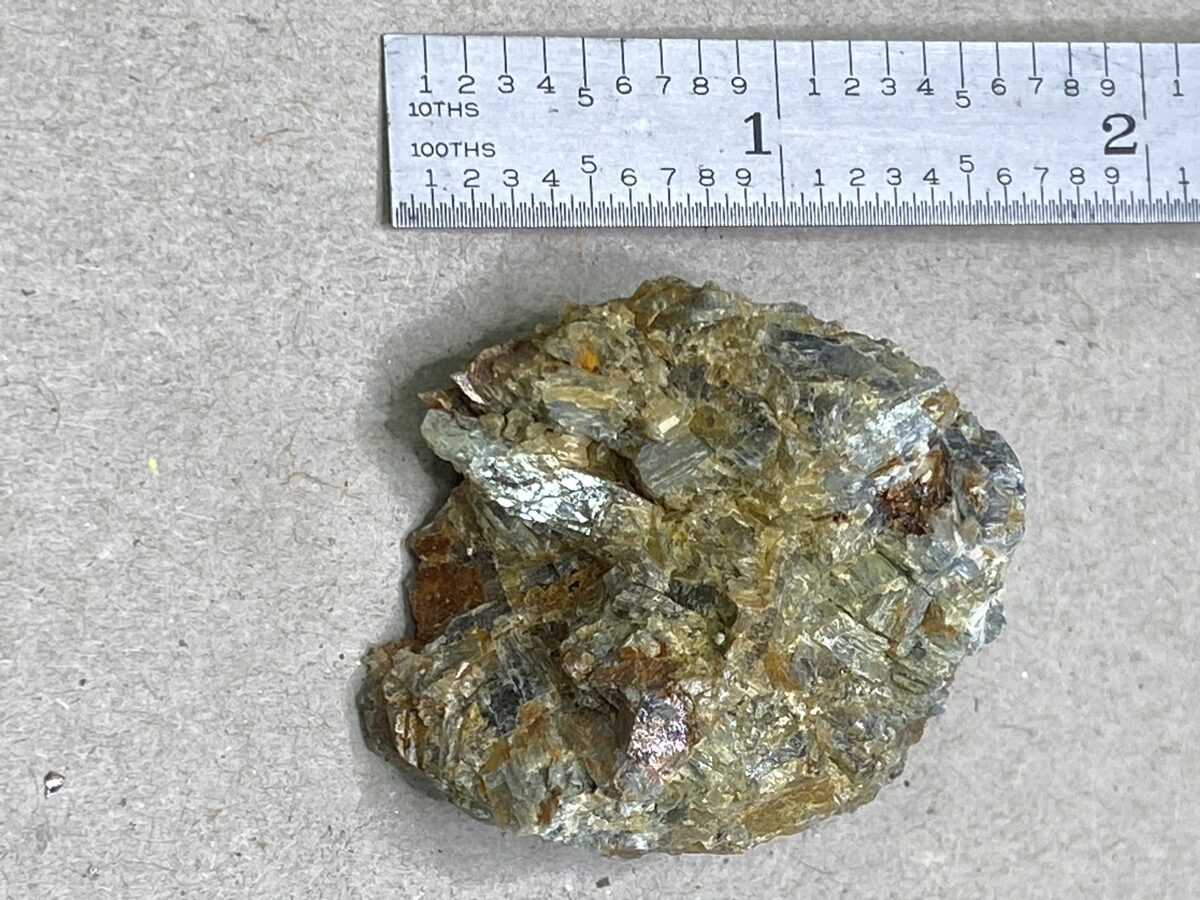
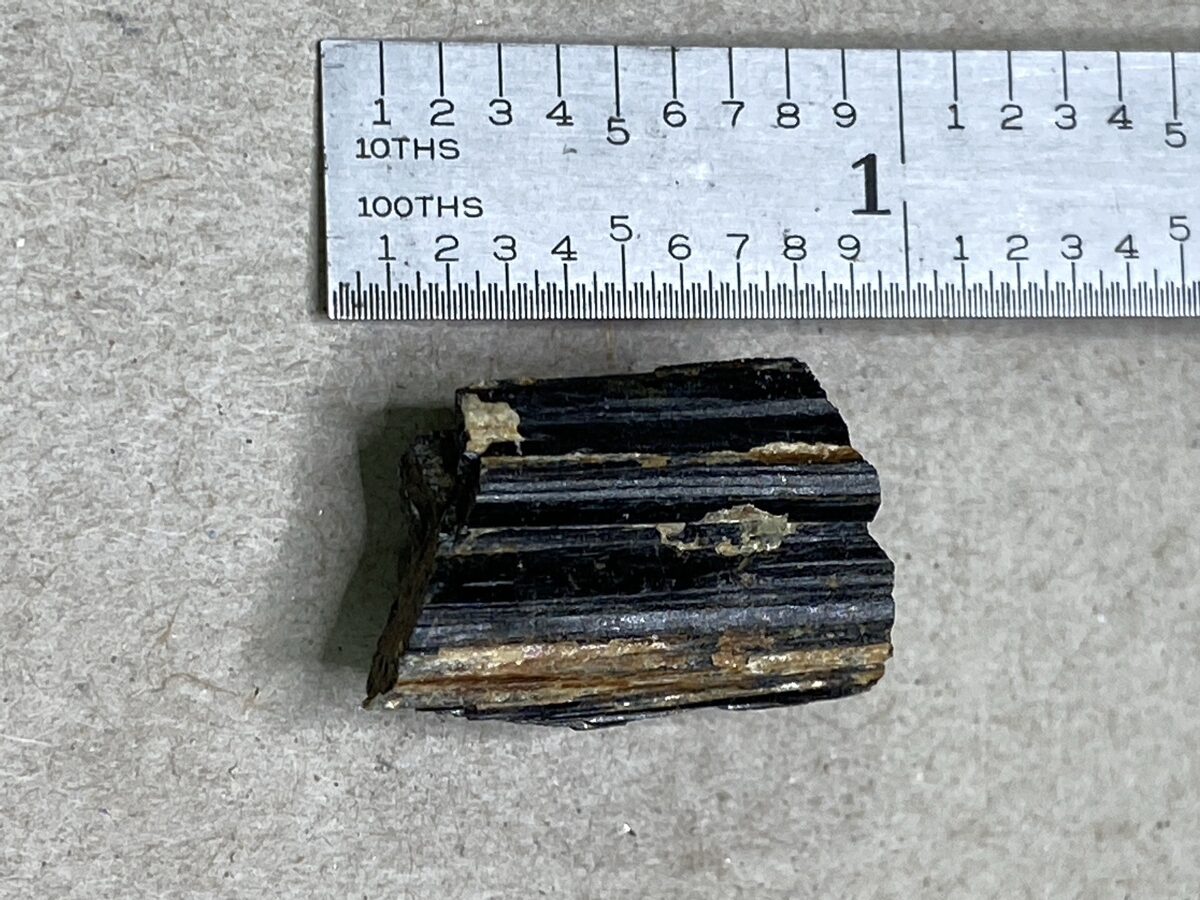
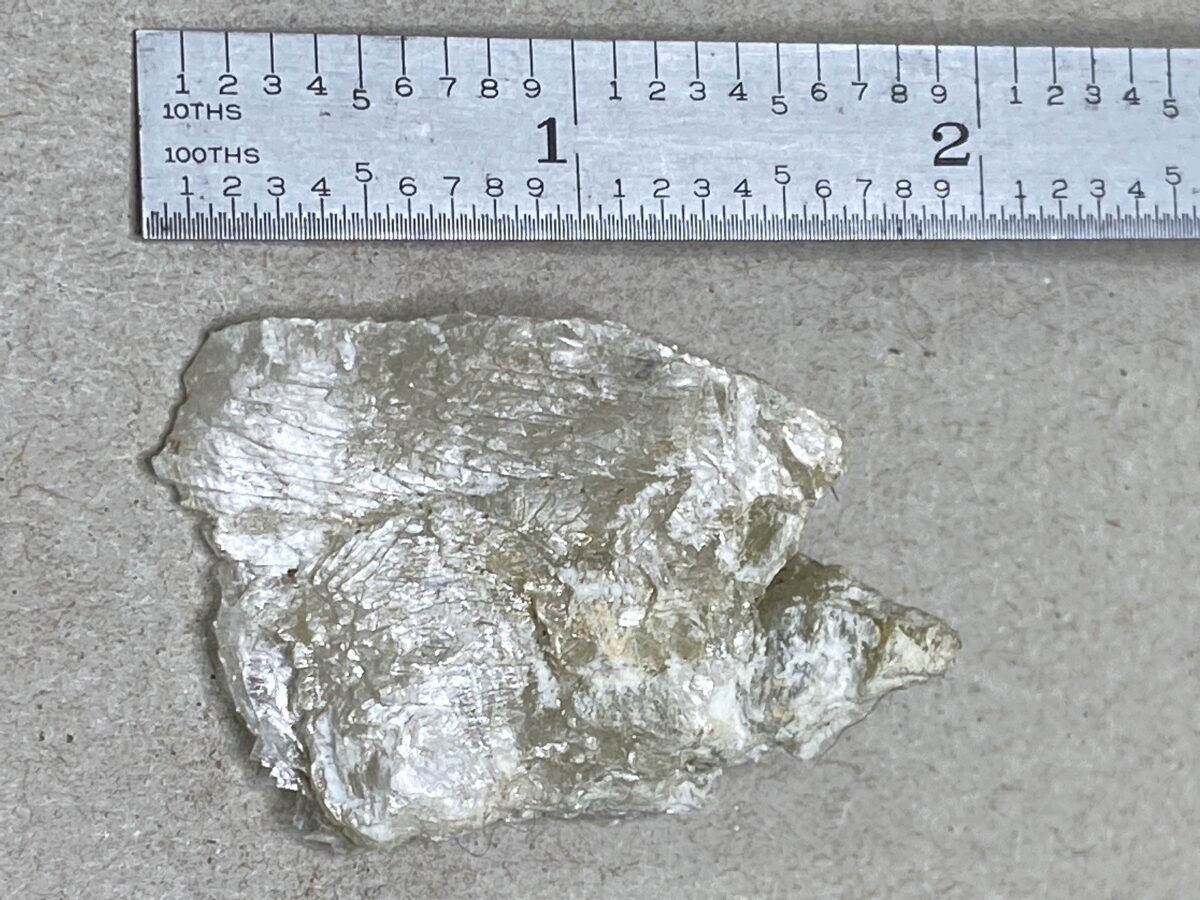
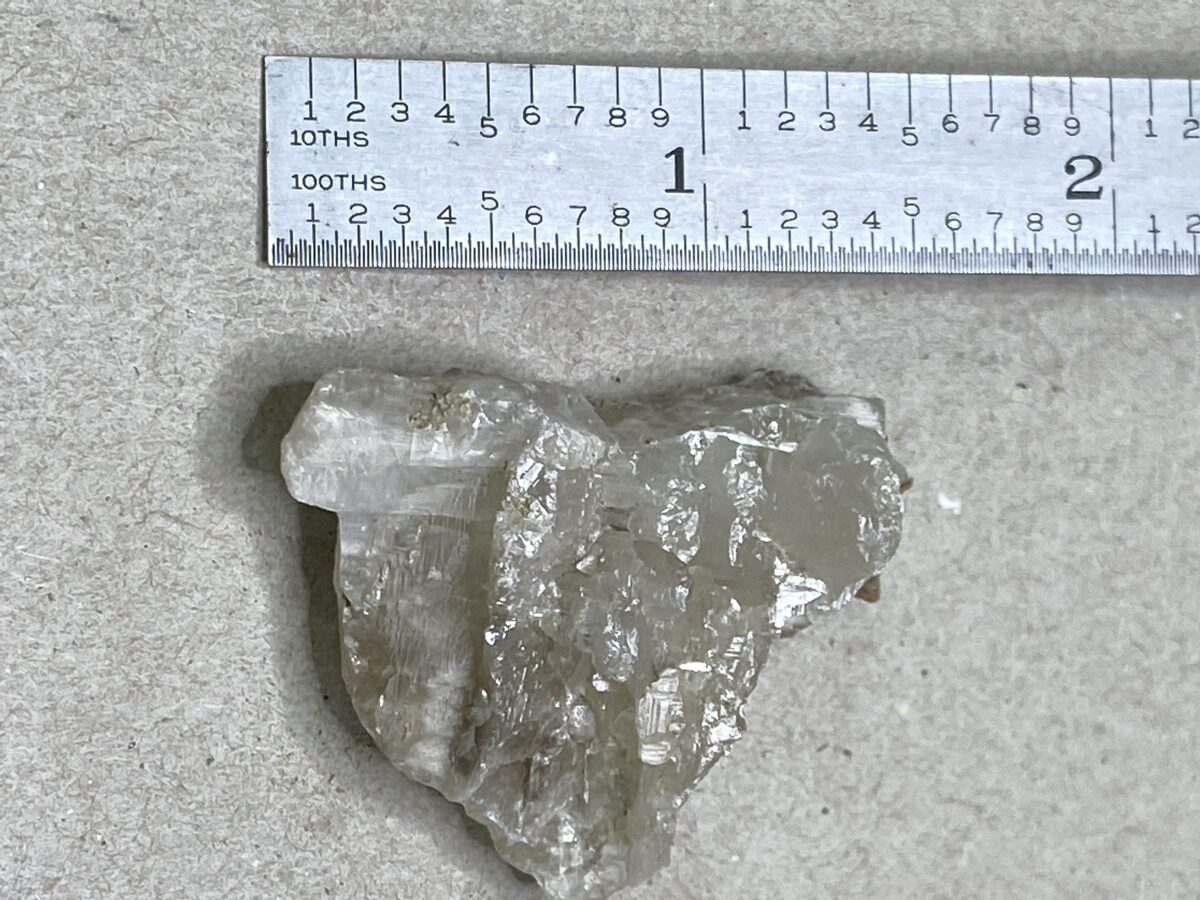
Quartz crystal — hardness 7 (set no. 1). Six-sided crystals with a pointed end, glassy lustre, no cleavage; breaks with a curved fracture.Quartz (massive) — hardness 7 (set no. 27). The same mineral without crystal faces: milky white, glassy, scratches glass.Chalcedony — hardness 6.5–7 (set no. 28). Quartz in crystals too small to see; translucent with a waxy lustre.Jasper or agate — hardness 6.5–7 (set no. 35). More microcrystalline quartz: agate is banded and translucent, jasper opaque.Orthoclase — hardness 6 (set no. 5). Potassium feldspar, commonly salmon pink. Two flat cleavage directions at right angles.Plagioclase — hardness 6–6.5 (set no. 3). White to grey feldspar. Two cleavages near 90°, and fine parallel grooves (striations) on some cleavage faces.Muscovite — hardness 2–2.5 (set no. 4). Light-coloured mica: peels into thin, clear, springy sheets.Biotite — hardness 2.5–3 (set no. 2). Black mica: peels into thin, dark, flexible sheets.Chlorite — hardness 2–2.5 (set no. 18). Green and flaky like a mica, but the flakes bend without springing back.Hornblende — hardness 5–6 (set no. 6). Black amphibole in long crystals; its two cleavages meet at about 60° and 120°.Actinolite — hardness 5–6 (set no. 14). Green amphibole in slender, bladed or fibrous crystals.Olivine — hardness 6.5–7 (set no. 25). Olive-green, glassy, usually in sugary granular masses. No cleavage.Epidote — hardness 6–7 (set no. 16). Its yellow-green 'pistachio' colour is the giveaway.Garnet — hardness 6.5–7.5 (set no. 7). Rounded crystals with many flat faces, commonly dark red; no cleavage.Kyanite — hardness 4.5–7 (set no. 33). Blue blades, and a rare trick: about 5 scratching along the blade, about 7 across it.Tourmaline — hardness 7–7.5 (set no. 34). Long prisms with grooves running lengthwise and a rounded-triangle cross-section. This black variety is schorl.
Non-silicates
Carbonates, sulfates, sulfides, oxides, halides and native elements. Many are ores; most are softer than the silicates.
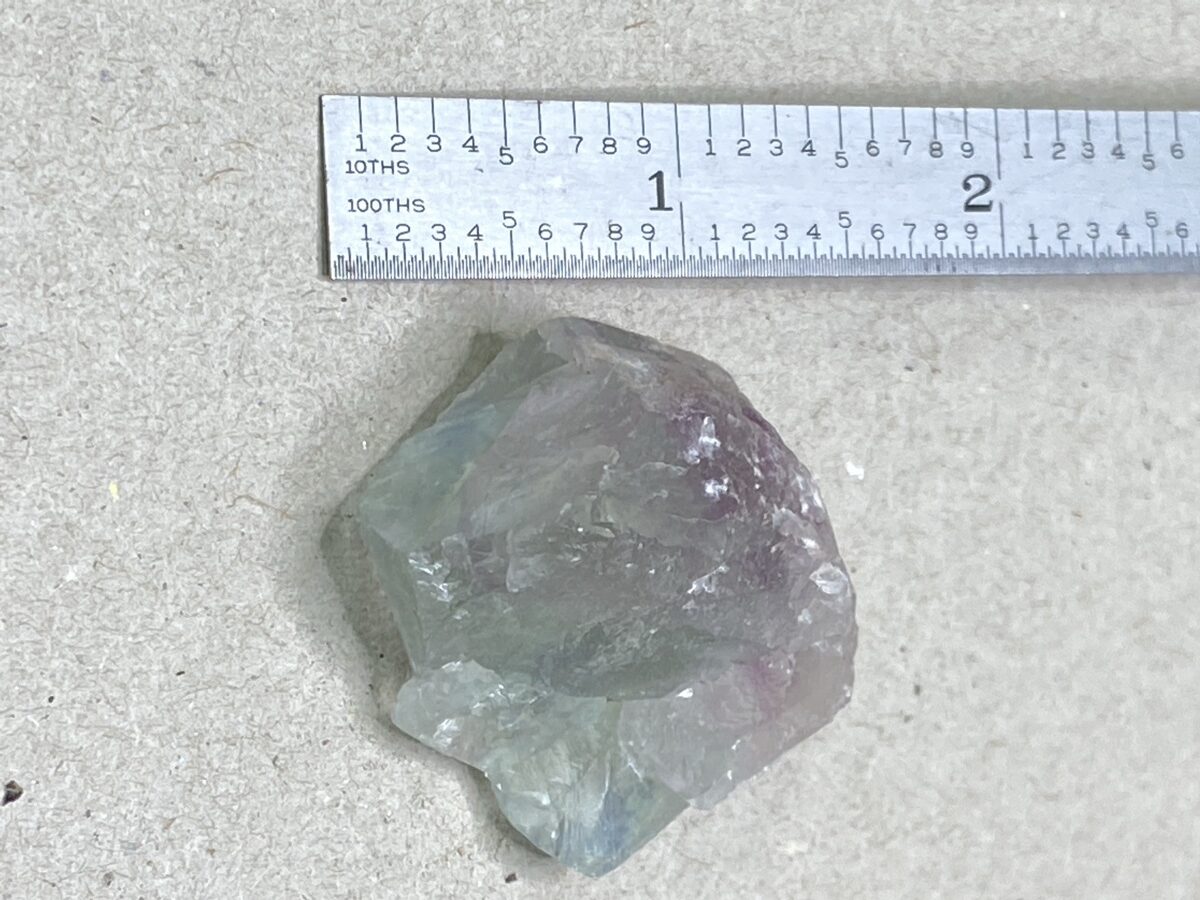
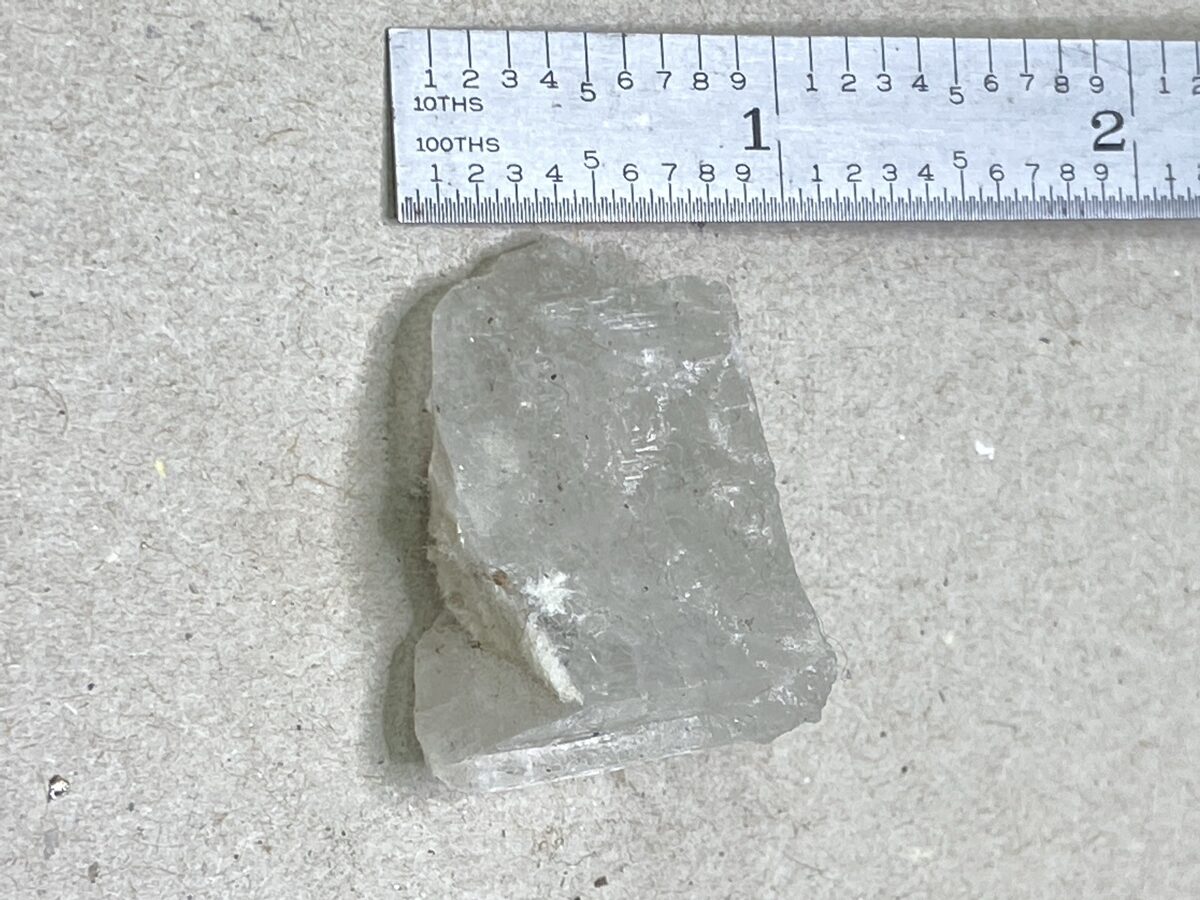
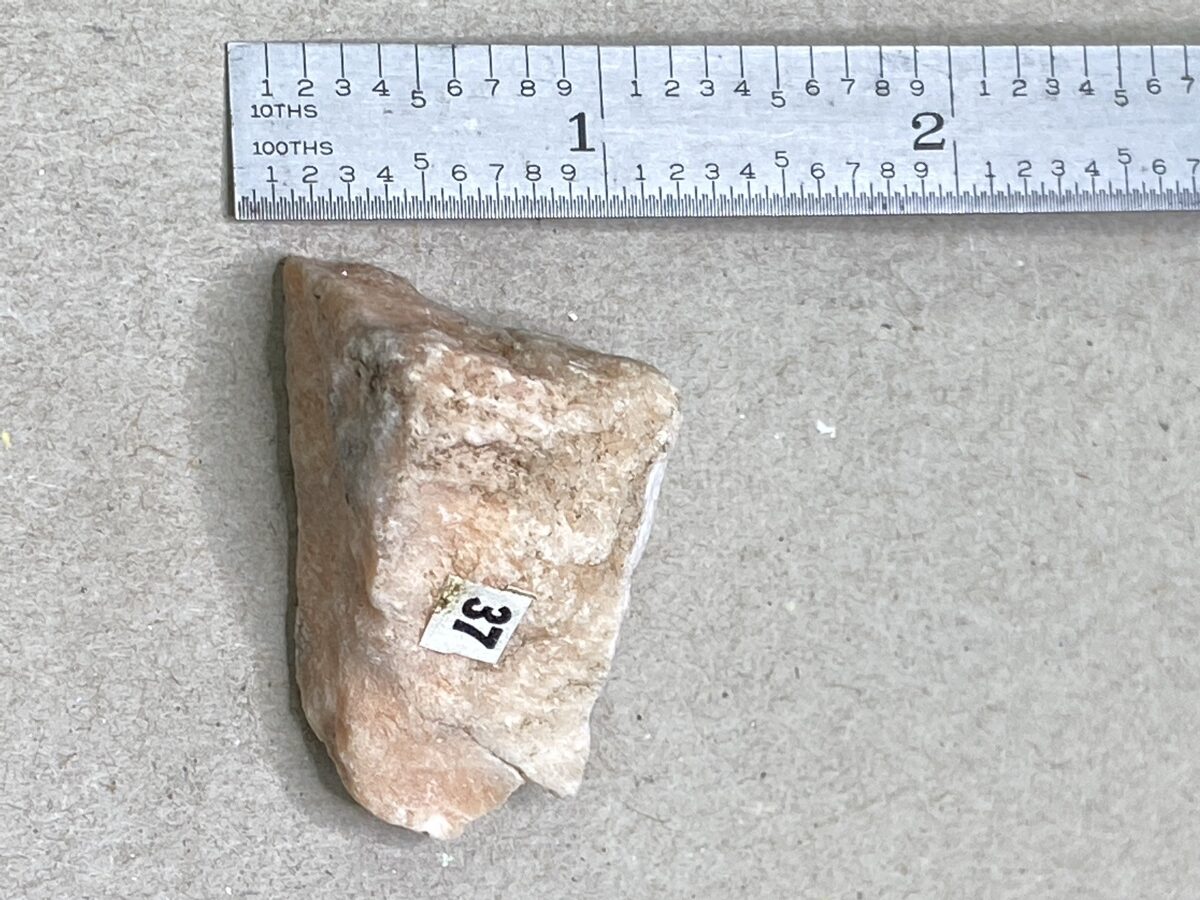
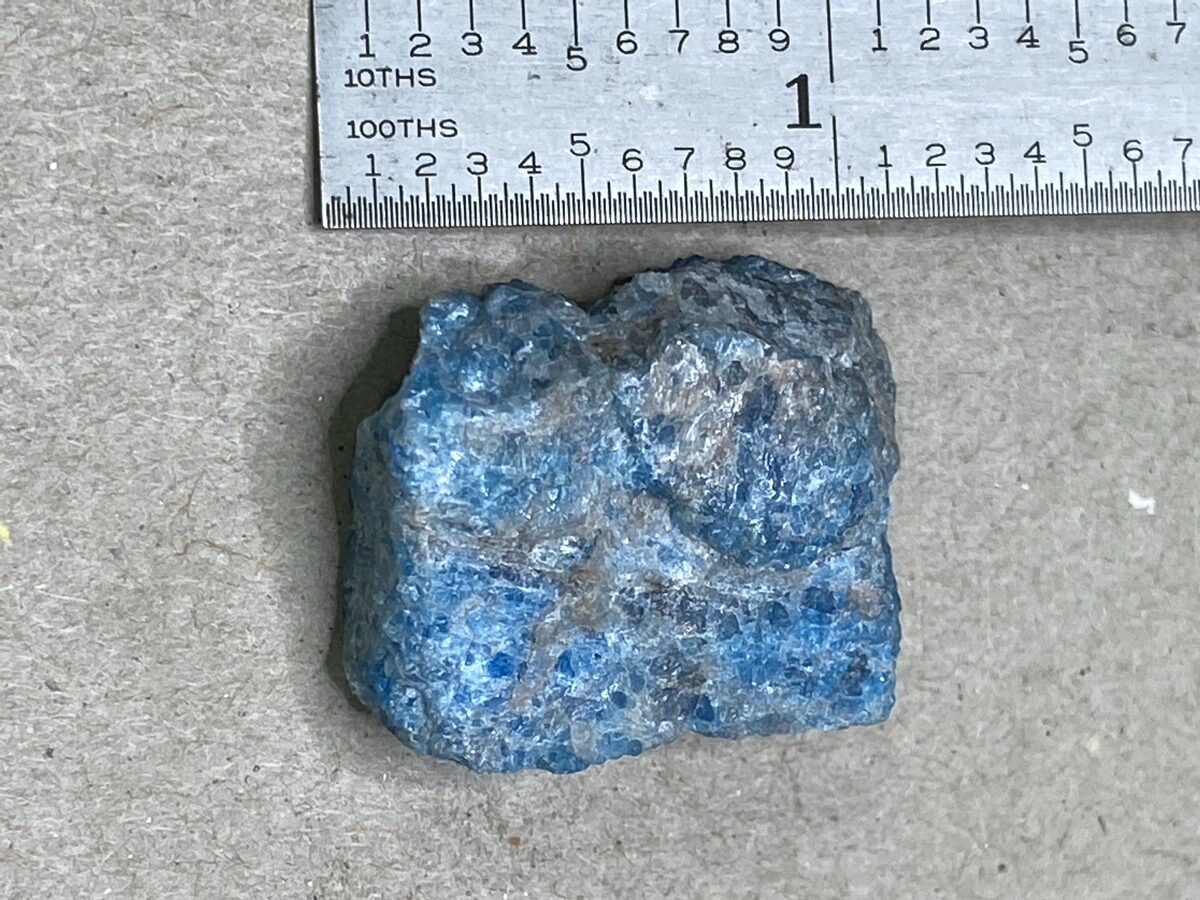
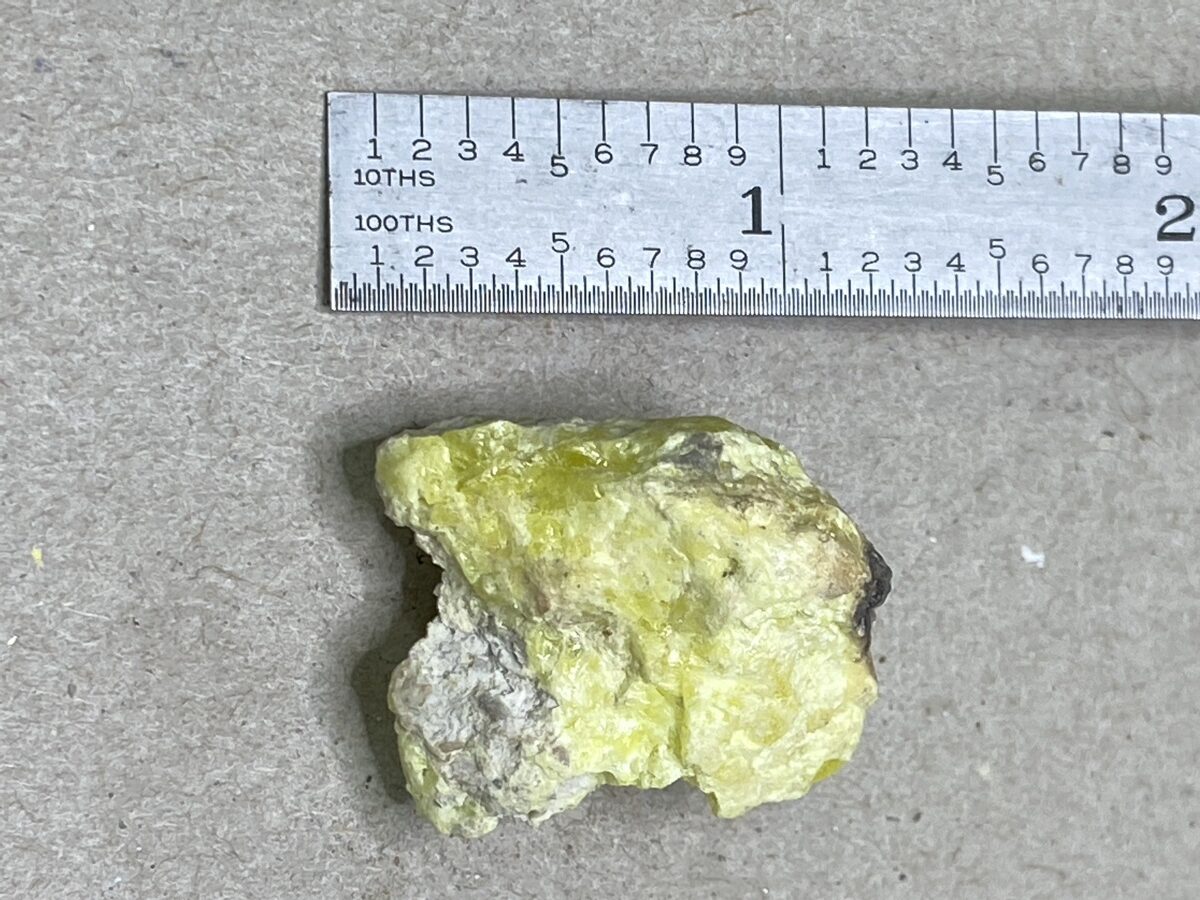
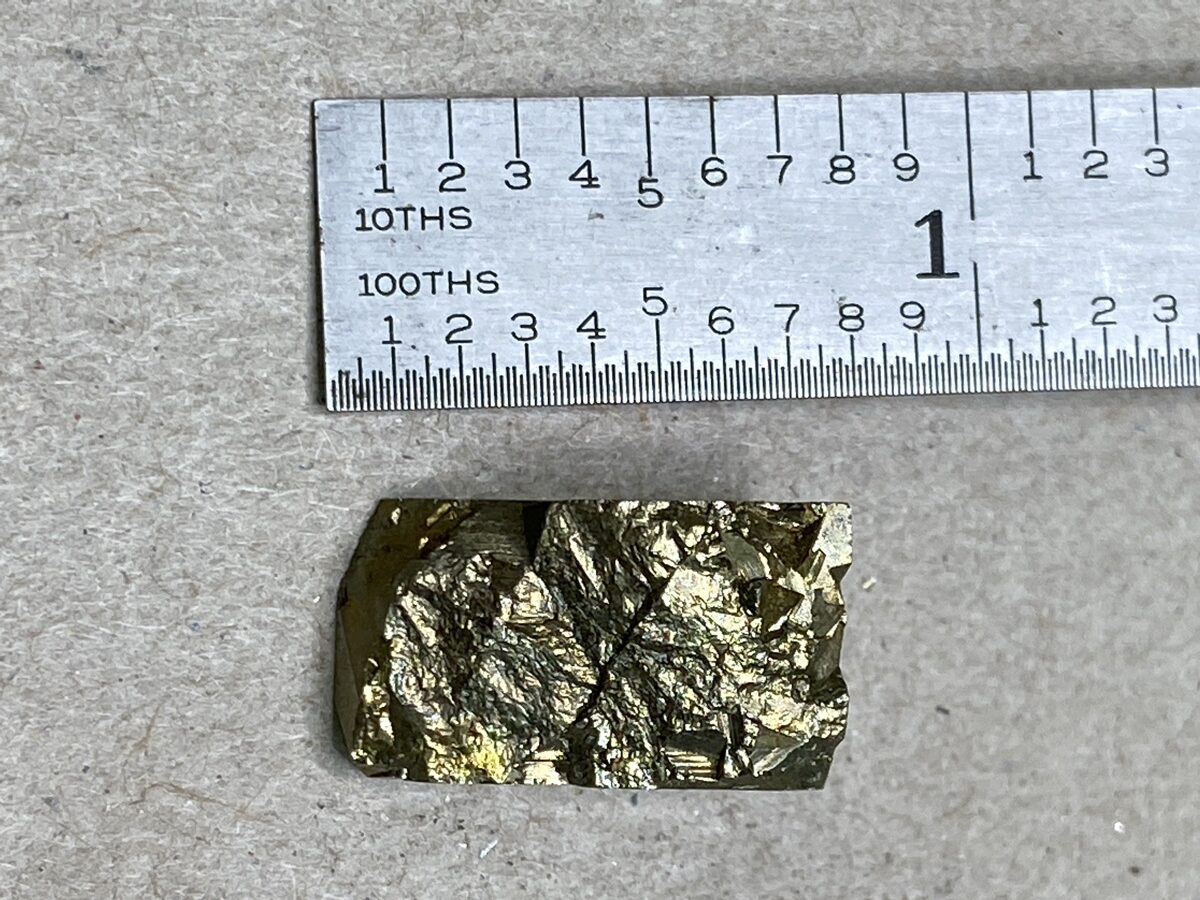
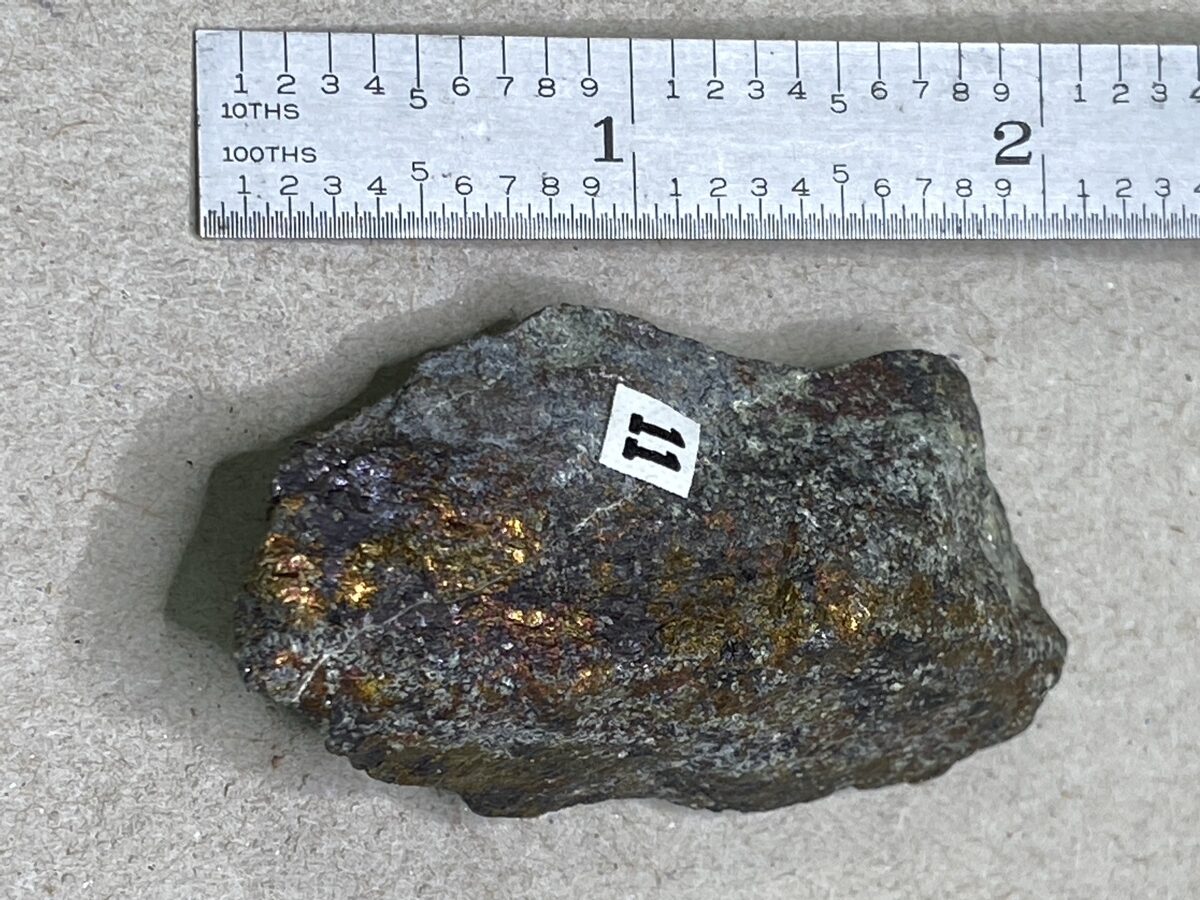
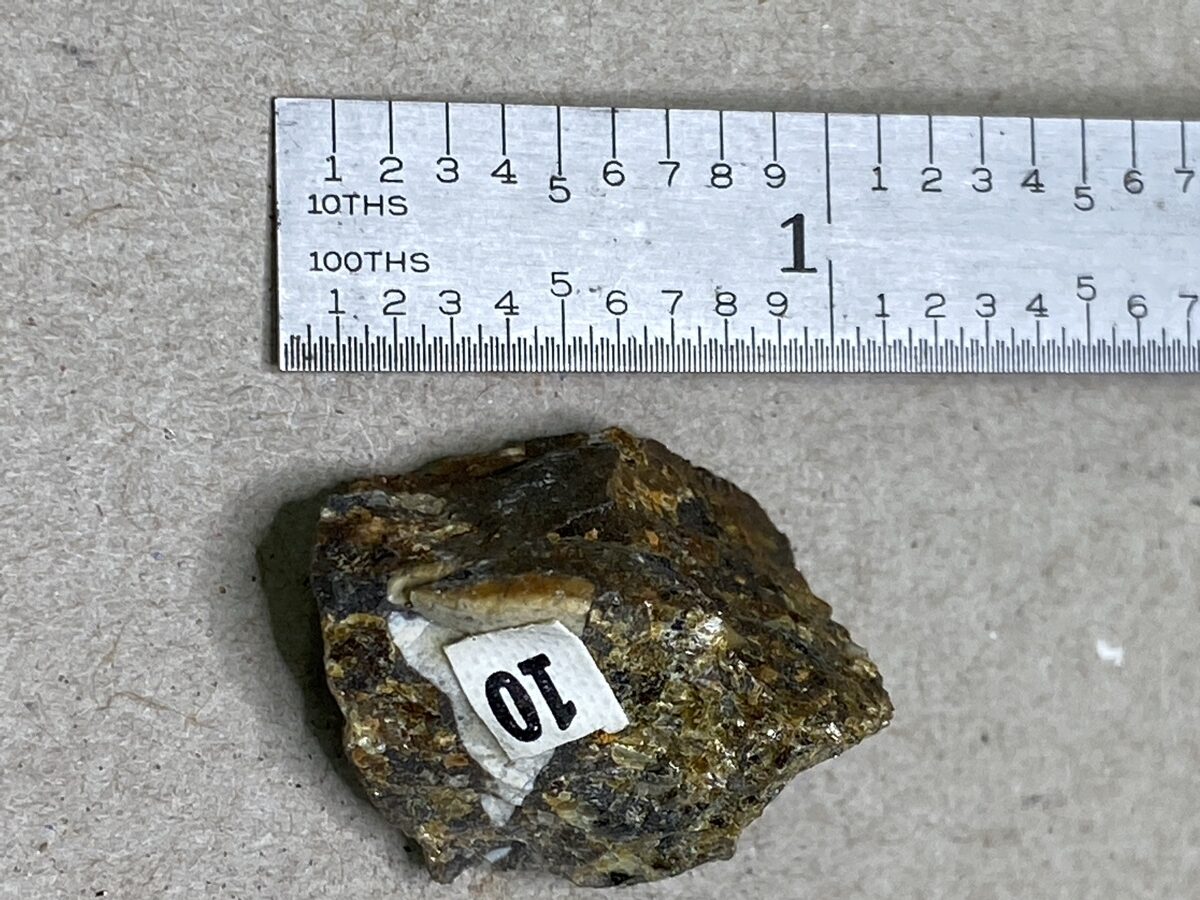
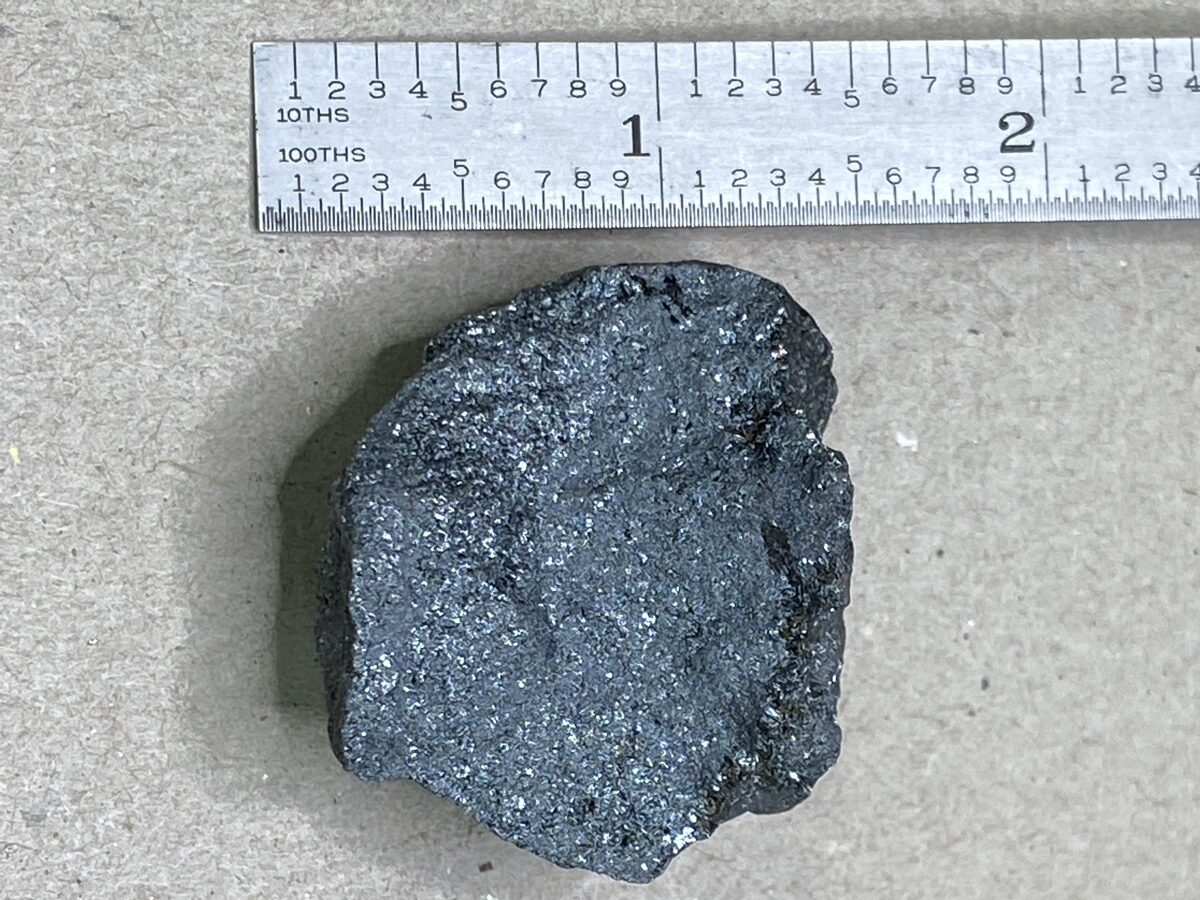
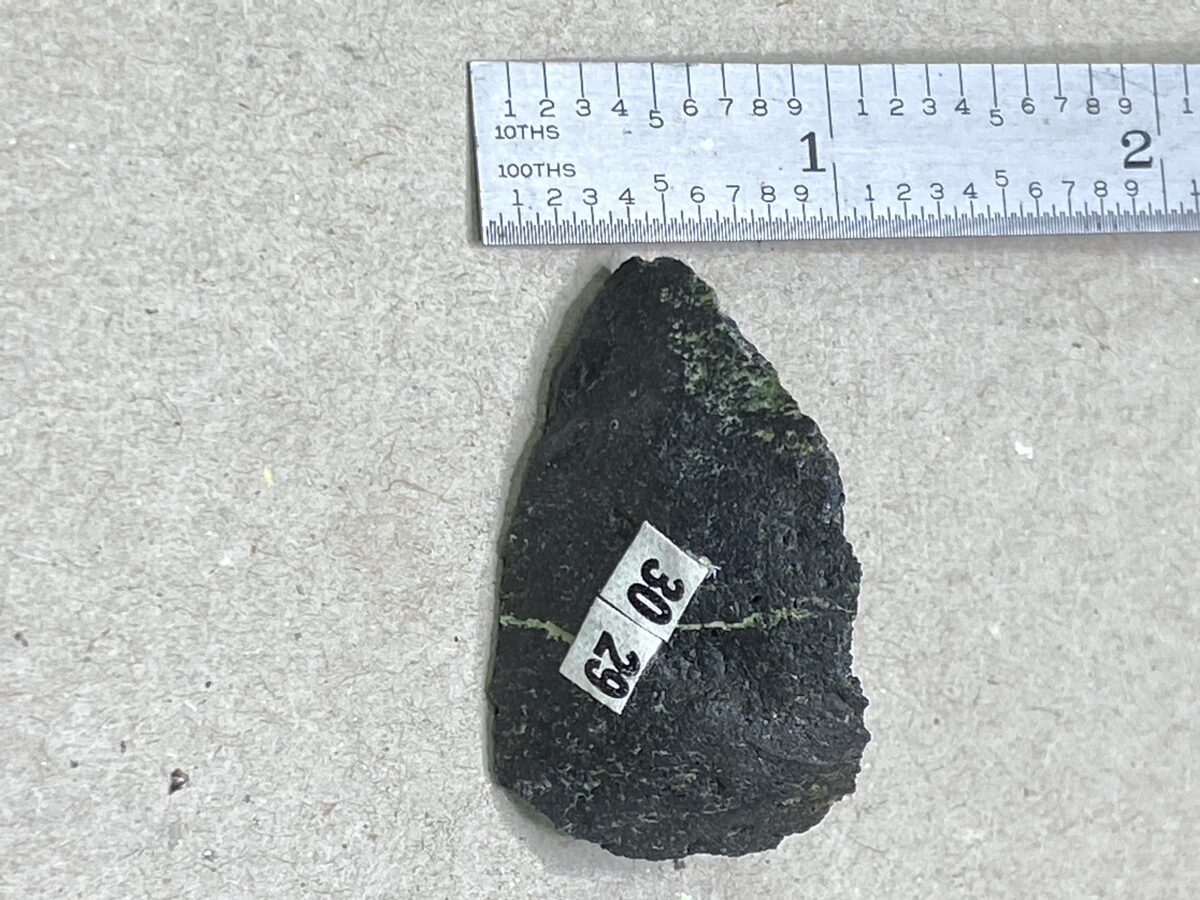
Calcite — hardness 3 (set no. 8). Fizzes in dilute acid and breaks into slanted, rhomb-shaped blocks.Fluorite — hardness 4 (set no. 12). Glassy, often purple or green; breaks along four directions, giving eight-sided fragments.Halite — hardness 2.5 (set no. 31). Rock salt: clear cubes, cubic cleavage, and it tastes salty.Selenite — hardness 2 (set no. 19). Clear, crystalline gypsum; a fingernail scratches it.Alabaster — hardness 2 (set no. 37). Fine-grained, massive gypsum, long used for carving.Barite — hardness 3–3.5 (set no. 15). Feels surprisingly heavy in the hand for a glassy, non-metallic mineral.Apatite — hardness 5 (set no. 32). A knife just scratches it. Commonly green or blue.Sulfur — hardness 1.5–2.5 (set no. 20). Bright yellow, brittle, light in weight, with a faint sulfur smell.Pyrite — hardness 6–6.5 (set no. 22). 'Fool's gold': brassy cubes with grooved faces. Too hard for a knife to scratch, and its streak is greenish black, not gold.Chalcopyrite — hardness 3.5–4 (set no. 11). Brassy yellow, often with a purple-blue tarnish; softer than pyrite (a knife scratches it).Sphalerite — hardness 3.5–4 (set no. 10). Zinc ore with a resinous lustre and a pale yellow-brown streak.Hematite — hardness 5.5–6.5 (set no. 13). Steel grey to red, but always leaves a red-brown streak.Chromite with uvarovite — hardness 5.5 (set no. 30). Black chromite with a thin green coating of uvarovite, the chromium garnet (numbers 29 and 30 on one piece).