Metamorphic rocks are older rocks changed by heat, pressure or hot fluids without melting. The first thing to check is foliation: whether the minerals have been lined up into sheets or bands.
Reading a metamorphic rock
Foliated, in order of increasing heat and pressure:
Slate — dull, splits into flat sheets
Phyllite — silky sheen, wavy surfaces
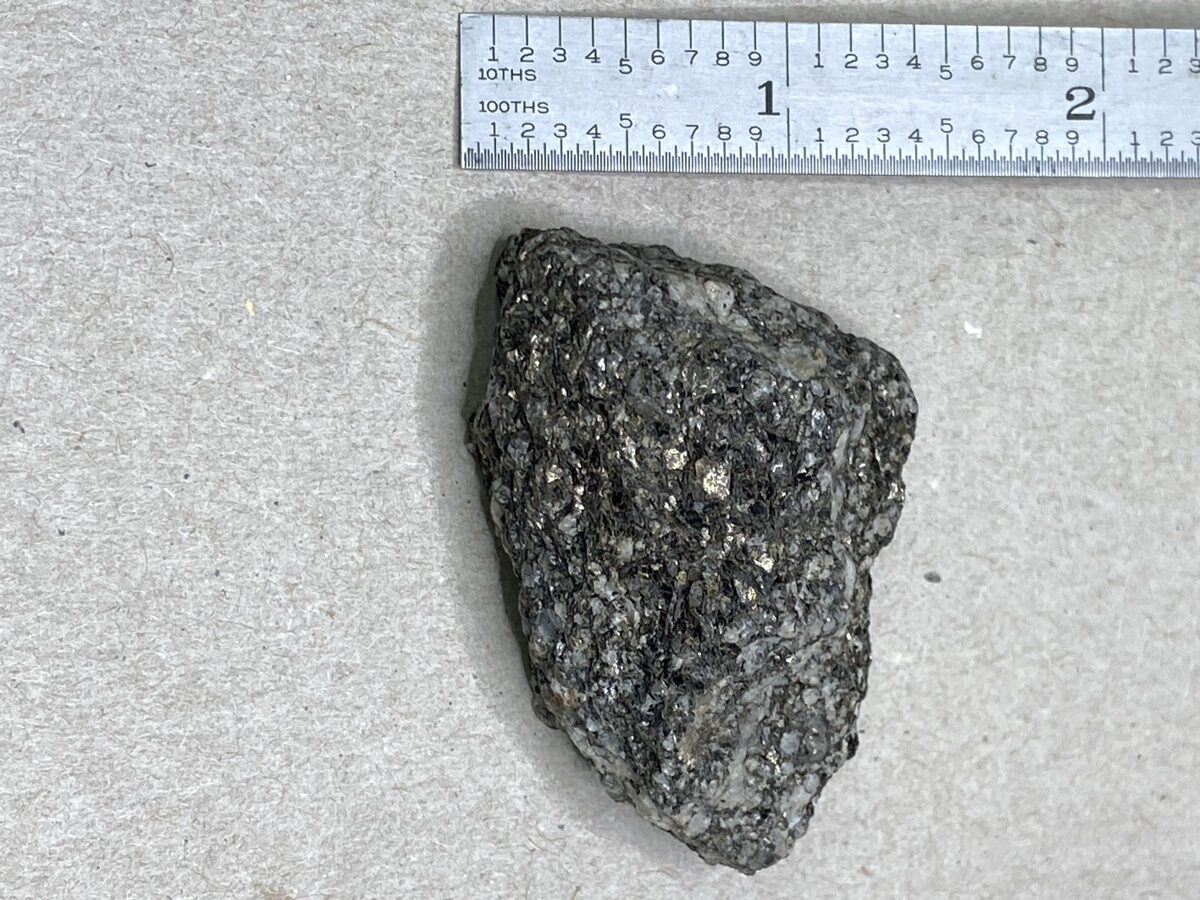
Schist — visible, glittering mica or amphibole
Gneiss — coarse light and dark bands
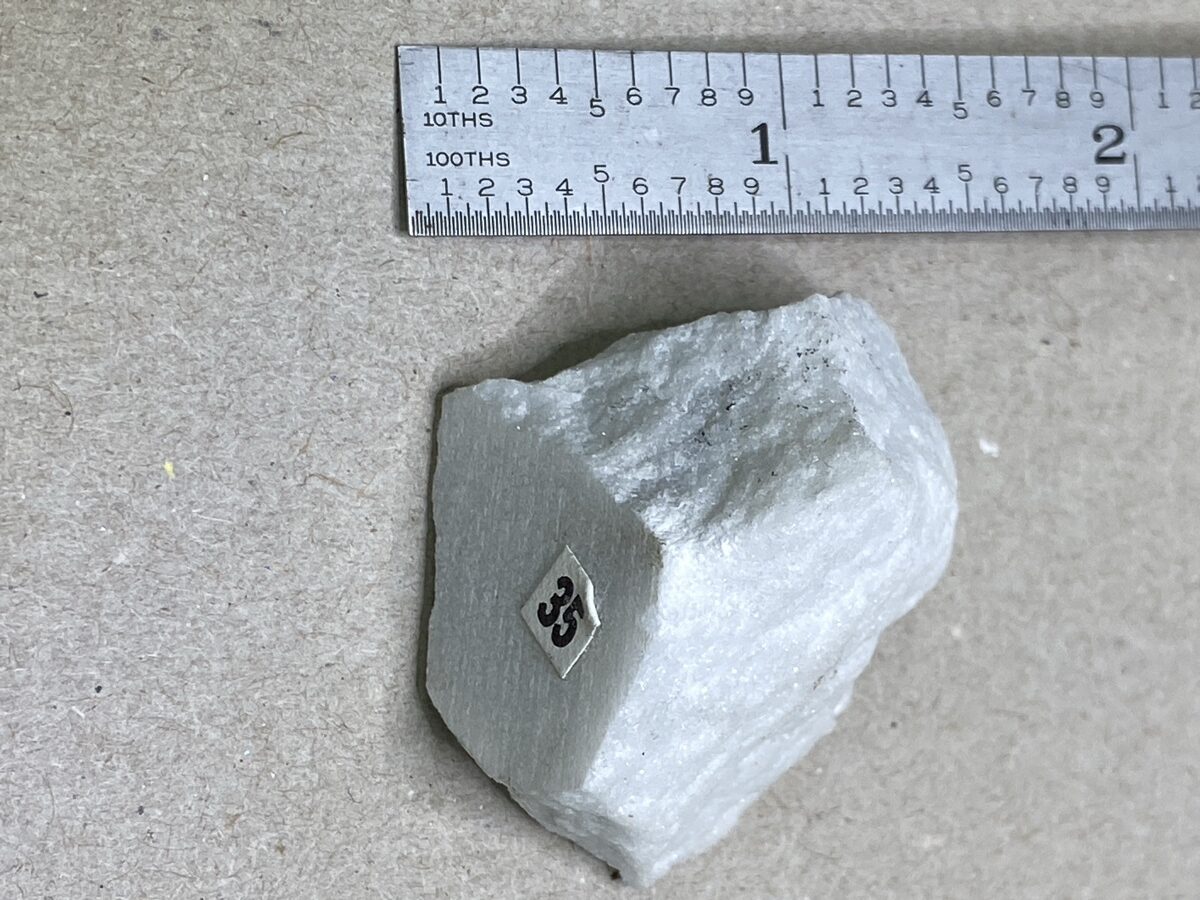
Not foliated — name it by what it is made of. Marble is calcite (fizzes, a knife scratches it). Quartzite is quartz (scratches glass). Hornfels is a dark, hard, baked rock. Serpentinite is green and waxy.
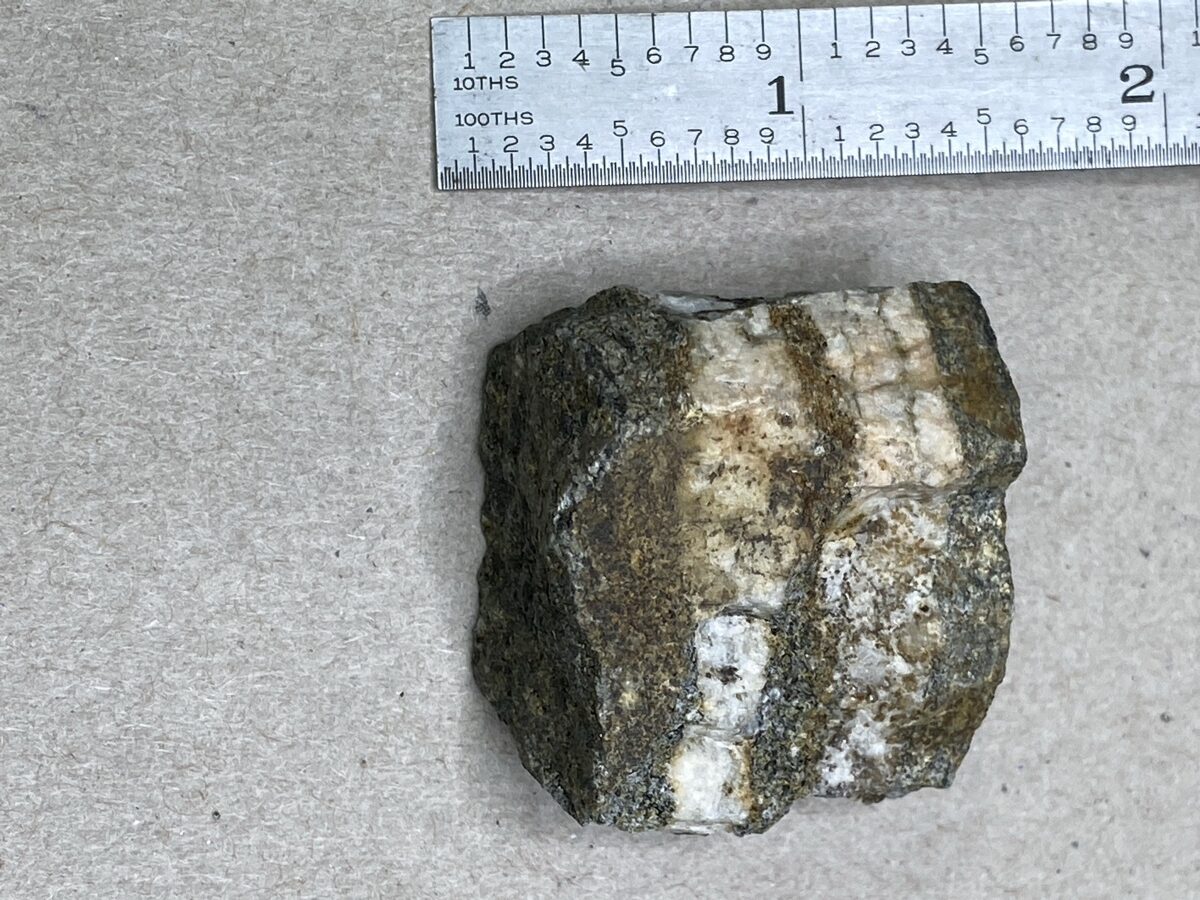
Several of these are California specialities. Glaucophane schist (blueschist), serpentinite and jade come from the Franciscan Complex of the Coast Ranges, and mariposite from the Mother Lode.
The specimens
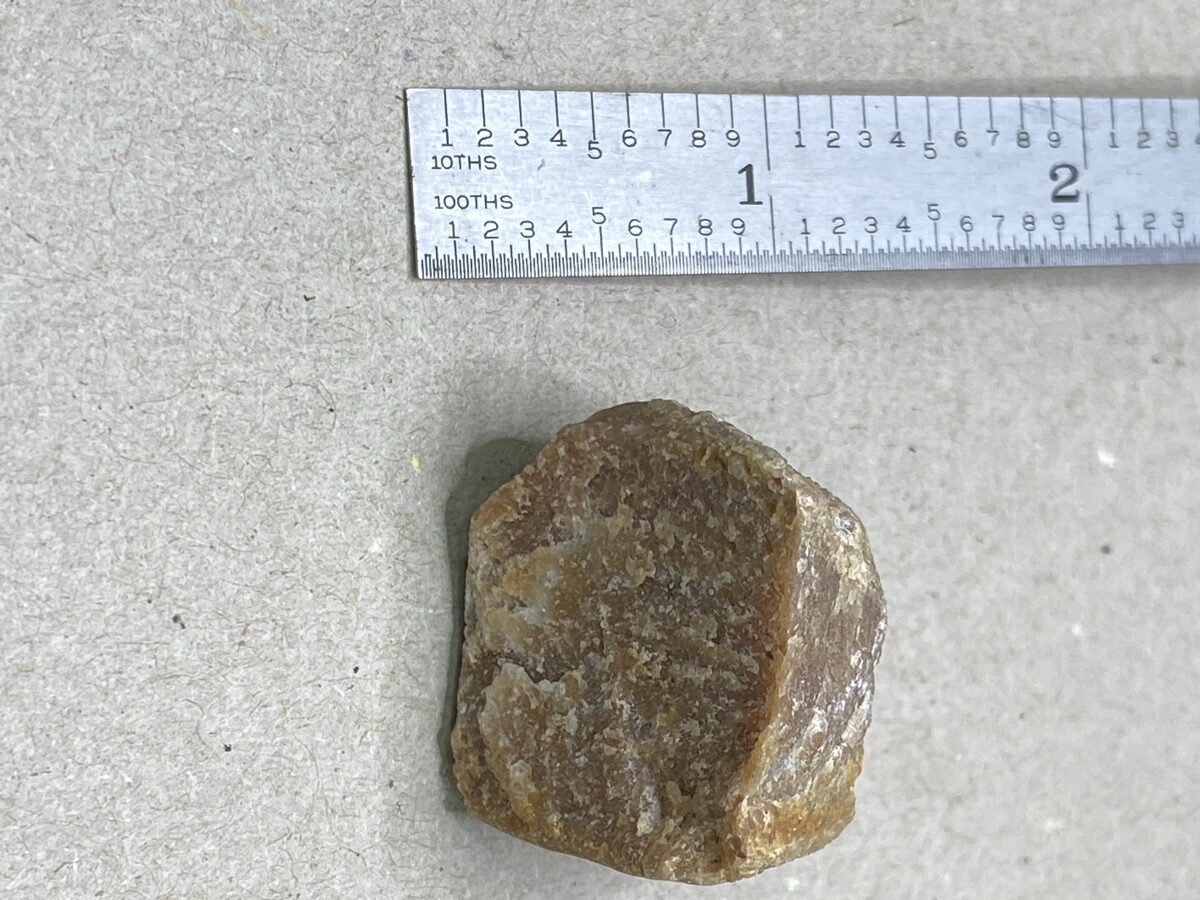
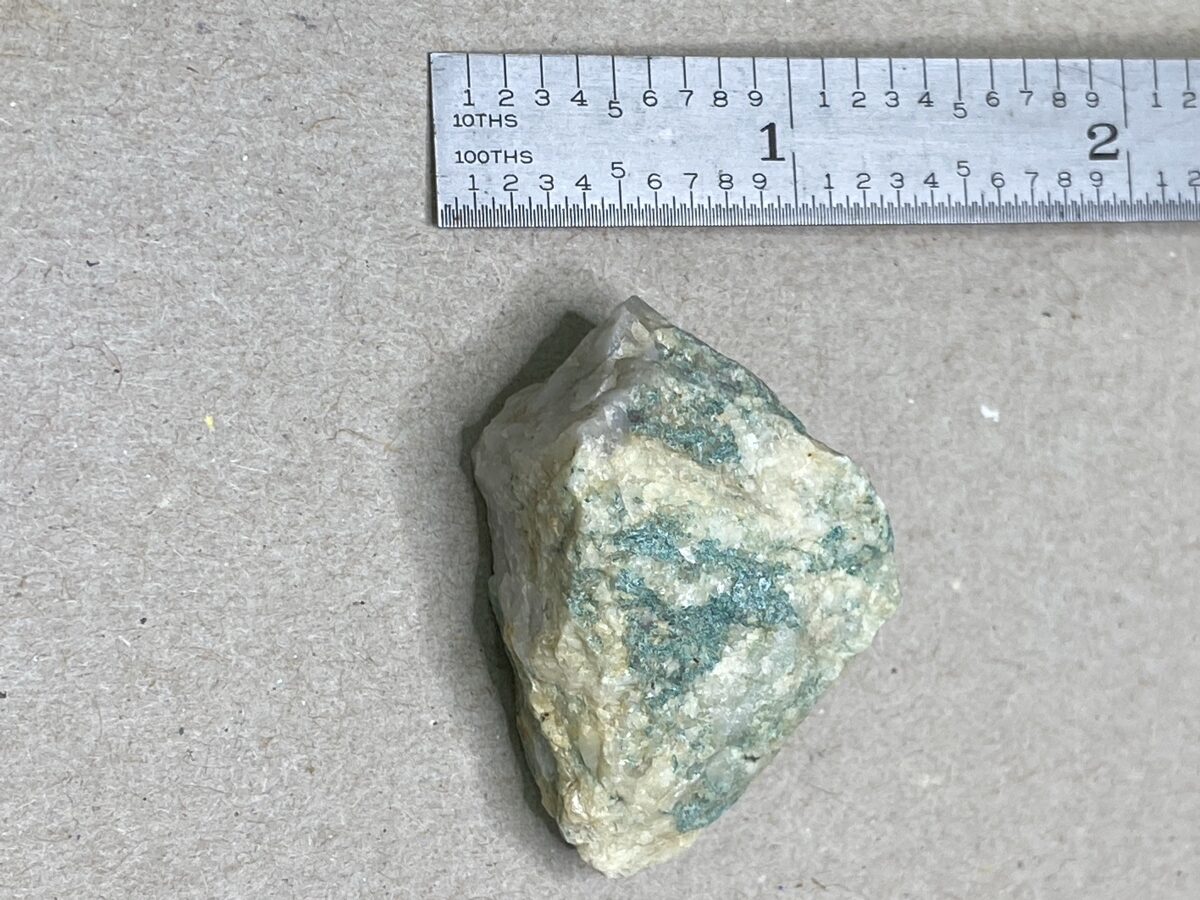
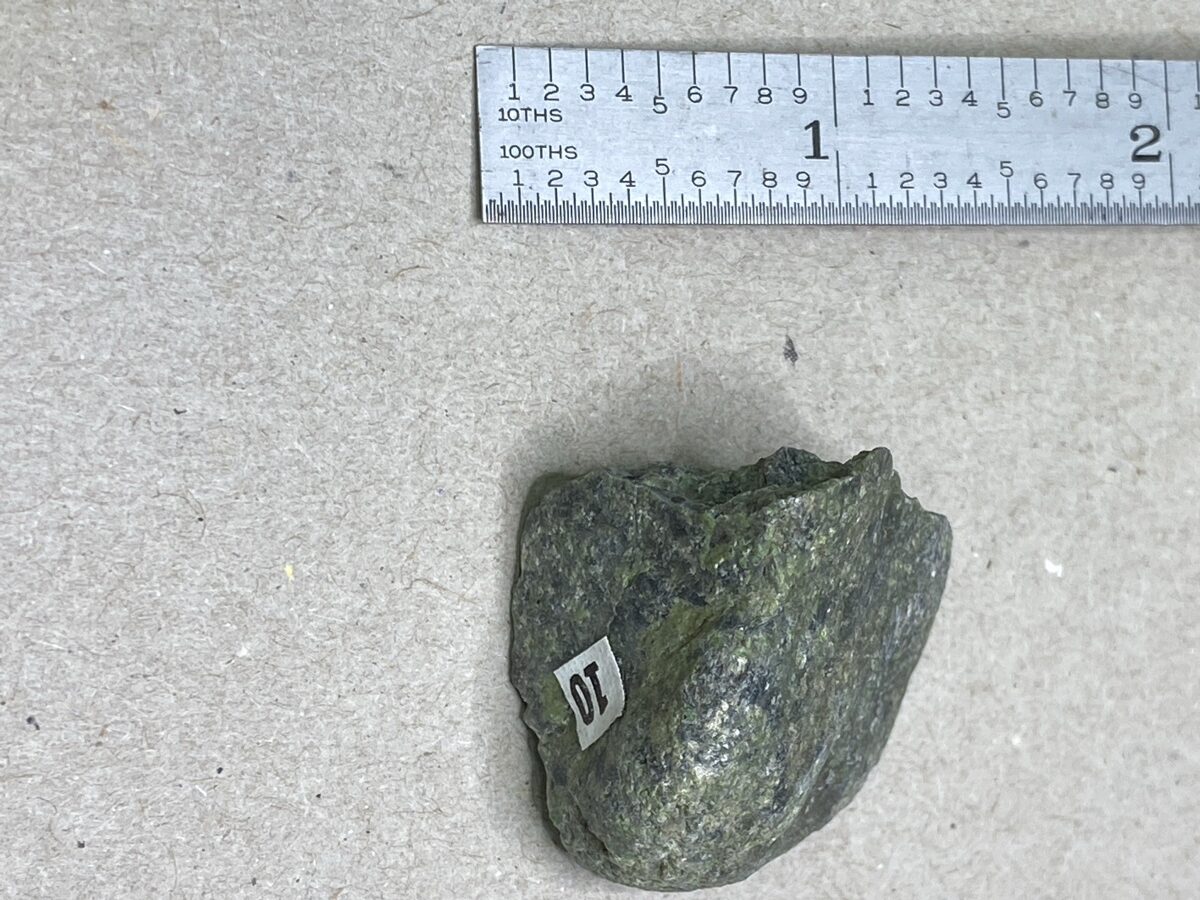
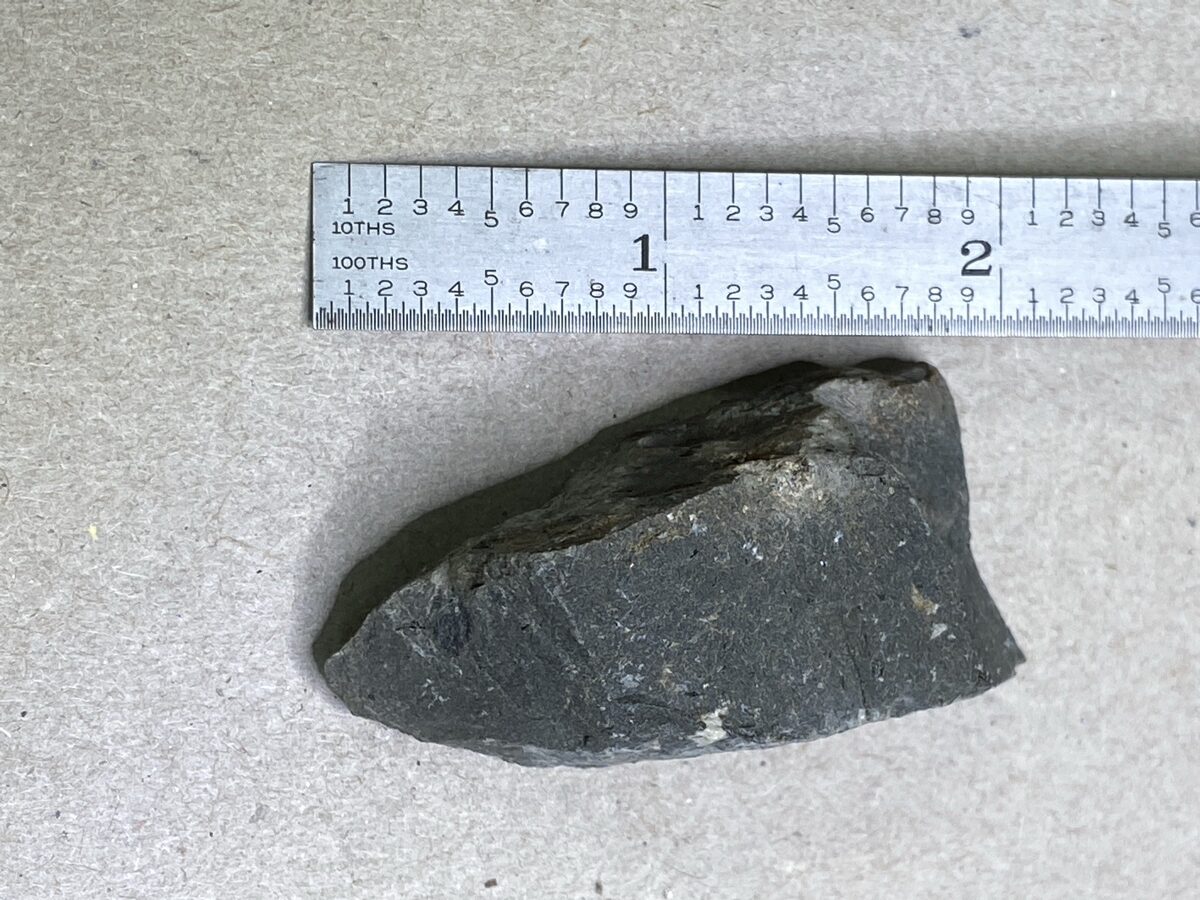
The specimens are from two teaching sets Bosco bought from his geology instructor at Cabrillo College: a 42-piece California rock set and a 37-piece California mineral set. Each name is the one printed on the set’s own legend sheet, and every photo is Bosco’s, shot against a steel ruler marked in inches.
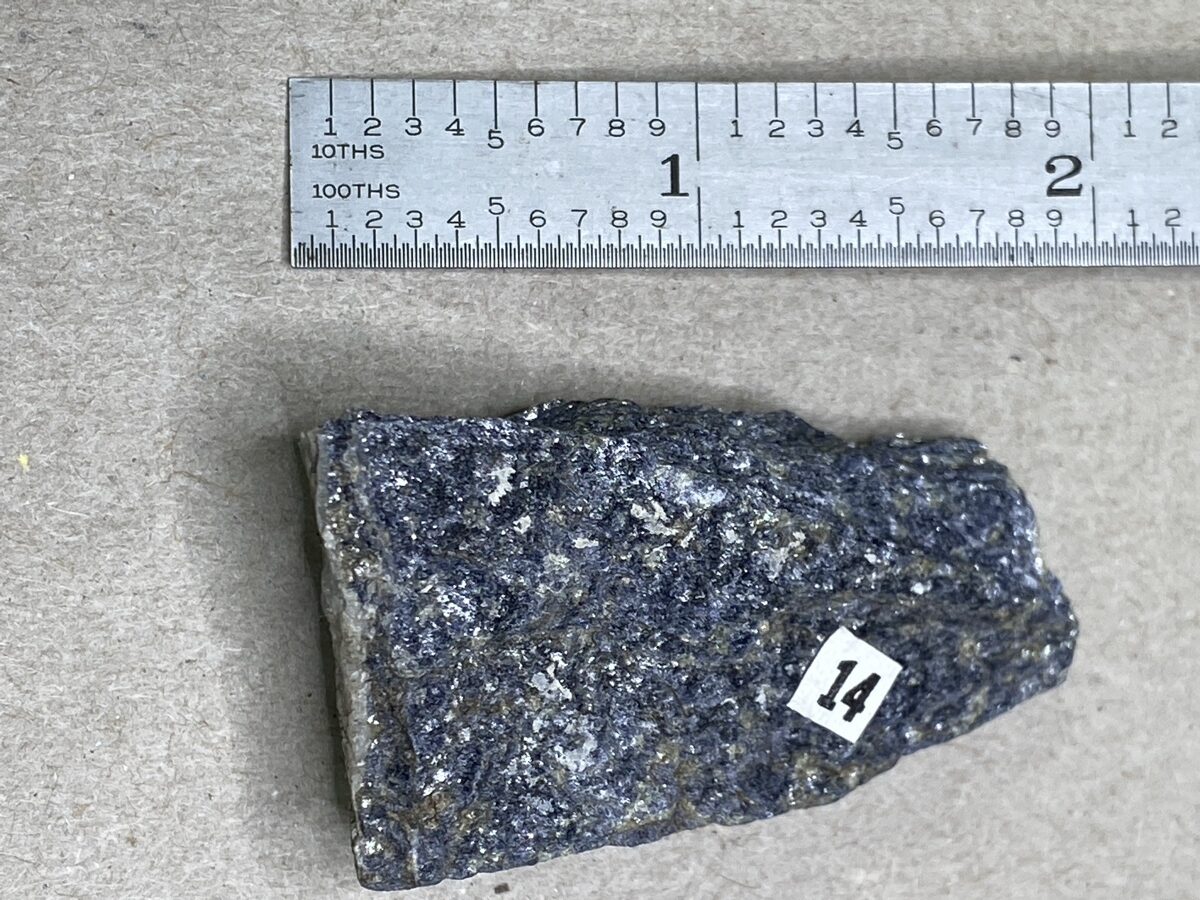
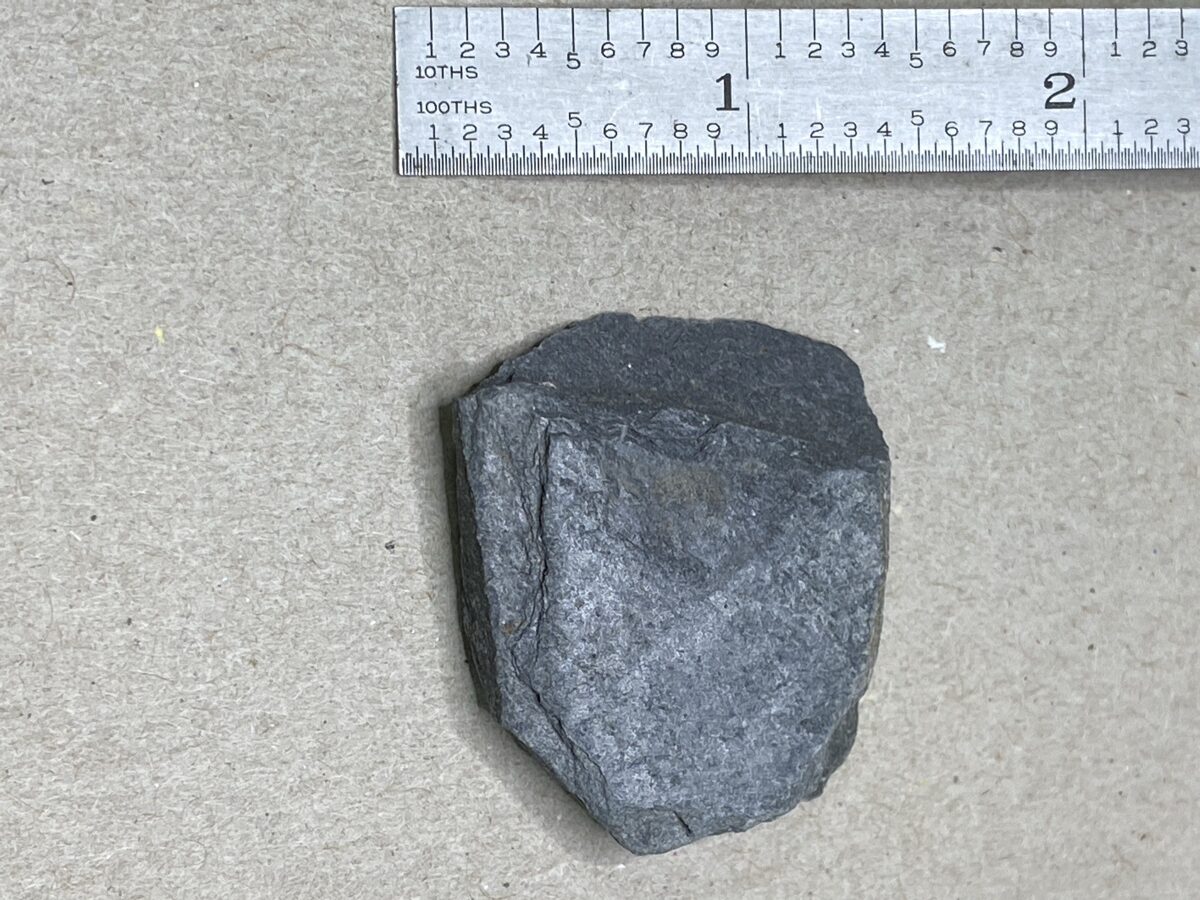
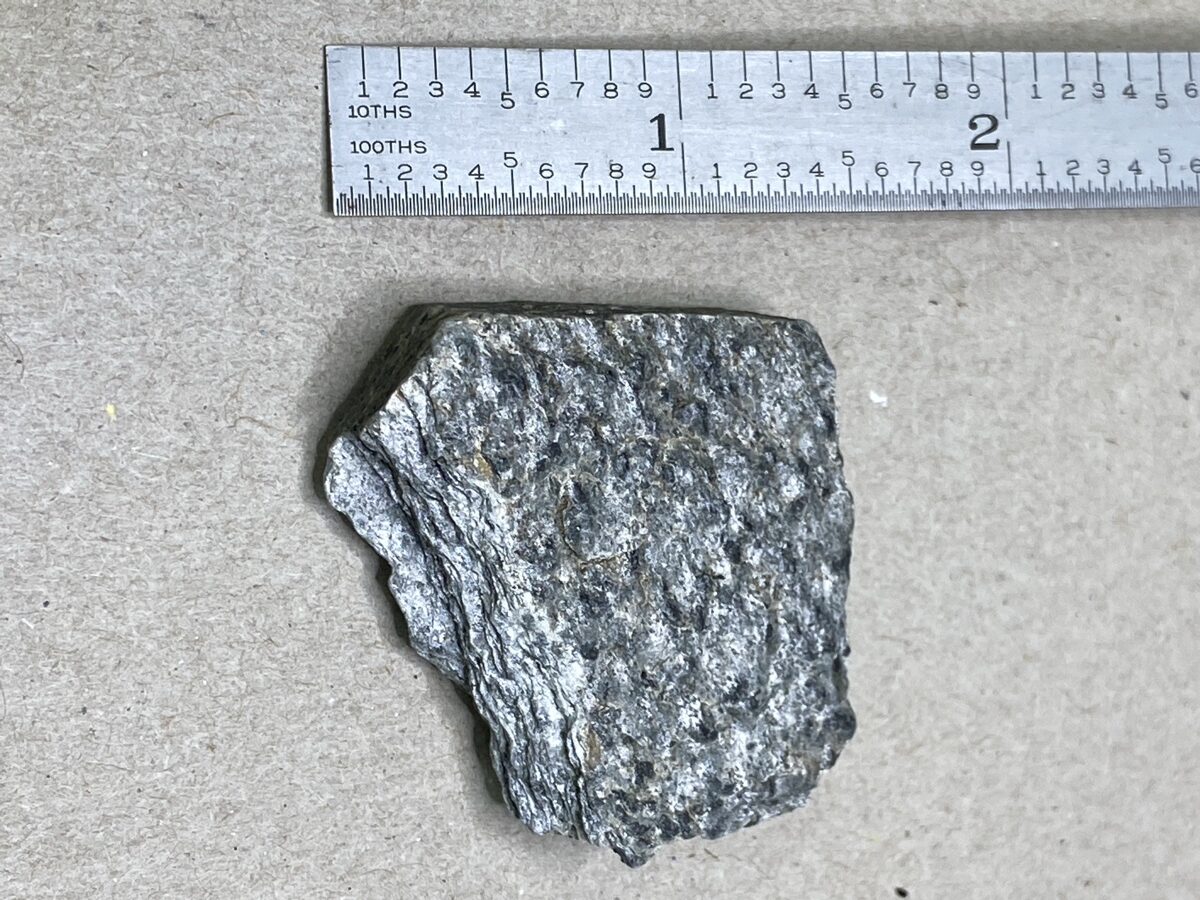
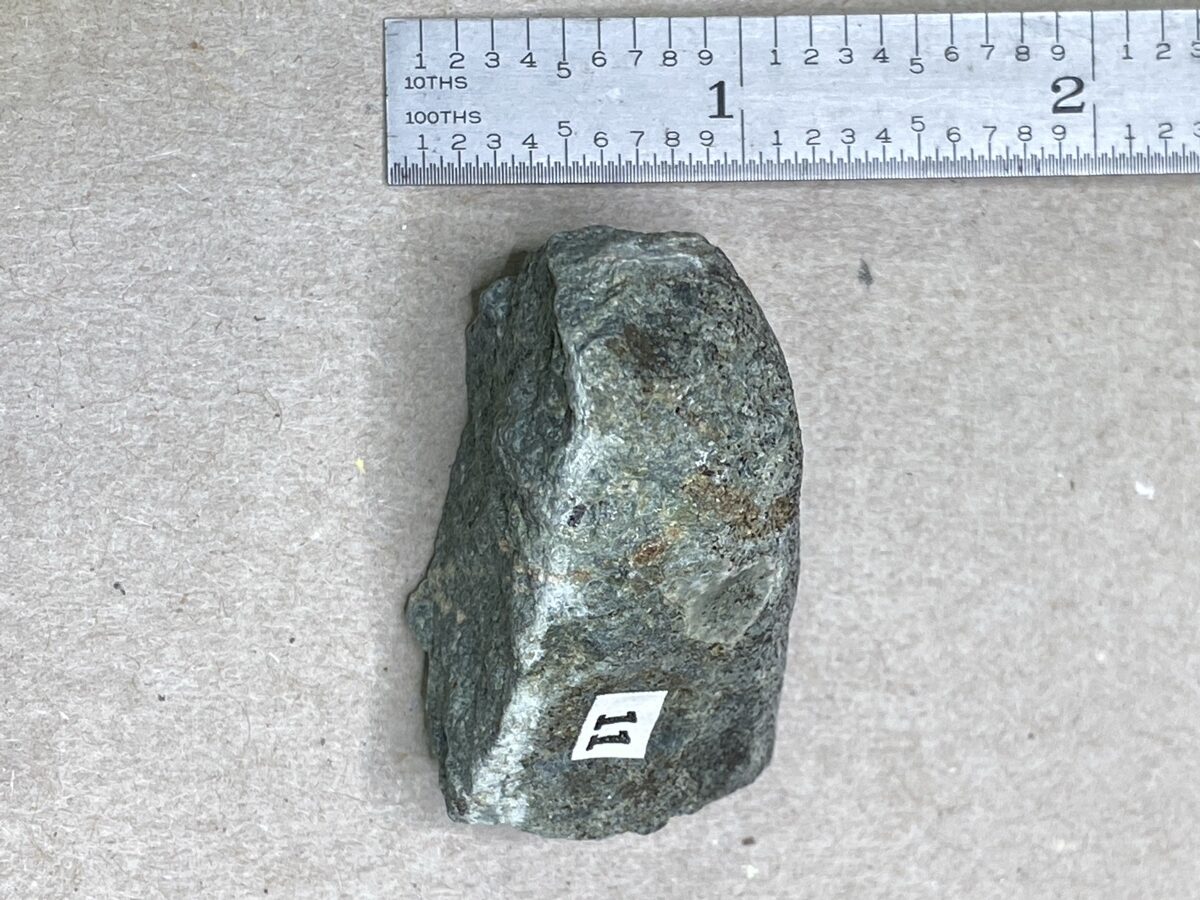
Slate (set no. 4). Shale changed by low heat and pressure. Fine-grained, dull, splits into flat sheets and rings when tapped.Phyllite (set no. 28). One step past slate: a silky, silvery sheen from mica grains still too small to see, often on wavy surfaces.Mica schist (set no. 12). Mica flakes large enough to see, lined up so the rock glitters and splits along wavy layers.Glaucophane schist (set no. 14). Blueschist: coloured by the blue amphibole glaucophane. Forms under high pressure and low temperature in subduction zones, and is a signature rock of California's Franciscan Complex.Green schist (set no. 11). Green from chlorite, actinolite and epidote; formed from basalt under low-grade metamorphism.Gneiss (set no. 2). Coarse-grained with light and dark minerals separated into bands.Marble (set no. 35). Limestone recrystallised by heat: sugary, sparkling calcite grains. Fizzes in acid; a knife scratches it.Quartzite (set no. 6). Sandstone recrystallised into solid quartz. Very hard (scratches glass) and breaks through the grains rather than around them.Mariposite (set no. 23). White quartz and carbonate streaked with green chromium mica; the rock of California's Mother Lode gold belt.Serpentinite (set no. 10). Green, waxy or greasy to the touch, often slick and mottled. California's state rock.Hornfels (set no. 41). Baked by contact with hot magma: dark, very fine-grained, hard, with no layering.